Not legal advice. This page summarizes FCC rules (47 CFR Part 95) from the official sources linked in the text. Rules and fees checked . The FCC sets its fees annually and can change its rules, so confirm the current version on fcc.gov before you rely on it.
Quick picks
The picks at a glance
| # | Product | Best for | Score | Price |
|---|---|---|---|---|
| 1 |  Midland MXT115P PRO MicroMobile (15 W) The mobile most rigs should get: 15 W, IP67, a magnet-mount antenna and a 12V plug in the box, PA and intercom jacks, and a 3-year warranty. | Best in-vehicle GMRS radioGMRS licensePremium | 8.0/10Researched | Check price · Amazon #ad · Disclosure |
| 2 | Midland MXT500 MicroMobile (50 W) The most reach Midland sells: 50 W with 25 W and 5 W steps, water resistant, PA and noise canceling. It wires to the fuse block or battery. | Best 50 W for trucks and farm basesGMRS licenseHigh-end | 7.9/10Researched | Check price · Amazon #ad · Disclosure |
| 3 | BTECH GMRS-20V2 (20 W compact mobile) 20 W, IP67 and a 12V cigarette-plug cable at the mid tier; no antenna in the box, so add one to its SO-239 jack. | Best value mobile (bring an antenna)GMRS licenseMid-price | 7.8/10Researched | Check price · Amazon #ad · Disclosure |
| 4 | BTECH GMRS-50PRO (50 W, Bluetooth + GPS) 50 W with a color control mic, Bluetooth app programming and built-in GPS location sharing, for convoy leaders and property crews; no antenna included. | Best 50 W with GPS and app setupGMRS licensePremium | 7.6/10Researched | Check price · Amazon #ad · Disclosure |
| 5 | BTECH GMRS-50V2 (50 W mobile/base) 50 W, quad watch and an SO-239 jack a tier below Midland's 50 W radios; it needs a 13.8 V supply or a battery connection and an antenna bought separately. | Best 50 W for a home or shop baseGMRS licensePremium | 7.5/10Researched | Check price · Amazon #ad · Disclosure |
| 6 | Midland MXT575 MicroMobile (50 W) 50 W with the radio body hidden and every control on the mic, for Jeeps and rigs short on dash space; Midland lists no water rating. | Best 50 W for a clean dashGMRS licenseHigh-end | 7.2/10Researched | Check price · Amazon #ad · Disclosure |
| 7 | Midland MXT275 MicroMobile (15 W) A plug-in 15 W radio with the controls on the mic and an SO-239 jack for a better antenna later; Midland states no water rating. | Best 15 W hideaway radioGMRS licensePremium | 6.9/10Researched | Check price · Amazon #ad · Disclosure |
#ad · Prices are set by Amazon and change often, so we don't print them. Scores are ours, built from published specs, manuals and FCC rules, not hands-on tests. Photos are illustrative stock. Tap a row for the full write-up.
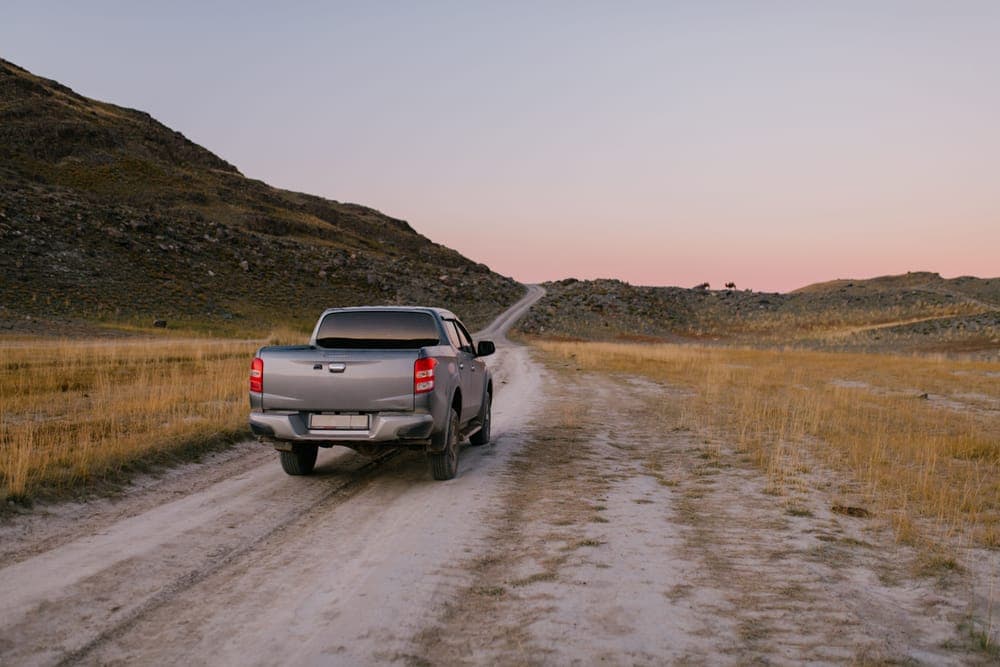
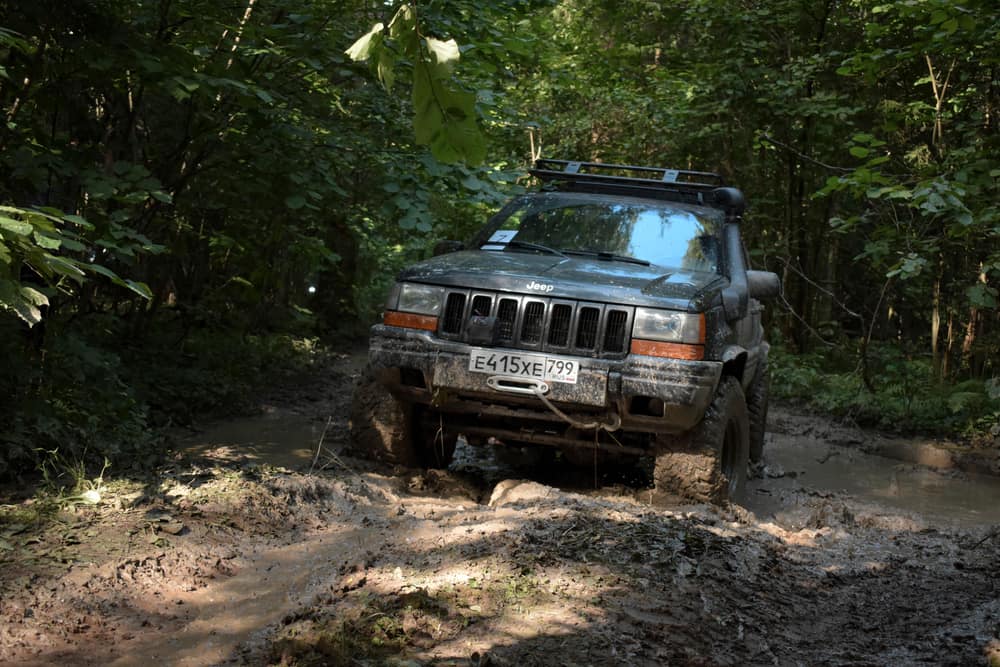
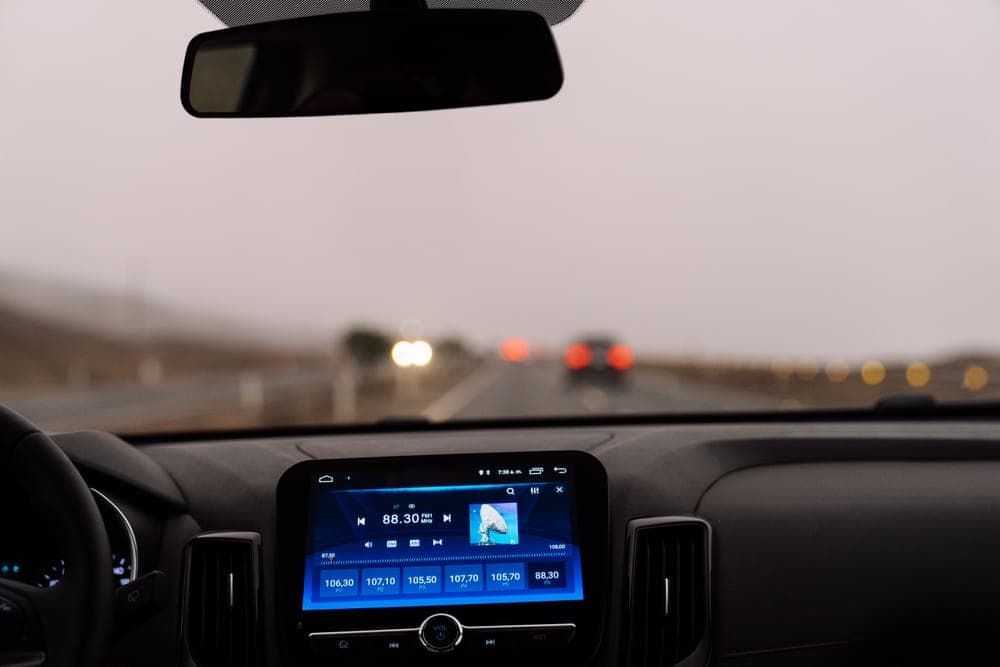
Handhelds work until the convoy strings out over a pass, or until the pickup drops into the far draw and the house can't raise it. That's the moment for a mobile radio. A GMRS mobile does two things a handheld can't: it puts 15 to 50 W into the antenna, and it puts that antenna on the roof, outside the steel cab a handheld has to talk through. Like any GMRS radio, it needs an FCC GMRS license, which covers your family.
My pick for most vehicles is the Midland MXT115P PRO, because it's tough, it plugs into a 12V socket and it comes with an antenna. If distance is the whole problem, the 50 W Midland MXT500 is the step up, as long as you're willing to wire it in. If you're still deciding between a mobile and handhelds, our best GMRS radios list covers both, and GMRS handheld vs mobile range compares what each realistically reaches.
Will a GMRS mobile reach where you need it?
Farther than a handheld, but ask the makers, not the box. The FCC tells GMRS users to expect "one to twenty-five miles depending on station class, terrain, and repeater use", and a mobile sits toward the top of that. BTECH is the most conservative maker here: for its 50 W GMRS-50V2 it says "around 2–5 miles in-town or wooded areas, 5–15 miles in open rural terrain". Midland's charts run higher; its MXT575 spec sheet claims 10 to 15 miles with major obstruction and 20 to 25 with partial obstruction. Plan on BTECH's numbers in timber and hills, and treat Midland's as open-country figures. Every figure on this page is the maker's advertised claim.
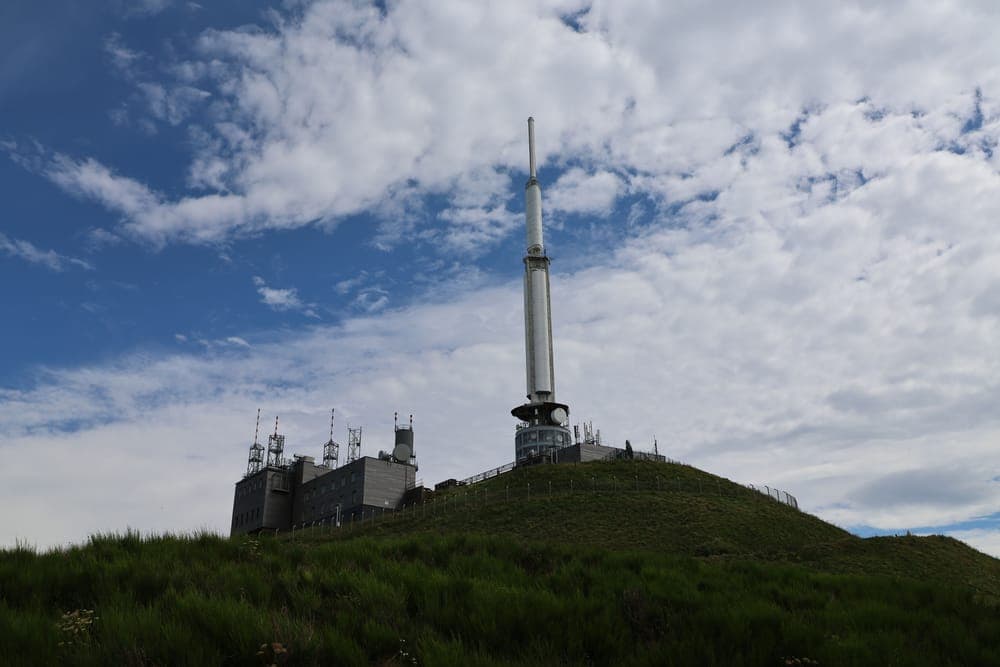
A repeater changes the math. A mobile that can reach a GMRS repeater on a nearby tower can talk far beyond its own simplex range, and every pick on this list supports repeaters. Look up what's near your route or property on myGMRS or RepeaterBook.
How we picked
We started from every GMRS mobile in our research that its maker currently sells and labels as a GMRS radio, and dropped the legacy BTECH GMRS-50X1, which BTECH lists as out of stock. Each radio was scored on the rubric published on How We Rank (reach 30%, ease of use 20%, toughness 15%, power 15%, field features 10%, value 10%) from published specs, owner's manuals and FCC rules. We don't test radios. The picks are in score order, and on this page install burden counts under ease of use: a radio that plugs into a 12V socket and ships with an antenna scores better there than one that needs wiring and an antenna bought separately.
5 W vs 15 W vs 50 W: which power do you need?
- 5 W (Midland MXT105). The same power many handhelds are rated at. The gain comes entirely from the magnet-mount roof antenna, which gets the signal out of the cab. It's the easiest install here, but Midland lists no repeater channels for it, which is why it isn't ranked.
- 15 to 20 W (MXT115P PRO, MXT275, GMRS-20V2). The sweet spot for convoys, trail groups and most properties. All three plug into a 12V socket.
- 50 W (MXT500, MXT575, GMRS-50V2, GMRS-50PRO). The most power the FCC allows a mobile on the main channels. You get more margin at the edge of range across big acreage or long, open country. Every one of them wants a direct, fused connection, not a cigarette socket.
More watts buy margin at the edge of range. They don't bend a signal over a ridge. Midland's own install advice is the better rule of thumb: "Mount the antenna as high on the vehicle as possible. The higher the better."
One license covers every radio your family runs, handheld or mobile. Our GMRS license guide covers what it costs and what it allows.
Specs and install needs, side by side
The install details decide more purchases than the specs do, so here they are from the makers' own pages and manuals:
| Radio | Rated power | Powered from | Antenna in the box | Water rating |
|---|---|---|---|---|
| Midland MXT115P PRO | 15 W / 5 W | 12V power cord with DC vehicle adapter | Yes: 2.1 dB magnetic mount | IP67 |
| Midland MXT500 | 50 / 25 / 5 W | Fused lead to the fuse block or battery (manual) | Yes: magnet mount with cable | IPX6 (manual) / IP66 (page) |
| BTECH GMRS-20V2 | 20 W / 5 W | 12V cigarette-plug cable | No (SO-239 jack) | IP67 |
| BTECH GMRS-50PRO | 50 / 25 / 5 W | Fused power lead, 13.8 V DC nominal | No | IP54 |
| BTECH GMRS-50V2 | 50 / 20 / 5 W | 13.8 V, 20 A peak; battery or fuse block, not a cigarette outlet | No (SO-239 jack) | IP54 |
| Midland MXT575 | 50 W on high | Fused lead to the fuse block or battery (manual) | Yes: 2.1 dB magnet mount | Not stated |
| Midland MXT275 | 15 W, high/low | 12V power cord with DC vehicle adapter | Yes: 2.1 dB magnetic mount (SO-239 jack) | Not stated |
The picks in context
1. Midland MXT115P PRO: the best in-vehicle GMRS radio
This is the radio I'd put in a ranch truck, a side-by-side or a tractor cab without thinking twice. It's rated at 15 W high and 5 W low, and it's IP67, radio and mic both, so an open cab, a dusty two-track or a pressure-washed floor won't end it. In the box: the radio, a slide-in mount, a 2.1 dB magnetic antenna and mount, and a 12V power cord with a DC vehicle adapter. That means no drilling and no wiring on day one. It adds 8 repeater channels, NOAA weather alerts, dual watch, noise canceling, and external speaker, PA and wired intercom jacks, and it carries a 3-year warranty.
Midland's chart is modest: up to 5 miles in a neighborhood or dense forest, up to 10 suburban or rural, up to 15 mountain peak to mountain peak. The trade-off is power. At 15 W, it has less margin than a 50 W radio over broken country, and the stock antenna is a magnet mount; an NMO roof whip takes extra parts. Buy it for a working vehicle. Skip it if you need to reach a base well past 15 miles.
2. Midland MXT500: the most reach Midland sells
The MXT500 is for the big property or the long valley: a house base talking to a truck on the far section, or a lead rig that has to raise the tail across miles of open desert. It's rated at 50 W high, 25 W medium and 5 W low, so you can turn it down for close talk. It adds a PA function, automatic noise canceling and optional PC programming over USB-C. Midland's documents disagree on the rating (IPX6 in the manual, IP66 on the page), and Midland publishes no range figure for it.
The install is the real difference from number one. The MXT500 manual says to connect the red lead, with its in-line fuse, to the fuse block or directly to the battery's positive post, and the black lead to the vehicle's metal frame. It lists a 13.8 VDC nominal power source and says an external antenna is required (a magnet mount and antenna are in the box). The warranty is 1 year, against 3 on the MXT115P PRO. Buy it when distance is the problem. Skip it if your vehicles stay close on flat ground.
3. BTECH GMRS-20V2: the best value, if you bring an antenna
The GMRS-20V2 is a compact control-mic mobile rated at 20 or 5 W and IP67, "fully submersible" by BTECH's description, with a 12V cigarette-plug cable in the box. The 14.9 oz body can hide under a seat, and it adds tri watch, VOX, NOAA weather, an SOS alarm and scanner receive. For an open UTV at the mid tier, that's a lot of radio. BTECH says "Typical simplex range may be around 1–5 miles in-town or wooded areas, 5–15 miles in open rural terrain", though the same page's table lists a 75-mile maximum. Plan on the first figure.
The catch: no antenna in the box. It has an SO-239 jack, so budget for a GMRS mobile antenna and mount; the Nagoya UT-72G magnet mount on our GMRS antenna list plugs straight in. Programming 200 channels also means the menu or CHIRP with BTECH's PC04 cable. Buy it if you're happy choosing an antenna. Skip it if you want one box with everything.
4. BTECH GMRS-50PRO: 50 W with GPS and app setup
The GMRS-50PRO is the most feature-heavy mobile here. It's rated at 5, 25 or 50 W, has 180 channels in six banks and a color control mic, and programs from BTECH's app over Bluetooth, with CSV import and export and firmware updates through the app. Built-in GPS shows location and shares it, and it monitors NOAA alerts in the background. It runs on 13.8 V DC nominal through a fused power lead, it's IP54 ("not submersible"), and it ships without an antenna; BTECH says to add a tuned GMRS antenna. Buy it for a convoy leader or a property crew that will actually use GPS sharing. Skip it if nobody will set up the app; the GMRS-50V2 gives the same 50 W at a lower list price.
5. BTECH GMRS-50V2: 50 W for a home or shop base
The GMRS-50V2 is the plain 50 W radio: 50, 20 or 5 W, 256 channels, quad watch, NOAA weather, VOX, repeater support and a standard SO-239 antenna jack, a list-price tier below Midland's 50 W radios. It's IP54, so it belongs in a closed cab or indoors. BTECH is blunt about power: 13.8 V DC at 20 A peak, connected to a battery or fuse block, not a cigarette outlet. There's no antenna in the box. That combination makes it a good base radio at the house or shop, with a power supply and a mast antenna, or a planned truck install. Buy it if you'll do the wiring. Skip it if you want to plug in and drive off.
6. Midland MXT575: 50 W for a clean dash
The MXT575 puts every control on the microphone and hides the radio body out of sight, which suits Jeeps and side-by-sides with no dash space to spare. It's rated at 50 W on high, with 15 GMRS channels, 8 split-tone repeater channels and 142 privacy codes, NOAA weather and a 2.1 dB magnet-mount antenna in the box. Like the MXT500, the manual wires it to the fuse block or battery. Midland states no water rating for it, and its product page opens with a copy error that describes the MXT500, so go by the spec sheet. Buy it for a tight cab. Skip it for an open UTV or tractor.
7. Midland MXT275: 15 W with the controls on the mic
The MXT275 is the hideaway design at 15 W: controls on the mic, the radio body tucked away, a 2.1 dB magnetic antenna in the box, a 12V power cord with a DC vehicle adapter, 8 split-tone repeater channels and NOAA alerts. Its SO-239 jack takes an upgraded antenna later. Midland's spec sheet claims 5 to 10 miles with major obstruction. It ranks last because Midland states no water rating and lists no PA or intercom jack, and the MXT115P PRO gives you IP67 at the same 15 W. How the MXT115, MXT275 and MXT575 differ in detail is in our MXT115 vs MXT275 vs MXT575 comparison.
Farm and ag bundles: the same radios, set up for machines
Midland sells two of these radios as farm bundles, and they're worth knowing about if the radio goes on a tractor, combine or sprayer rather than a pickup. The difference is the antenna kit, built so the antenna mounts on a roll bar or mirror instead of a roof magnet: the bundles add a 3.5-inch Ghost NMO antenna, a roll bar or mirror bracket and a low-profile NMO cable. The MXT115AGVP3 packages the IP67 MXT115P PRO this way (Midland's FAQ says to expect 8 to 15 miles in normal conditions), and the MXT500AGVP3 does the same for the 50 W MXT500, adding a large magnetic NMO base and a metal plate for it. Midland's FAQ for the Ghost antenna notes that its antennas need a metal ground plane, about 12 inches across for GMRS (Midland MXTA25 page).
Our picks for this job
Midland's farm bundles
Buy a bundle instead of the bare radio when it goes on a machine with a roll bar or mirror mount. For a pickup with a steel roof, the plain radio's magnet antenna already does the job.
- Stock photo
Best for tractors and combines
Midland MXT115AGVP3 Farm Tractor Bundle (15 W)
The IP67 MXT115P PRO with a Ghost NMO antenna, a roll bar/mirror bracket and a 20 ft cable: the pick for tractors and combines within a few miles of the yard.
Check price · Amazon#ad · Price set by Amazon · How we make money for the link to Midland MXT115AGVP3 Farm Tractor Bundle (15 W)
- Stock photo
Best 50 W kit for big acreage
Midland MXT500AGVP3 Ag Bundle (50 W)
The 50 W MXT500 with two antenna options (a Ghost on a bracket or an NMO stock antenna on a large magnetic base) for base-to-field talk across big acreage.
Check price · Amazon#ad · Price set by Amazon · How we make money for the link to Midland MXT500AGVP3 Ag Bundle (50 W)
For the full property plan, with handhelds, a base and which radio goes where, see our best radios for farm and ranch.
In detail
The picks, in full
Rank 01
Stock photoBest in-vehicle GMRS radio
Midland MXT115P PRO MicroMobile (15 W)
The mobile most rigs should get: 15 W, IP67, a magnet-mount antenna and a 12V plug in the box, PA and intercom jacks, and a 3-year warranty.
Published specsResearched · not tested by us
How the 8.0 score breaks down
- Real-world reach (30%)
- 8
- Ease of use (20%)
- 7
- Toughness & weather (15%)
- 9
- Power & battery (15%)
- 8
- Field features (10%)
- 8
- Value (10%)
- 8
What the specs support
- IP67 waterproof and dustproof, the best rating of the Midland mobiles here
- PA and wired intercom jacks for farm yards and UTV helmets
- 3-year warranty, against 1 year on the MXT500
- Midland's terrain chart is modest and useful: up to 5 miles in dense forest
Where it falls short
- 15 W, not 50 W: less margin over broken terrain
- Midland's manual limits channels 1-7 and several preset privacy channels to 5 W
- The stock antenna is a 2.1 dB magnet mount; an NMO roof antenna needs extra parts
Skip this if…
…Skip it if you need to reach a base or a truck well past 15 miles across broken terrain: Midland's own chart tops out at 15 miles peak to peak, and a 50 W MXT500 on a roof antenna is the better tool.
#ad · Price set by Amazon · How we make money for the link to Midland MXT115P PRO MicroMobile (15 W)
Rank 02
Stock photoBest 50 W for trucks and farm bases
Midland MXT500 MicroMobile (50 W)
The most reach Midland sells: 50 W with 25 W and 5 W steps, water resistant, PA and noise canceling. It wires to the fuse block or battery.
Published specsResearched · not tested by us
How the 7.9 score breaks down
- Real-world reach (30%)
- 9
- Ease of use (20%)
- 7
- Toughness & weather (15%)
- 7
- Power & battery (15%)
- 8
- Field features (10%)
- 8
- Value (10%)
- 7
What the specs support
- 50 W with medium (25 W) and low (5 W) steps for short-range talk
- Listed as water resistant (IPX6 in the manual, IP66 on the page)
- PA function and noise canceling suit farm yards and job sites
- Pre-programmed privacy channels are reprogrammable, with optional PC programming
Where it falls short
- Midland's own documents disagree on the rating: IPX6 (water only) in the manual vs IP66 on the page
- 1-year warranty, against 3 years on the MXT115P PRO
- Midland publishes no range figure for it, and channels 1-7 stay on low power
Skip this if…
…Skip it if you only need to reach the next vehicle in a convoy on flat ground: a 15 W MXT115P PRO or MXT275 does that a tier lower, and 50 W only pays off with a roof antenna over long, open distances.
#ad · Price set by Amazon · How we make money for the link to Midland MXT500 MicroMobile (50 W)
Rank 03
Stock photoBest value mobile (bring an antenna)
BTECH GMRS-20V2 (20 W compact mobile)
20 W, IP67 and a 12V cigarette-plug cable at the mid tier; no antenna in the box, so add one to its SO-239 jack.
Published specsResearched · not tested by us
How the 7.8 score breaks down
- Real-world reach (30%)
- 8
- Ease of use (20%)
- 6
- Toughness & weather (15%)
- 9
- Power & battery (15%)
- 8
- Field features (10%)
- 8
- Value (10%)
- 8
What the specs support
- IP67 at the mid list-price tier
- Runs from the included 12V cigarette-plug cable
- Control-mic design lets the small body hide under a seat
- Tri watch and scanner receive
Where it falls short
- No antenna in the box
- Programming-heavy: 200 channels, with CHIRP and a cable for bulk setup
- The page's 75-mile figure contradicts its own 1-5 mile typical-range statement
Skip this if…
…Skip it if you want one box with everything: the GMRS-20V2 ships without an antenna, so it can't transmit until you add a GMRS mobile antenna and mount.
#ad · Price set by Amazon · How we make money for the link to BTECH GMRS-20V2 (20 W compact mobile)
Rank 04
Stock photoBest 50 W with GPS and app setup
BTECH GMRS-50PRO (50 W, Bluetooth + GPS)
50 W with a color control mic, Bluetooth app programming and built-in GPS location sharing, for convoy leaders and property crews; no antenna included.
Published specsResearched · not tested by us
How the 7.6 score breaks down
- Real-world reach (30%)
- 9
- Ease of use (20%)
- 6
- Toughness & weather (15%)
- 5
- Power & battery (15%)
- 8
- Field features (10%)
- 9
- Value (10%)
- 8
What the specs support
- Phone-app programming over Bluetooth, no cable needed
- Built-in GPS with location sharing for convoys and property crews
- Color control mic keeps channel, signal and GPS info in your hand
- 5, 25 and 50 W power steps
Where it falls short
- IP54 and not submersible
- No antenna in the box
- The feature depth means more setup than a plug-and-play Midland
Skip this if…
…Skip it if nobody in your group will set up the app or use GPS sharing: the GMRS-50V2 gives the same 50 W and repeater support at a lower list price.
#ad · Price set by Amazon · How we make money for the link to BTECH GMRS-50PRO (50 W, Bluetooth + GPS)
Rank 05
Stock photoBest 50 W for a home or shop base
BTECH GMRS-50V2 (50 W mobile/base)
50 W, quad watch and an SO-239 jack a tier below Midland's 50 W radios; it needs a 13.8 V supply or a battery connection and an antenna bought separately.
Published specsResearched · not tested by us
How the 7.5 score breaks down
- Real-world reach (30%)
- 9
- Ease of use (20%)
- 6
- Toughness & weather (15%)
- 5
- Power & battery (15%)
- 8
- Field features (10%)
- 8
- Value (10%)
- 8
What the specs support
- 50 W with 20 W and 5 W steps, a list-price tier below Midland's 50 W MicroMobiles
- Quad watch and VHF/UHF scanner receive
- Standard SO-239 jack for any GMRS mobile or base antenna
- BTECH publishes a typical simplex range (2-5 miles in town or woods), not just a max figure
Where it falls short
- Needs direct 13.8 V wiring and an antenna bought separately
- IP54 splash resistance only
- 256 channels and many menus mean more setup than a Midland
Skip this if…
…Skip it if you want to plug into a 12V socket and drive off: BTECH says the GMRS-50V2 needs a direct battery or fuse-block connection, and it ships without an antenna.
#ad · Price set by Amazon · How we make money for the link to BTECH GMRS-50V2 (50 W mobile/base)
Rank 06
Stock photoBest 50 W for a clean dash
Midland MXT575 MicroMobile (50 W)
50 W with the radio body hidden and every control on the mic, for Jeeps and rigs short on dash space; Midland lists no water rating.
Published specsResearched · not tested by us
How the 7.2 score breaks down
- Real-world reach (30%)
- 9
- Ease of use (20%)
- 7
- Toughness & weather (15%)
- 4
- Power & battery (15%)
- 8
- Field features (10%)
- 7
- Value (10%)
- 6
What the specs support
- 50 W on high, the top power in Midland's MicroMobile line
- Hideaway body with the controls on the mic frees dash space in Jeeps and side-by-sides
- 8 split-tone repeater channels for reaching a local GMRS repeater
- Midland publishes a terrain chart (20-25 miles with partial obstruction), not just a max figure
Where it falls short
- Midland states no IP or water rating for the MXT575; the MXT500 is listed as water resistant
- Same list-price tier as the MXT500, which adds a PA function and noise canceling
- Channels 1-7 stay on low power (manual), so full power is only on 15-22 and the repeater channels
Skip this if…
…Skip it if the radio will ride in an open-cab UTV or tractor: Midland lists no water rating for the MXT575, so the IP67 MXT115P PRO or the water-resistant MXT500 fits that job better.
#ad · Price set by Amazon · How we make money for the link to Midland MXT575 MicroMobile (50 W)
Rank 07
Stock photoBest 15 W hideaway radio
Midland MXT275 MicroMobile (15 W)
A plug-in 15 W radio with the controls on the mic and an SO-239 jack for a better antenna later; Midland states no water rating.
Published specsResearched · not tested by us
How the 6.9 score breaks down
- Real-world reach (30%)
- 8
- Ease of use (20%)
- 7
- Toughness & weather (15%)
- 4
- Power & battery (15%)
- 8
- Field features (10%)
- 6
- Value (10%)
- 7
What the specs support
- Plugs into a 12V socket, with no hardwiring needed
- Hideaway body and control mic keep the dash clear
- Repeater capable, and the SO-239 jack takes an upgraded antenna
Where it falls short
- Midland states no IP or water rating
- No PA or intercom jack listed, unlike the MXT115P PRO
- Channels 1-7 stay on low power (manual)
Skip this if…
…Skip it if the radio goes in an open-cab tractor or UTV that sees rain and dust: Midland states no water rating for the MXT275, while the MXT115P PRO at the same 15 W is IP67.
#ad · Price set by Amazon · How we make money for the link to Midland MXT275 MicroMobile (15 W)
What the install really takes
- Power. The 15 and 20 W radios here plug into a 12V socket. The 50 W radios want a fused connection: Midland's MXT500 and MXT575 manuals run the red lead to the fuse block or battery positive and the black lead to the frame, and BTECH says the GMRS-50V2 needs a battery or fuse-block connection rather than a cigarette outlet.
- An antenna. The Midlands include a 2.1 dB magnet-mount antenna. None of the BTECH mobiles ships with one. Either way, a better antenna mounted higher is the upgrade that matters; our best GMRS antennas page covers magnet, NMO and bull-bar options and the connectors each one needs.
- A ground plane. Midland says its antennas need a metal surface under them, about 12 inches across for GMRS. A steel or aluminum roof works (a magnet mount still needs steel); fiberglass and soft tops need another plan.
- The cable run. Midland's manual says to mount the antenna high and centered, avoid metal covered by fiberglass or vinyl, and route the cable through existing gaskets and grommets, away from ignition noise.
- A place for the radio and mic. Hideaway radios (MXT275, MXT575, GMRS-20V2, GMRS-50PRO) put the controls on the mic and the body under a seat; the others need dash or console space.
Our step-by-step guide to installing a GMRS radio in your vehicle walks through each of these.
For convoys, overlanding and trail groups
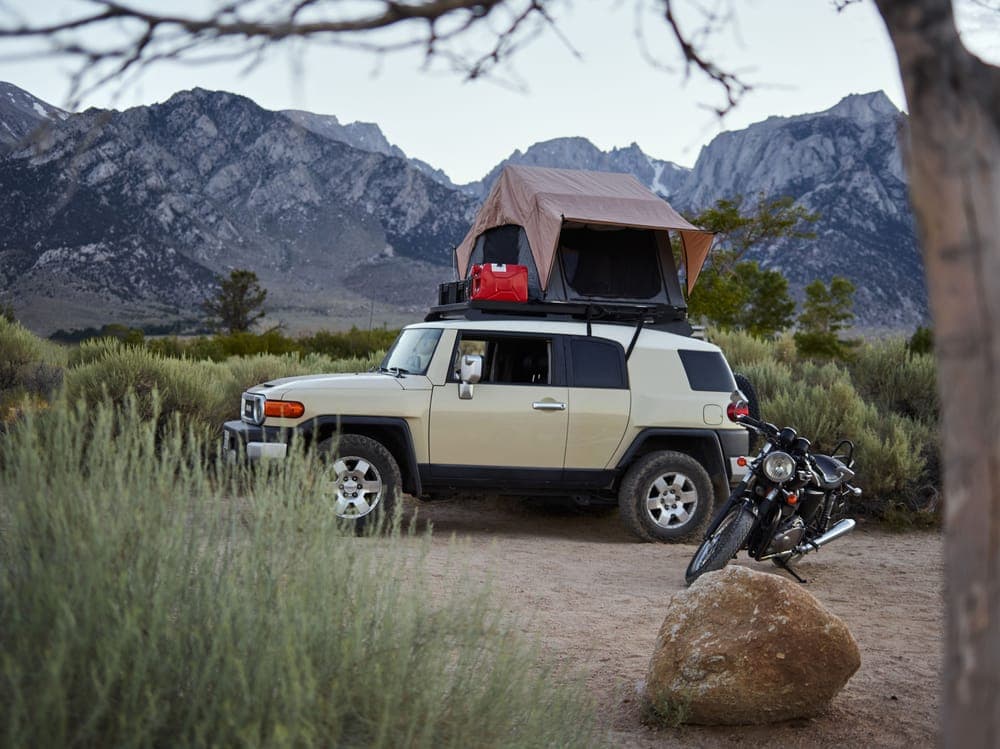
On the trail, the mobile's job is to keep the lead and tail vehicles in touch, and to hear the handhelds of people walking a line or spotting. A 15 or 20 W radio with a roof antenna covers most groups; if one vehicle gets a 50 W radio, I'd put it in the lead or the sweep. Our best GMRS radio for overlanding ranks for that use, the convoy radio guide covers channels and calls, and GMRS vs CB explains when the old CB in the truck still earns its place.
Using a mobile as a base station
A mobile makes a good base at the house, shop or barn. The rule allows base stations the same 50 W on the main channels as mobiles. You'll need two things a vehicle provides for free: a 13.8 V DC supply that can deliver the radio's current (BTECH lists 20 A peak for the GMRS-50V2 and sells a regulated power converter for the GMRS-50PRO), and an antenna up high, ideally on a mast above the roofline. A base antenna there reaches the handhelds and trucks on your property better than any radio sitting inside the house. Our guide to covering your property with radios plans it out.
Mistakes to avoid
- Buying a BTECH mobile and forgetting the antenna. It can't transmit without one.
- Plugging a 50 W radio into a cigarette socket. The makers say to wire them to the fuse block or battery.
- Leaving the antenna inside the cab. The roof is where a mobile earns its reach.
- Expecting the 75-mile figure. That's a maximum with no obstruction. BTECH's 2 to 5 miles in wooded country is the number to plan around.
- Running on channels 1 to 7 and wondering where the power went. They're capped at 5 W ERP; use 15 to 22 or a repeater channel for full power.
- Skipping the license. Every radio here needs one, and it covers your family.
More on GMRS radios, licensing and range is on the GMRS and FRS hub.
How we scored this
Radios we claim to have lab-tested: 0
Plenty of radio sites say they range-tested everything they list. We haven't, and we say so. Every pick here is labeled Researched: we read each maker's published specs, manuals and range tables, check the license rules against the FCC, and score every radio on a public rubric. Every figure links to where it came from, and every range number is labeled “advertised.”
Scores are editorial judgments from that documented research, not test results. Commissions never set a score or decide a pick. The rubric and its weights are published.
What changed
- Published.
Questions
Frequently asked
What is the best GMRS mobile radio?
Is a 50-watt GMRS radio worth it?
Can I plug a GMRS mobile radio into a cigarette lighter socket?
Do GMRS mobile radios come with an antenna?
Can I use a GMRS mobile radio as a base station?
Do I need a license for a GMRS mobile radio?
Will a GMRS mobile radio talk to handhelds and FRS radios?
Receipts
Sources
- FCC: General Mobile Radio Service (GMRS) page (checked 2026-09-22)
- FCC: Family Radio Service (FRS) page (checked 2026-09-22)
- FCC: Personal service and amateur application fees (checked 2026-09-22)
- 47 CFR 95.1705, individual license required (Cornell LII, checked 2026-09-22)
- 47 CFR 95.1763, GMRS channel frequencies (Cornell LII, checked 2026-09-22)
- 47 CFR 95.1767, GMRS transmitting power limits (Cornell LII, checked 2026-09-22)
- Midland: MXT115P PRO product page (checked 2026-09-22)
- Midland: MXT115P PRO spec sheet PDF (checked 2026-09-22)
- Midland: MXT500 product page (checked 2026-09-22)
- Midland: MXT500 owner's manual PDF, installation and specifications (checked 2026-09-22)
- Midland: MXT575 product page (checked 2026-09-22)
- Midland: MXT575 spec sheet PDF (checked 2026-09-22)
- Midland: MXT575 owner's manual PDF, installation (checked 2026-09-22)
- Midland: MXT275 product page (checked 2026-09-22)
- Midland: MXT275 spec sheet PDF (checked 2026-09-22)
- Midland: MXT105 product page (checked 2026-09-22)
- Midland: MXT115AGVP3 Farm Tractor Bundle product page (checked 2026-09-22)
- Midland: MXT500AGVP3 Ag Bundle product page (checked 2026-09-22)
- Midland: MXTA25 Ghost antenna page and FAQ (checked 2026-09-22)
- BTECH: GMRS-20V2 product page (checked 2026-09-22)
- BTECH: GMRS-50V2 product page (checked 2026-09-22)
- BTECH: GMRS-50PRO product page (checked 2026-09-22)
- myGMRS: GMRS Repeater Directory and Community (checked 2026-09-22)
- RepeaterBook: repeater directory, including US GMRS repeaters (checked 2026-09-22)
We haven't tested the radios on this page and we don't pretend to. Specs and range figures come from each maker's own pages and manuals (linked on every product), and license, power and channel rules come from the FCC and 47 CFR Part 95. Range numbers are the maker's advertised claims and are labeled that way. Prices are set by Amazon and change often, so we don't print them. Where a figure isn't published, we say so. Read the full method.