Not legal advice. This page summarizes FCC rules (47 CFR Part 95) from the official sources linked in the text. Rules and fees checked . The FCC sets its fees annually and can change its rules, so confirm the current version on fcc.gov before you rely on it.

You're at the lease gate, the ranch gate or the trailhead, and your phone just dropped to "No Service." Your people are about to spread out. Will a walkie-talkie still work out there? Yes. A real two-way radio doesn't use the cell network at all. The honest questions are how far it will reach across your ground, and which kind you need. This guide answers both, using the FCC's own range expectations and the makers' published figures.
Yes: walkie-talkies work without cell service, radio to radio
When you press the talk button, your walkie-talkie turns your voice into a radio signal and sends it straight to every radio tuned to the same channel. Nothing sits in the middle: no tower, no carrier, no data plan and no monthly bill. The FCC's own definitions describe it that way. A hand-held portable unit is a small "mobile station," and a mobile station "communicates directly with base stations and other mobile stations" (47 CFR 95.303). Directly is the key word. For the full picture of what happens inside the radio, read how walkie-talkies work.
That independence cuts both ways. A cell phone can reach anyone in the world as long as a tower can reach you; a walkie-talkie can reach only other radios within its range, but it doesn't care whether a tower exists. Out of cell coverage, in a canyon, on a lease three ridges from the highway or during a storm that knocks out service, the radio is the one that still works. Ready.gov notes that "mobile networks can become overwhelmed during emergencies, making it hard to make and get phone calls" ( Ready.gov: Get Tech Ready). A radio pair doesn't share that problem.
The two kinds that do need signal
Two things sold as "walkie-talkies" will not work without service:
- Walkie-talkie apps. They turn a phone into a push-to-talk radio, but the voice travels over the internet. Zello, one of the best known, says plainly: "If your device is not connected to the internet via WiFi or cellular connection, Zello will not work" (Zello: connection requirements).
- Cellular push-to-talk (PoC) radios. These look like walkie-talkies and are sold as "nationwide" radios, because they ride on a carrier network. Motorola says of its TLK 110 that "push-to-talk (PTT) communications take place over an extended LTE network via WAVE PTX, so you communicate nationwide" (Motorola TLK 110 page). That's the catch: where there's no LTE, there's no call.
So if you've seen a "nationwide walkie-talkie" and wondered whether it works where your phone doesn't, the answer is no; it works where your phone does. Our walkie-talkies vs walkie-talkie apps comparison goes through the apps and PoC radios in detail, including when an app is the better choice.
What decides whether it will reach
Here's where honesty matters, because the boxes don't help. Many family radios advertise 35 miles or more. The FCC's own expectation for license-free FRS radios is "generally less than one-half mile on the 0.5 watt channels and up to two miles on the 2 watt channels, depending on conditions" (FCC consumer guide). For GMRS it's "one to twenty-five miles depending on station class, terrain, and repeater use" ( FCC GMRS page). Four things decide where you land in those ranges:
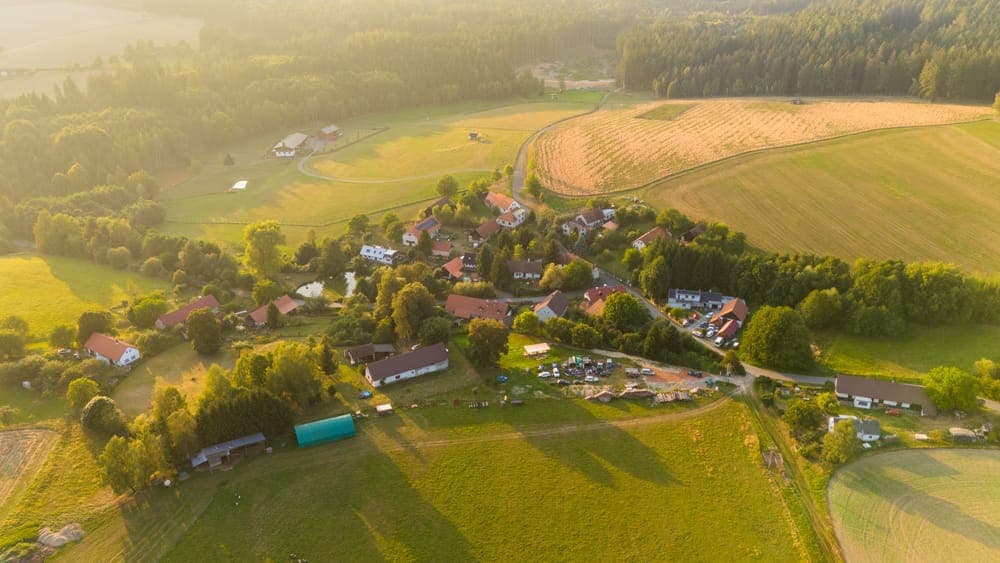
- Terrain. The signal likes a clear path. A ridge, a creek bottom, a hill between two stands or a thick stand of timber can cut range to a fraction of the box number. Terrain beats wattage.
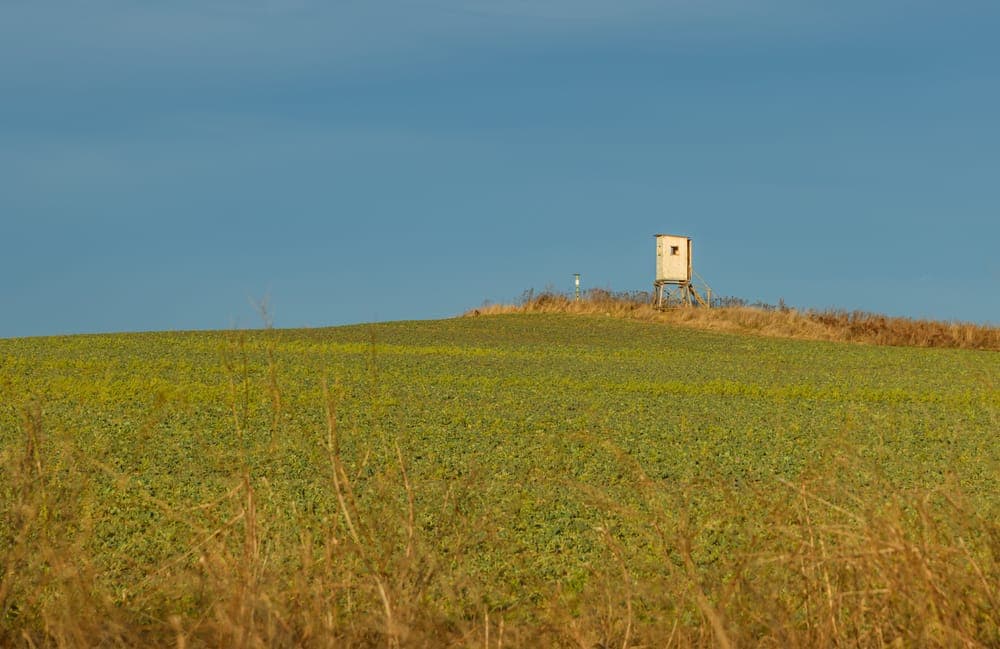
- Height. An antenna up high sees over what blocks one at chest height. A radio on a ridge, in a box stand or on a truck roof reaches farther than the same radio down in a draw.
- Power and antenna. FRS radios are limited to 2 W ERP (0.5 W on channels 8-14) with a built-in antenna (FCC FRS page). GMRS handhelds are typically rated at 5 W by their makers, some take a longer antenna, and GMRS mobile radios run up to 50 W into a roof antenna.
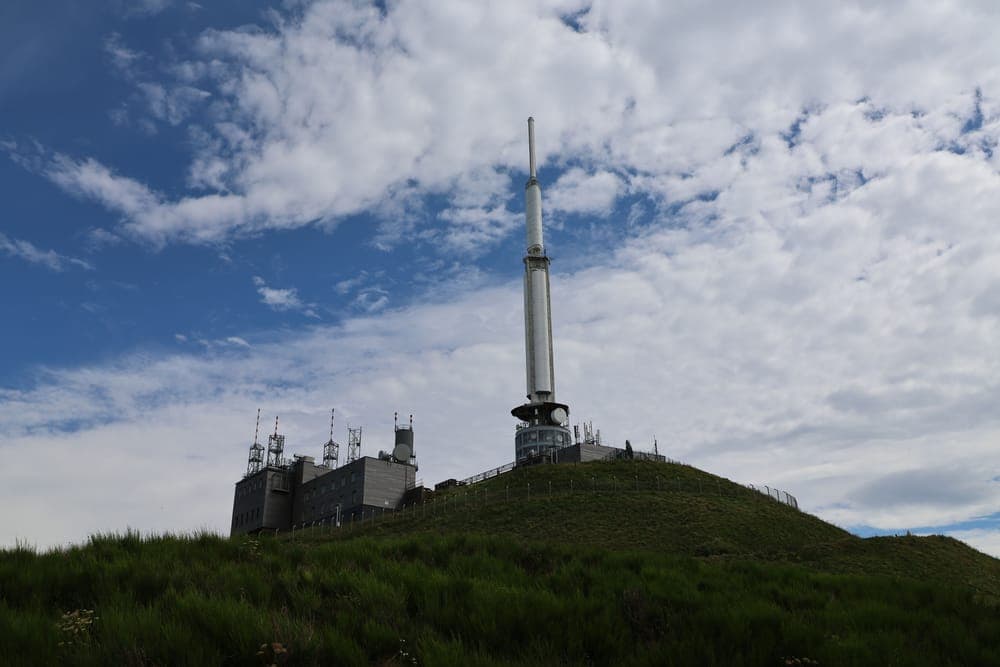
- Repeaters. A GMRS repeater is a station on a tower or hilltop that the FCC describes as "used to extend the communications range of mobile stations, hand-held portable units and control stations" (47 CFR 95.303). If one covers your area, a repeater-capable GMRS radio can reach far past direct range. The myGMRS repeater directory lists them by area.
The makers' own terrain figures, where they publish them, show the same pattern:
| Radio type | Maker's realistic figure (advertised) | Source |
|---|---|---|
| License-free FRS pair | "Neighborhood - up to 2 miles" | Motorola T470 page |
| Family GMRS pair, no repeater | "The GXT averages 1/2-2 miles in normal conditions" | Midland GXT1000VP4 page |
| 5 W GMRS handheld | Forest/hills 0.5 to 5 miles; mountains 2 to 8 miles | Rocky Talkie Expedition page |
| GMRS handheld, direct vs through a repeater | "1–5+ miles typical" direct; "15–50+ miles" with GMRS repeaters | BTECH GMRS-V2 page |
| 15 W GMRS mobile | Up to 5 miles neighborhood or dense forest; up to 10 suburban or rural; up to 15 peak to peak | Midland MXT115P PRO spec sheet |
Plan on the low end of every range, then test on your own ground. Our how far walkie-talkies reach guide goes terrain by terrain, and if distance is your only concern, our best long-range walkie-talkies ranking is built for exactly that.
When the radio won't reach: fixes to try first
Before you buy more radio, try the free fixes. Most dead spots come from where you're standing, not from the radio in your hand.
- Get higher. Walk up out of the draw, climb into the stand or move to the top of the pasture. Even a little elevation can clear the rise that was blocking you.
- Use a full-power channel. On FRS, channels 1-7 and 15-22 carry up to 2 W, while channels 8-14 are held to 0.5 W, which the FCC says usually means "less than one-half mile" (FCC FRS page). If your group is on channel 10, that alone may be the problem.
- Switch to high power on radios that have a high/low setting, and check nobody left theirs on low.
- Set up a relay. Put one person, or the truck, on a high point between the far radio and camp, and pass messages through them. It costs nothing.
- Try a repeater or a better antenna if you're on GMRS. A repeater-capable radio can use a local repeater, and GMRS radios with a removable antenna can take a longer one. FRS radios can do neither, because their antennas are built in.
If none of that closes the gap, that's your answer: you need a GMRS radio with more margin, a mobile in the truck, or a base antenna up high.
License-free or GMRS?
Both work without cell service. The choice is about how far you need to reach and whether you'll get a license.
My rule of thumb: if everyone stays within a mile or so on fairly open ground, go license-free. If your group spreads across timber and hills, or you want a truck or house radio as the strong link, get the GMRS license. It covers your immediate family, and FRS radios can still talk to your GMRS radios on the 22 shared channels.
What to look for in a radio for no-signal places
- The right service for the distance. FRS for short range and no license; GMRS when you need more margin.
- Repeater channels, if a GMRS repeater covers your area. Not every GMRS radio has them.
- A mobile or base option for a truck, a camp or a house. It's the biggest single reach upgrade most groups can make.
- A battery you can keep going. An AA backup or a swappable pack matters more off-grid than a big runtime claim.
- NOAA weather alerts. NOAA Weather Radio is "a nationwide network of radio stations broadcasting continuous weather information directly from the nearest National Weather Service office" (National Weather Service). With no phone alerts, a radio that receives it is your warning system.
- Easy channel and code setup, so the whole group ends up on the same channel with the same privacy code.
Our picks for this job
Four radios for the places phones don't reach
One for each kind of no-signal job: a license-free pair for camp and the storm kit, a GMRS pair that can use a repeater, a 50 W radio for the truck or the house, and a GMRS handheld that texts with no service. The three GMRS radios need an FCC GMRS license.
 Stock photo
Best Motorola for storm kits
Motorola Talkabout T470 (2-pack)
License-free, with NOAA alerts, a flashlight and a stated 28 hours on three AAs. Motorola's own neighborhood figure is up to 2 miles, so buy it for camp, the cruise deck and the storm kit.
Check price · Amazon#ad · Price set by Amazon · How we make money for the link to Motorola Talkabout T470 (2-pack)
 Stock photo
Best Midland pair with repeater access
Midland GXT3000VP4 (2-pack)
A GMRS pair for the lease or the trailhead: 8 repeater channels for when a repeater covers your area, Li-ion packs with a 3 AA backup, NOAA alerts and a flashlight.
Check price · Amazon#ad · Price set by Amazon · How we make money for the link to Midland GXT3000VP4 (2-pack)
 Stock photo
Best 50 W Midland for trucks and farms
Midland MXT500 MicroMobile (50 W)
The strong link at the ranch truck or the camp: 50 W with 25 W and 5 W steps, a water-resistant body, NOAA weather and a PA. Give it a roof or mast antenna.
Check price · Amazon#ad · Price set by Amazon · How we make money for the link to Midland MXT500 MicroMobile (50 W)
 Stock photo
Best value GMRS with GPS and texting
BTECH GMRS-PRO (single radio)
Texts and shares GPS positions with other GMRS-PRO radios with no cell service, rated at 5 W with repeater support and IP67. Messages only go to other GMRS-PRO units.
Check price · Amazon#ad · Price set by Amazon · How we make money for the link to BTECH GMRS-PRO (single radio)
Which kind to buy for each no-signal situation
The deer lease. Stands spread across a few hundred acres, a creek bottom or two, somebody back at camp. License-free radios are a coin flip once a hill sits between stands. A GMRS handheld pair like the Midland GXT3000VP4 gives more margin, and a mobile at camp or in the truck becomes the relay point everyone can reach. Our deer lease radio setup walks through channels, roles and earpieces for the stand.
The ranch or farm. Here the house and the trucks should carry the distance. A 50 W radio like the Midland MXT500 in the truck or on a mast at the house, with handhelds for whoever is on foot, is the setup that covers a big place. Our guide to covering your property with radios lays it out, and best radios for farm and ranch ranks the options.
The trailhead and the backcountry. Hikers, climbers and hunters spread out on foot. A license-free pair works when the group stays close; GMRS handhelds help when someone drops behind a ridge. Height is your friend: make your check-in calls from a high point, not the bottom of the drainage. See best walkie-talkies for mountains.
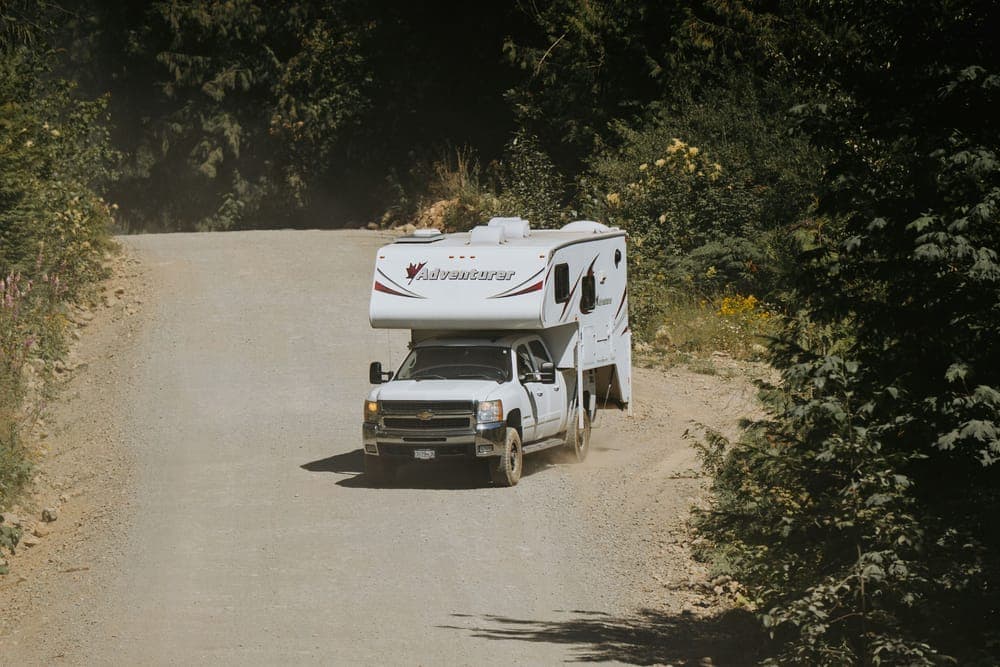
The convoy. Vehicles strung out on a forest road or a desert track lose sight of each other fast. A mobile radio in each rig beats handhelds on the dash. Our convoy radio guide covers channels and radio calls.
The cruise ship. Families on a ship want a way to find each other without leaning on phones, so they look at radios. A ship is a big, crowded steel structure, so expect far less than the box claims, and check your cruise line's own policy before you pack radios. Our do walkie-talkies work on cruise ships? guide covers it.
The storm outage. When the power and the cell network go down, a radio pair keeps a household or a street in touch, and a radio with NOAA alerts keeps the forecast coming. Batteries decide how long that lasts, which is why the Motorola T470's AA fallback matters here. Our family emergency communication plan and best walkie-talkies for emergencies go further.
Texting and location with no cell service
Voice isn't the only thing a radio can carry. Since 2017 the FCC has allowed GMRS radios "short data messaging applications including text messaging and GPS location information" ( FCC GMRS page). The BTECH GMRS-PRO uses that for short texts and GPS position sharing with other GMRS-PRO users, "no cell service needed" (BTECH GMRS-PRO page). On the license-free side, Motorola's T800 series pairs with the TALKABOUT phone app for off-grid messages and location sharing between T800 radios (Motorola T800 page). In both cases, the messages only go to the same model, so the whole group needs matching radios. Our hunting radios with GPS and texting comparison weighs these against plain voice radios.
A short plan before you lose signal
Ready.gov's planning advice starts with the basics: "Know how you'll contact one another and reconnect if separated," and "Establish a family meeting place that's familiar and easy to find" (Ready.gov: Make a Plan). For radios, that turns into five steps you do while you still have a signal:
- Pick one channel and one privacy code, plus a backup channel, and write both on tape on the back of every radio. Our channels guide helps you choose a quiet one.
- Test at the truck or the trailhead. Key up every radio before anyone walks off, then again from the first high point.
- Set check-in times, such as on the hour, so a quiet radio means something.
- Agree on a meeting place for when radios fail: the truck, the camp, a trail junction.
- Carry power. Charge everything the night before, and pack spare AAs for any radio that takes them.
If I were heading somewhere with no signal for the first time, I'd buy the radios a week early and walk the ground with them once, so I knew where they worked before it mattered. The walkie-talkies hub has every buying guide for the next step.
How we scored this
Radios we claim to have lab-tested: 0
Plenty of radio sites say they range-tested everything they list. We haven't, and we say so. Every pick here is labeled Researched: we read each maker's published specs, manuals and range tables, check the license rules against the FCC, and score every radio on a public rubric. Every figure links to where it came from, and every range number is labeled “advertised.”
Scores are editorial judgments from that documented research, not test results. Commissions never set a score or decide a pick. The rubric and its weights are published.
What changed
- Published.
Questions
Frequently asked
Do walkie talkies work without cell service?
Is there a walkie-talkie that works nationwide without cell service?
What is the longest range walkie-talkie that works without cell service?
Can I text without cell service using a radio?
Do walkie-talkie apps work without cell service?
Is a walkie-talkie better than a cell phone?
Do I need a license for walkie-talkies that work without cell service?
Receipts
Sources
- 47 CFR 95.303, Part 95 definitions (via Cornell LII, checked 2026-09-22)
- FCC: Family Radio Service (FRS) page (checked 2026-09-22)
- FCC: General Mobile Radio Service (GMRS) page (checked 2026-09-22)
- FCC: Personal Radio Services consumer guide (checked 2026-09-22)
- FCC: Personal service and amateur application fees (checked 2026-09-22)
- Zello Support: Connection requirements (checked 2026-09-22)
- Motorola Solutions: WAVE PTX TLK 110 product page (checked 2026-09-22)
- Motorola Solutions: TALKABOUT T470 series product page (checked 2026-09-22)
- Motorola Solutions: TALKABOUT T800 series product page (checked 2026-09-22)
- Midland: GXT1000VP4 product page (checked 2026-09-22)
- Midland: MXT115P PRO spec sheet PDF (checked 2026-09-22)
- Rocky Talkie: Expedition Radio product page (checked 2026-09-22)
- BTECH: GMRS-V2 product page (checked 2026-09-22)
- BTECH: GMRS-PRO product page (checked 2026-09-22)
- myGMRS: GMRS repeater directory (checked 2026-09-22)
- National Weather Service: NOAA Weather Radio All Hazards (checked 2026-09-22)
- Ready.gov: Get Tech Ready (checked 2026-09-22)
- Ready.gov: Make a Plan (checked 2026-09-22)
We haven't tested the radios on this page and we don't pretend to. Specs and range figures come from each maker's own pages and manuals (linked on every product), and license, power and channel rules come from the FCC and 47 CFR Part 95. Range numbers are the maker's advertised claims and are labeled that way. Prices are set by Amazon and change often, so we don't print them. Where a figure isn't published, we say so. Read the full method.