Not legal advice. This page summarizes FCC rules (47 CFR Part 95) from the official sources linked in the text. Rules and fees checked . The FCC sets its fees annually and can change its rules, so confirm the current version on fcc.gov before you rely on it.

Picture two deer stands a mile apart with a creek bottom between them. You key the radio in one, and your partner hears you in the other. Nothing in between helped: no tower, no satellite, no cell carrier. That is the whole trick, and it's why walkie-talkies still ride in the truck when the phone shows no bars. Whether your voice makes it comes down mostly to the ground between the two radios, not the number on the box.
This page explains how walkie-talkies work in plain terms, with a source for every rule and number, so you can buy radios that reach where you need them. If you already know the basics and just want picks, start with our best walkie-talkies, or browse the walkie-talkies hub for everything else.
Push to talk: one voice on the channel at a time
A walkie-talkie is a radio transmitter and a radio receiver in one case. Most of the time it's a receiver, listening to its channel. Press the push-to-talk (PTT) button and it becomes a transmitter: your voice rides out on a radio signal, and every radio set to the same channel (and the same privacy code, which we'll get to) plays it through its speaker. Let go, and you're a receiver again.
That is why radio talk sounds the way it does. A phone call lets both people talk at once. A walkie-talkie works one direction at a time. Cobra's RX680 owner's manual says it flatly: "You cannot receive incoming calls while pressing the Talk button." If two people key up together, neither hears the other, because both radios are sending instead of listening. So you say your piece, let go and listen. "Over" exists for a reason.
The signal is plain analog FM voice. Midland's walkie-talkie FAQ puts it simply: FRS and GMRS radios "operate in FM mode between 462-467" MHz. There is no network between the radios, no login and no data plan. That simplicity is the strength (nothing to go down) and, as you'll see in the privacy section, the weakness (nothing to keep strangers out).
UHF and line of sight: why height beats watts
FRS and GMRS share 22 channels in the 462 MHz and 467 MHz range (FCC FRS page). That is the UHF band, and at these frequencies a signal does best when the two antennas have a clear path to each other. Makers say so in their own fine print. Cobra's manual says maximum range "is based on unobstructed line-of-sight communication under ideal conditions." Midland's FAQ defines ideal conditions as "no obstructions between you and the other person, a fully charged radio set to high power, and communication over a flat surface such as water, or mountain top to mountain top."
The best plain-language evidence I know of comes from the federal government's own radio lab. In 1968, researchers at the Institute for Telecommunication Sciences, the radio lab now run by NTIA, measured UHF signals between low antennas (3 meters or less) over hilly, rocky ground in Wyoming, Idaho and Washington (Hause, Kimmett and Harman, UHF Radio Propagation Data for Low Antenna Heights). Two findings matter to anyone buying walkie-talkies:
- Antenna height swamped everything else. "Lowering both antennas from 3m to 0.75 m produces a median increase in path loss of approximately 20 dB." Three meters is about 10 feet, the height of a low ladder stand; 0.75 meters is about hip height.
- The ground between you matters as much as the distance. Paths of the same length varied by as much as 60 dB from one location to another.
Decibels are a ratio: every 10 dB is a factor of ten in power. So 20 dB is a factor of 100, and 60 dB is a factor of a million. Now compare the power upgrades you can buy. A 2-watt radio to a 5-watt radio is 2.5 times the power, about 4 dB. A 5-watt handheld to a 50-watt mobile is ten times, 10 dB. Both help. Neither comes close to what height and terrain do. The study ran at 230 and 415.9 MHz, a little below the FRS and GMRS band, so treat the numbers as a direction rather than a promise. The direction is the point.
Rocky Talkie's own spec tables show the same thing from the maker's side. It lists "35+ miles" line of sight for its 2-watt Mountain Radio and the same "35+ miles" for its 5-watt Expedition Radio. The extra watts and the bigger, removable antenna move its mountain figure from 1 to 5 miles up to 2 to 8 miles. Line of sight sets the ceiling; the ground decides where under it you land. The FCC's own expectation for FRS is "generally less than one-half mile on the 0.5 watt channels and up to two miles on the 2 watt channels, depending on conditions" ( FCC Personal Radio Services guide). Our guide to how far walkie-talkies can reach breaks that down by terrain.
Channels are names for frequencies
A channel number is a shortcut. FRS channel 1 is 462.5625 MHz, channel 8 is 467.5625 MHz and channel 15 is 462.5500 MHz, per the FCC's FRS channel table. All 22 are shared with GMRS, which is why a license-free radio and a GMRS radio can talk on channel 5. The Colorado Search and Rescue Association puts it well in its FRS position paper: the only channels every radio has in common are the first 22.
Past 22, the numbers stop meaning the same thing. On the Cobra RX680, channel 23 is FRS channel 1 with privacy code 38 preset (the manual's frequency chart). On Midland's GXT1000, channels 23 to 50 are Midland preset channels (GXT1000 owner's manual). On Baofeng's UV-5G, 23 to 30 are repeater pairs. An FRS radio can't transmit on extra frequencies at all: the rules say it "must not be capable of transmitting on any frequency or channel other than those listed" ( 95.587). So "60 channels" on an FRS box means 22 channels plus preset combinations. Our walkie-talkie channels guide has the full table and how to pick one for your group.
Privacy codes filter what you hear
Most radios let you add a privacy code (CTCSS or DCS) to a channel. With a code set, your radio adds a tone or digital code to everything it sends, and it keeps its speaker quiet unless an incoming signal carries the same code. That cuts out other groups on your channel. It does not hide you from them. Garmin's Rino 750 manual is blunt about it: "Squelch codes do not make your conversation private. Anyone on the same channel can hear your conversation." Both radios need the same channel and the same code to hear each other, which is the number one reason a new pair "doesn't work" out of the box.
Power and antennas: what the rules allow
The FCC splits these radios into two services on the same channels, and the split decides power, antenna and paperwork. Our GMRS vs FRS comparison goes deeper; here is what shapes how the radio works.
- FRS needs no license. "FRS is licensed by rule," and you may operate one "regardless of your age" (FCC). Power is capped at 2 watts ERP on channels 1 to 7 and 15 to 22, and 0.5 watt on channels 8 to 14 (47 CFR 95.567). The antenna "must be a non-removable integral part" of the radio, with gain no higher than a half-wave dipole (95.587). That fixed antenna is the real ceiling on an FRS radio.
- GMRS needs a license. "An FCC license is required to operate GMRS," it runs ten years, you must be 18 or older, and "any family member, regardless of age" can use radios under it (FCC GMRS page). There is no exam. The application fee is $35, per the FCC's fee table (checked September 2026). Our GMRS license guide covers whether you need one.
- GMRS power depends on the channel and the station. On the main channels, mobile, repeater and base stations may run up to 50 watts; on the 462 MHz interstitial channels the limit is 5 watts ERP; on the 467 MHz interstitials, handhelds are held to 0.5 watt ERP (47 CFR 95.1767). GMRS handhelds are typically rated at 5 watts by their makers.
- GMRS radios may have detachable antennas. The FCC notes that FRS units have integrated antennas while GMRS units "may have detachable antennas" (consumer guide). That matters more than the wattage: a detachable antenna means a longer whip on a handheld, or a roof or mast antenna on a mobile, which is height you can buy.
Repeaters: the one kind of tower that helps
A GMRS repeater is a radio station, usually on a hilltop, tower or tall building, that listens on one frequency and instantly retransmits what it hears on another at higher power. The FCC consumer guide says some GMRS land stations "operate as repeaters, thereby extending the range of GMRS mobile units." Because the repeater's antenna sits high above the terrain, two handhelds that can't see each other can both see the repeater.
The frequencies are paired. Handhelds and mobiles may transmit on the 467 MHz main channels only "when communicating through a repeater station" or for brief tests (47 CFR 95.1763), and the repeater answers on the matching 462 MHz channel. Garmin's Rino manual shows the pattern: its repeater channel 15R transmits on 467.5500 MHz and receives on 462.5500 MHz. Three things to know:
- You need GMRS. FRS radios can't transmit on the 467 MHz main channels, so they can't use repeaters. You need a GMRS license and a radio with repeater channels.
- You need the repeater's tone and permission. Cobra's TrailBlazer FAQ says you need to know the repeater's channel and the CTCSS or DCS tone that activates it, and that repeater owners require permission. It points to the myGMRS directory to find one.
- Repeaters are local. The FCC says GMRS repeaters "may not be linked via the internet" to extend coverage across a large area (FCC GMRS page). The same page sets expectations: "one to twenty-five miles depending on station class, terrain, and repeater use."
Do walkie-talkies need radio towers?
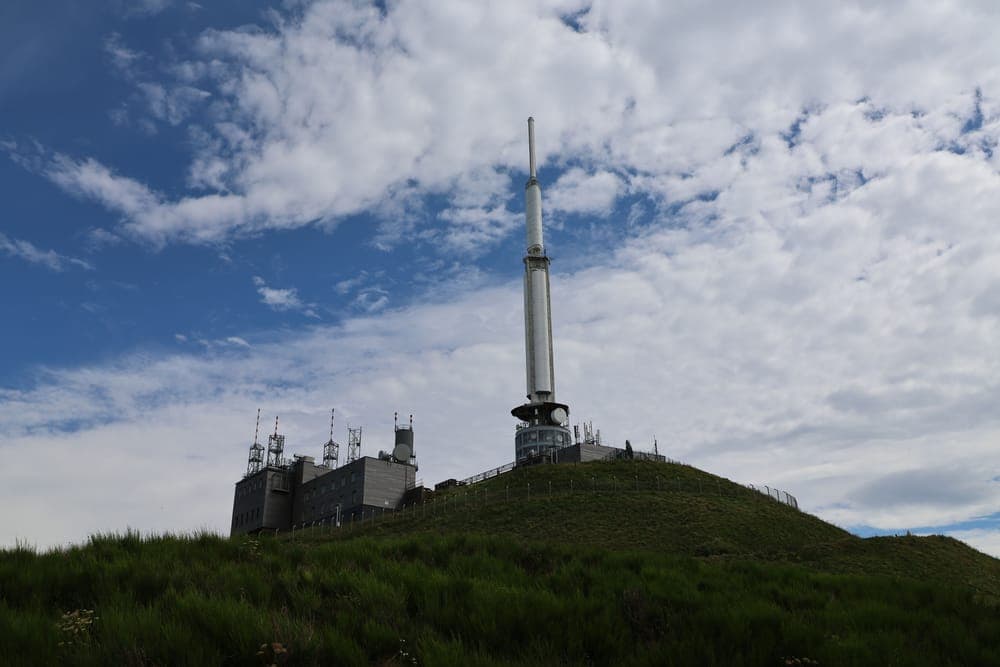
No. The FCC's Personal Radio Services guide says these devices "generally do not rely on transmission towers or other equipment." FRS and GMRS radios talk directly to each other. Cell towers don't help or hurt them, and a dead zone for your phone is no different to a walkie-talkie than anywhere else. The only tower that helps is a GMRS repeater, and only if you have a license, a repeater-capable radio and access to one nearby.
The exception runs the other way. A walkie-talkie app on your phone, or a "push-to-talk over cellular" radio, rides the cell or data network, so it fails exactly where a real radio keeps working. If that is your situation, read walkie-talkies without cell service and walkie-talkies vs walkie-talkie apps. And if you're still sorting out the words, our walkie-talkie vs two-way radio explainer clears that up.
What to look for when buying walkie-talkies
Once you know how they work, the buying checklist mostly writes itself:
- License or not. FRS radios need nothing. GMRS radios need the license above, which covers your immediate family. Decide this first, because it splits the whole market.
- The maker's terrain figure, not the box number. Look for makers that publish realistic numbers (Rocky Talkie's terrain tables, Midland's "1/2-2 miles in normal conditions" for its GXT line) and plan on the small one.
- A removable antenna if you want to add height later: a longer whip, a magnet-mount roof antenna or a mast at camp. Only GMRS radios can have one.
- Repeater channels if there's a GMRS repeater within reach of where you'll use them.
- Power you can replace. An AA fallback or a swappable pack keeps a radio alive on a long weekend; USB-C makes charging from a truck or power bank easy.
- A real water rating. IP67 survives a dunk; "splash-resistant" ratings like IPX4 or JIS4 handle rain, not a creek crossing.
- Field features that fit your use: channel lock so a bumped knob doesn't strand you, scan and dual watch, NOAA weather alerts, VOX hands-free and an earpiece jack for a quiet stand.
If range is your only concern, go straight to our best long-range walkie-talkies, which ranks on reach first.
Our picks for this job
Three radios that show the trade-offs
One license-free FRS radio, one GMRS handheld with a removable antenna and repeater channels, and one vehicle radio with a roof antenna. Each step buys you antenna, height or repeater access, which matters more than watts.
 Stock photo
Best for climbers and ski tourers
Rocky Talkie Mountain Radio (single radio)
No license needed. 2 W FRS with a fixed antenna; Rocky Talkie's own figure for mountains is 1 to 5 miles, and it lists the same 35+ miles line of sight as its 5 W radio. Sold singly, so buy two.
Check price · Amazon#ad · Price set by Amazon · How we make money for the link to Rocky Talkie Mountain Radio (single radio)
 Stock photo
Best rugged GMRS for backcountry trips
Rocky Talkie Expedition Radio (single radio)
Needs a GMRS license. Rated at 5 W, with a removable antenna (short and long in the box) and 8 repeater channels; Rocky Talkie's mountain figure rises to 2 to 8 miles. Sold singly.
Check price · Amazon#ad · Price set by Amazon · How we make money for the link to Rocky Talkie Expedition Radio (single radio)
 Stock photo
Best 15 W with the controls on the mic
Midland MXT275 MicroMobile (15 W)
Needs a GMRS license. A 15 W mobile with a magnetic roof antenna, so the antenna sits up top and outside the cab; Midland's figures run from 5-10 miles obstructed to 50 miles with no obstruction.
Check price · Amazon#ad · Price set by Amazon · How we make money for the link to Midland MXT275 MicroMobile (15 W)
What else you'll need: the GMRS license if you pick either GMRS radio, spare AAs or a power bank, a channel and code your group agrees on before you split up, and an earpiece or speaker-mic if the radio rides in a pack or you need to stay quiet.
How we scored this
Radios we claim to have lab-tested: 0
Plenty of radio sites say they range-tested everything they list. We haven't, and we say so. Every pick here is labeled Researched: we read each maker's published specs, manuals and range tables, check the license rules against the FCC, and score every radio on a public rubric. Every figure links to where it came from, and every range number is labeled “advertised.”
Scores are editorial judgments from that documented research, not test results. Commissions never set a score or decide a pick. The rubric and its weights are published.
Questions
Frequently asked
Do walkie talkies need radio towers?
How do walkie-talkies work without cell service?
What should I look for when buying walkie-talkies?
Do different brands of walkie-talkies work together?
Can walkie-talkies talk to CB radios?
How far can walkie-talkies reach?
Receipts
Sources
- FCC: Family Radio Service (FRS) page, updated Sept. 27, 2022 (checked 2026-09-22)
- FCC: General Mobile Radio Service (GMRS) page (checked 2026-09-22)
- FCC: Personal Radio Services consumer guide, reviewed Dec. 3, 2024 (checked 2026-09-22)
- FCC: Personal Service and Amateur application fees table (checked 2026-09-22)
- 47 CFR 95.567, FRS transmit power, via Cornell LII (checked 2026-09-22)
- 47 CFR 95.587, FRS additional requirements (antenna, frequencies), via Cornell LII (checked 2026-09-22)
- 47 CFR 95.1763, GMRS channels, via Cornell LII (checked 2026-09-22)
- 47 CFR 95.1767, GMRS transmitting power limits, via Cornell LII (checked 2026-09-22)
- NTIA/ITS (ESSA): Hause, Kimmett and Harman, UHF Radio Propagation Data for Low Antenna Heights, Vol. I, ERL 134-ITS 93-1, Nov. 1969 (PDF, checked 2026-09-22)
- Midland: Walkie Talkie FAQs (checked 2026-09-22)
- Midland: GXT1000 series owner's manual PDF (checked 2026-09-22)
- Midland: GXT1000VP4 product page (checked 2026-09-22)
- Cobra: RX680 owner's manual PDF (checked 2026-09-22)
- Cobra: TrailBlazer 450 product page and FAQ (checked 2026-09-22)
- Baofeng: UV-5G (UV-5X) GMRS radio product page (checked 2026-09-22)
- Garmin: Rino 750/755t owner's manual PDF (checked 2026-09-22)
- Colorado Search and Rescue Association: FRS Radio Use for Backcountry SAR position paper, Apr. 10, 2023 (checked 2026-09-22)
- CISA: National Interoperability Field Operations Guide (NIFOG) v2.02, Jan. 2025 (PDF, checked 2026-09-22)
- Rocky Talkie: Mountain Radio product page (checked 2026-09-22)
- Rocky Talkie: Expedition Radio product page (checked 2026-09-22)
- Midland: MXT275 spec sheet PDF (checked 2026-09-22)
We haven't tested the radios on this page and we don't pretend to. Specs and range figures come from each maker's own pages and manuals (linked on every product), and license, power and channel rules come from the FCC and 47 CFR Part 95. Range numbers are the maker's advertised claims and are labeled that way. Prices are set by Amazon and change often, so we don't print them. Where a figure isn't published, we say so. Read the full method.