Listening, not talking
Police Scanners: What Actually Hears Your County
The single question that decides a scanner purchase is not brand or price. It is whether your county runs analog, P25 Phase I or P25 Phase II — because the wrong scanner hears silence, however well you program it.
By Mike M. · Updated September 2026 · 2 pages in this hub
#adAs an Amazon Associate we earn from qualifying purchases, at no extra cost to you. Commissions never set a score or pick a winner. How we rank · Disclosure
Start here
Best Police Scanners
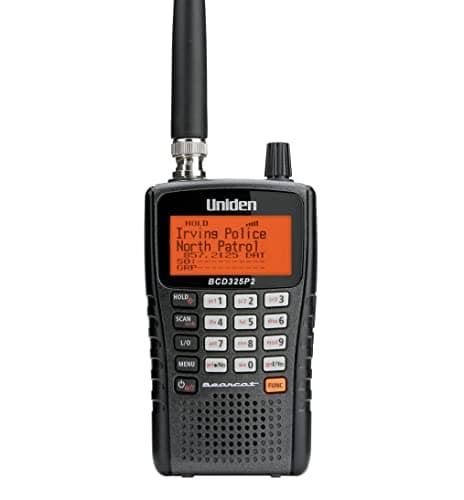
Top pick: Uniden BCD325P2 TrunkTracker V Handheld Scanner. The scanner most people should buy when their county went digital: P25 Phase I and the TDMA Phase II that modern systems actually run, plus Motorola, EDACS and LTR trunking, in a handheld that is still being firmware-updated.
#ad · Price as of November 6, 2026 · How we make money for the link to Uniden BCD325P2 TrunkTracker V Handheld Scanner
Scanners are the one radio category where spending more does not reliably get you more. A hundred-dollar scanner and a four-hundred-dollar scanner both work perfectly — on different systems. Buy the wrong one and it is not worse than the right one, it is silent, and no antenna, setting or firmware update will ever fix it.
So everything on this hub is organized around one question, asked before you look at a single product: what does your county actually run?
Three answers, three scanners
Free scanner-frequency databases list, for every county in the United States, the agencies, the system type and whether traffic is encrypted. Five minutes there is the highest-value step in this purchase, and it produces one of three answers:
- Conventional analog. Each agency on its own fixed frequency. Common in rural and smaller jurisdictions. Any scanner works, including the cheapest.
- P25 Phase I. Digital, FDMA. Needs a digital scanner — and most digital scanners handle it.
- P25 Phase II. Digital, TDMA, fitting two conversations into one channel's space. What a large share of metropolitan systems migrated to. A Phase I scanner cannot follow it.
That last line is where buyers get caught, because a scanner can be digital, advertise P25, and still be Phase I only. Makers are not always careful: one model on our scanner roundup has a product page claiming P25 Phase 1 while the maker's own category page claims Phase 1 and 2. On a Phase II county that gap is the entire purchase, so the specification for the exact model is what matters, not the brand's reputation.
Trunking, and why conversations move
A trunked system pools a handful of frequencies and assigns them dynamically, with a control channel directing radios to whichever is free — so a single conversation hops between frequencies mid-exchange. A scanner that cannot follow the control channel hears fragments or nothing at all. Following trunking is a specific capability (Uniden brands it TrunkTracker), and entry-level scanners do not have it.
In dense metro areas there is a second problem: simulcast. Several towers transmit the same signal, and where coverage overlaps a receiver gets copies slightly out of step. The result garbles scanners that otherwise support the system perfectly, decoding cleanly in one part of town and turning to mush in another. That is the specific problem the flagship receivers are built for, and it is worth nothing if you do not have it. How to choose a police scanner walks all of this through with the terms explained once each.
Encryption ends the conversation
If an agency encrypts its traffic, no lawfully sold scanner decodes it — Whistler states this plainly in its own FAQ, and every other maker is in the same position. Encryption is spreading, and in some cities it is total.
Check before you buy. If your police department is fully encrypted, a scanner may still be worth owning for fire, EMS, public works, rail, aviation and weather — but be clear with yourself about what you are buying it for, because no purchase at any price changes the answer.
What the law actually says
Owning a scanner and listening to unencrypted traffic is lawful across the United States. Federal law restricts what you do with what you hear: the Communications Act limits divulging or using intercepted radio communications (47 U.S.C. 605), and the Wiretap Act governs interception more broadly (18 U.S.C. 2511).
State and local rules differ, particularly about carrying a scanner in a vehicle. There is no authoritative national table of those rules, so we do not publish one — check your own state's statute before putting a scanner in a car. And note the obvious: a scanner is receive-only, needs no license, and can never be used to call for help. If you want to talk, that is a two-way radio.
Where to start
- Best police scanners: ranked on system coverage, with every published spec side by side.
- How to choose a police scanner: trunking, P25 phases, programming and the legal basics.
Ranked picks
The rankings
Ranked picks
Best Police Scanners
Scanners ranked on system coverage first: the P25 Phase II handheld most people should buy, the analog-only entry model, the True I/Q flagship for simulcast areas, and Whistler's alternative with per-county weather alerting.
By Mike M. · Updated November 2026
Top pick: Uniden BCD325P2 TrunkTracker V Handheld Scanner · 4 ranked
$399.00Amazon#ad · Price as of November 6, 2026 · How we make money for the link to Uniden BCD325P2 TrunkTracker V Handheld Scanner
Know-how
Guides
Guide
How to Choose a Scanner
Conventional vs trunked, P25 Phase I vs the TDMA Phase II most metro systems run, how to check your own county before spending anything, what programming really involves, and the federal legal baseline.
By Mike M. · Updated November 2026
Featured pick: Uniden BCD325P2 TrunkTracker V Handheld Scanner
$399.00Amazon#ad · Price as of November 6, 2026 · How we make money for the link to Uniden BCD325P2 TrunkTracker V Handheld Scanner
From other hubs
Keep going
Emergency & Weather Radios
Best NOAA Weather Radios
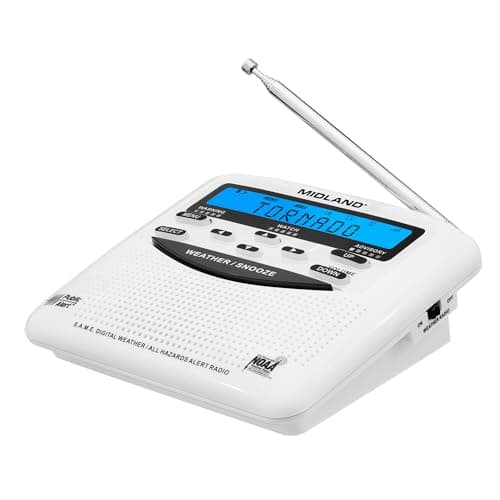
NOAA weather radios ranked on S.A.M.E. county alerting, battery backup and what each maker actually publishes. Includes the two Midland desktop units with 25-county programming and the portable alternatives for a go-bag.
By Mike M. · Updated November 2026
Top pick: Midland WR120B NOAA Weather Alert Radio · 4 ranked
$45.99Amazon#ad · Price as of November 6, 2026 · How we make money for the link to Midland WR120B NOAA Weather Alert Radio
GMRS & FRS
GMRS Channels & Frequencies
All 30 GMRS channels in MHz: the 22 shared with FRS, the 8 repeater inputs 5 MHz up, and the FCC power limit for each group, with what it means for choosing a channel.
By Mike M. · Updated September 2026
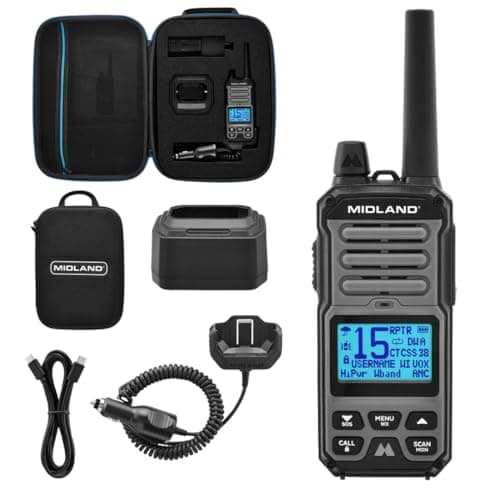
Featured pick: Midland GXT67 PRO (single radio)
$219.99Amazon#ad · Price as of November 6, 2026 · How we make money for the link to Midland GXT67 PRO (single radio)
Questions