Quick picks
The picks at a glance
| # | Product | Best for | Score | Price |
|---|---|---|---|---|
| 1 | 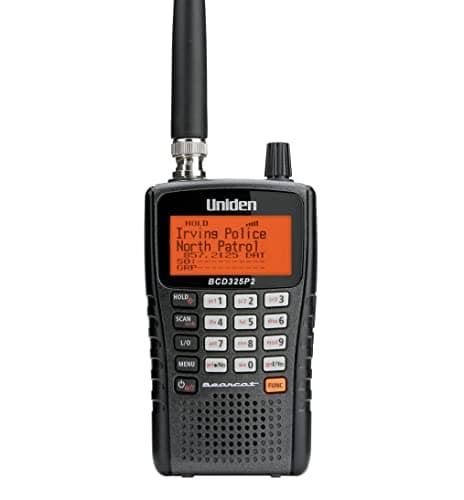 Uniden BCD325P2 TrunkTracker V Handheld Scanner P25 Phase I and the TDMA Phase II modern systems run, plus Motorola, EDACS and LTR trunking, in a handheld Uniden still ships firmware for. | Best scanner for most peopleNo licenseHigh-end | 9.2/10Researched | $399.00Amazon #ad · Disclosure |
| 2 | 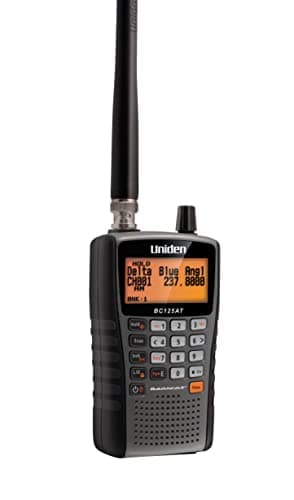 Uniden Bearcat BC125AT Handheld Scanner 500 alpha-tagged channels, air band and Close Call with a USB cable in the box. Uniden states plainly that it will not receive digital systems. | Best first scanner, analog areas onlyNo licenseMid-price | 8.9/10Researched | $139.99Amazon #ad · Disclosure |
| 3 | 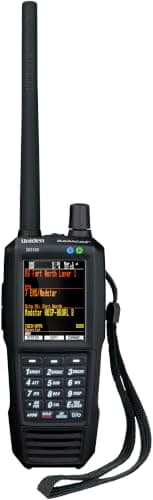 Uniden SDS100 True I/Q Digital Handheld Scanner True I/Q receiver aimed at the simulcast distortion that defeats cheaper scanners, plus IPX4 and a configurable color display. | Best for difficult simulcast areasNo licenseHigh-end | 9.6/10Researched | $699.99Amazon #ad · Disclosure |
| 4 | 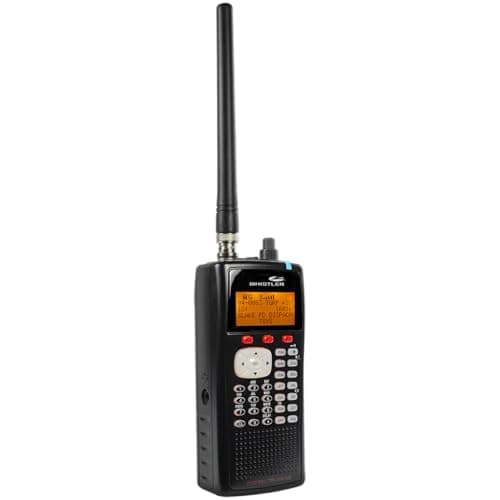 Whistler WS1040 Handheld Digital Scanner Displays the weather event and alerts for counties you choose. Read the trunking line carefully: the product page claims P25 Phase 1, not Phase 2. | Best per-county weather alertingNo licenseHigh-end | 8.9/10Researched | $364.37Amazon #ad · Disclosure |
#ad · Prices come live from Amazon, last checked November 6, 2026. Scores are ours, built from published specs, manuals and FCC rules. Photos come from each product's Amazon listing; a radio we can't show a real photo of is left blank rather than illustrated. Tap a row for the full write-up.

Scanners are the one category on this site where price and quality are almost beside the point. A four-hundred-dollar scanner and a hundred-dollar scanner both work perfectly — on different systems. Buy the wrong one and it is not worse, it is silent, and no amount of programming will fix it.
So this page is ordered by system coverage, and every figure is quoted from the maker's own page or manual. The method is on how we rank.
The one question to answer first
What does your county's public-safety radio system actually use? There are three broad answers, and they map directly onto what you should buy:
- Conventional analog. Older, rural and smaller agencies. Any scanner here works, including the cheapest.
- P25 Phase I. Digital, FDMA. Needs a digital scanner; all three digital picks here handle it.
- P25 Phase II (TDMA). What most metropolitan systems moved to. Needs a scanner that states Phase II explicitly — and this is exactly where buyers get caught, because a scanner can be "digital" and still miss it.
Free databases list the system type for every county in the United States. Five minutes there before you spend anything is the single highest-value step in this purchase. Our how to choose a police scanner guide walks through reading one, plus trunking and programming.
How we ranked them
- System coverage (30%). Which trunking formats and which P25 phase, in the maker's words.
- Programming and setup (25%). Database or ZIP-code setup versus third-party software, and whether a cable is included.
- Reception and antenna (15%), then display, battery and build (15%), then value (15%).
The picks in detail
1. Uniden BCD325P2 — the one most people should buy
It wins because it covers what modern systems actually run. TrunkTracker V: APCO P25 Phase I and Phase II, plus Motorola, EDACS and LTR trunked systems and conventional analog, with 25,000 channels using dynamic memory allocation and coverage across 25-512, 758-824, 849-869 and 894-960 MHz (BCD325P2 product page). Rechargeable Ni-MH cells are included.
The quiet reason to trust it is support: Uniden was still shipping firmware for this model in late 2024, with version 1.11.07 adding P25 control-channel NAC display for conventional search. A scanner that is still being updated is a scanner that will still follow your county after the next system change.
Good to know: Uniden publishes no battery-life or sensitivity figures for it; GPS-based location scanning needs the separate BC-GPSK accessory; and it is a real step up in price from analog.
2. Uniden BC125AT — the right first scanner, in the right county
500 alpha-tagged channels in 10 banks of 50, names up to 16 characters, Close Call RF capture with a Do-Not-Disturb option, and coverage that includes the air band (108.000 to 136.9916 MHz) alongside 25-54, 137-174, 225-380 and 400-512 MHz (BC125AT). A USB programming cable is in the box rather than an upsell.
For air shows, racing, marine, rail, and any county still running conventional analog, this is all the scanner anyone needs.
Good to know: analog only — no digital, no trunking; the owner's manual dates from 2012, so firmware and packaging may differ; and one Uniden listing quotes a 1,000-channel figure that conflicts with the 500 on the product page and manual.
3. Uniden SDS100 — when a cheaper scanner keeps dropping the system
The flagship, and the one to buy for a specific problem rather than for prestige. Uniden's True I/Q receiver is aimed at simulcast distortion — the interference pattern created when several towers transmit the same signal, which garbles conventional scanners in dense metro areas. TrunkTracker X covers P25 Phase 1 and 2, X2-TDMA, Motorola, EDACS and LTR (SDS100 product page).
It is also the only handheld here with any weather rating — JIS4 / IPX4 — and a color display you can set per field, which matters when you are scanning fast.
Good to know: it is the most expensive option by a wide margin; Uniden publishes no runtime, frequency-range or weight figures on the product page; and on a clean single-site system the BCD325P2 hears exactly the same traffic.
4. Whistler WS1040 — the per-county weather alerter
Whistler's P25 handheld stores up to 1,800 frequencies, adapts its digital decoder to the modulation format of the signal when monitoring P25, and does something no Uniden here does: it displays the weather event and alerts for a specific county or counties of your choice (WS1040 product page). For a scanner that doubles as a storm radio, that is a real feature.
Good to know, and it matters: Whistler's own pages disagree on the trunking. The product page lists Motorola, EDACS, LTR and P25 P1 trunked networks; its handheld category page separately claims P25 Phase 1 & 2, X2-TDMA and DMR. On a Phase II county that difference is everything, so verify against your system before buying. Whistler's FAQ also states that trunking systems are best programmed using third-party PC software, which is a cost and a learning curve on top.
The published specs side by side
Encryption, and the thing no scanner can do
If an agency encrypts its traffic, no lawful scanner will decode it. Whistler says so directly in its own FAQ: when a system is encrypted, the scanner will not decode those channels (Whistler FAQ). Uniden's scanners are the same, and so is every other receiver sold legally in the United States.
This matters because encryption is spreading. A growing number of departments encrypt some or all channels, and in a few cities everything. Before buying, check whether the agency you care about is encrypted — if it is, no scanner at any price will help, and that is the end of the decision.
The legal basics, briefly
Owning and listening to a scanner is lawful across the United States. What federal law restricts is what you do with what you hear: the Communications Act prohibits divulging or using intercepted radio communications in various circumstances (47 U.S.C. 605), and the Wiretap Act governs interception more broadly (18 U.S.C. 2511).
On top of that, state and local rules differ, particularly about carrying a scanner in a vehicle and about using one while committing an offense. We are not going to publish a state-by-state table we cannot source authoritatively — check your own state's statute. The longer discussion is in how to choose a police scanner.
And note what a scanner is not: every model here is receive-only and cannot transmit. For talking, you want FRS or GMRS — see best walkie-talkies.
In detail
The picks, in full
Rank 01
Best scanner for most people
Uniden BCD325P2 TrunkTracker V Handheld Scanner
P25 Phase I and the TDMA Phase II modern systems run, plus Motorola, EDACS and LTR trunking, in a handheld Uniden still ships firmware for.
Published specsResearched · every figure sourced
How it scores on each criterion
- System coverage (30%)
- 9.8
- Programming & setup (25%)
- 8.9
- Reception & antenna (15%)
- 9.3
- Display, battery & build (15%)
- 8.9
- Value (15%)
- 8.4
Why we recommend it
- Handles the P25 Phase II TDMA systems most metro areas moved to
- Motorola, EDACS and LTR trunking as well as conventional analog
- Dynamic memory means you are not rationing channel slots
- Still receiving firmware updates nearly a decade after launch
Good to know
Skip it if your area is still entirely analog: you would be paying roughly three times the BC125AT's price for digital decoding you will never switch on.
#ad · Price as of November 6, 2026 · How we make money for the link to Uniden BCD325P2 TrunkTracker V Handheld Scanner
Rank 02
Best first scanner, analog areas only
Uniden Bearcat BC125AT Handheld Scanner
500 alpha-tagged channels, air band and Close Call with a USB cable in the box. Uniden states plainly that it will not receive digital systems.
Published specsResearched · every figure sourced
How it scores on each criterion
- System coverage (30%)
- 8.4
- Programming & setup (25%)
- 9.3
- Reception & antenna (15%)
- 9.3
- Display, battery & build (15%)
- 8.9
- Value (15%)
- 9.7
Why we recommend it
- Cheapest honest way into scanning, with a real alpha-tag display
- Air band coverage, which most entry scanners drop
- Close Call finds the transmitter standing next to you
- USB programming cable is in the box, not an upsell
Good to know
Check your county on a scanner-frequency database before buying this one: if the agencies you want are on a P25 or trunked system, the BC125AT will never hear them no matter how it is programmed.
#ad · Price as of November 6, 2026 · How we make money for the link to Uniden Bearcat BC125AT Handheld Scanner
Rank 03
Best for difficult simulcast areas
Uniden SDS100 True I/Q Digital Handheld Scanner
True I/Q receiver aimed at the simulcast distortion that defeats cheaper scanners, plus IPX4 and a configurable color display.
Published specsResearched · every figure sourced
How it scores on each criterion
- System coverage (30%)
- 9.8
- Programming & setup (25%)
- 9.7
- Reception & antenna (15%)
- 9.8
- Display, battery & build (15%)
- 9.7
- Value (15%)
- 8.4
Why we recommend it
- True I/Q receiver targets exactly the simulcast distortion that defeats cheaper scanners
- The widest system coverage here, including X2-TDMA
- IPX4 water resistance — the only handheld on this page with any rating
- Color display you can configure per field, which matters when scanning fast
Good to know
Skip it unless you have an actual reception problem: True I/Q earns its money on simulcast systems that garble cheaper scanners, and on a clean single-site system the BCD325P2 hears the same traffic for much less.
#ad · Price as of November 6, 2026 · How we make money for the link to Uniden SDS100 True I/Q Digital Handheld Scanner
Rank 04
Best per-county weather alerting
Whistler WS1040 Handheld Digital Scanner
Displays the weather event and alerts for counties you choose. Read the trunking line carefully: the product page claims P25 Phase 1, not Phase 2.
Published specsResearched · every figure sourced
How it scores on each criterion
- System coverage (30%)
- 9.3
- Programming & setup (25%)
- 8.4
- Reception & antenna (15%)
- 9.3
- Display, battery & build (15%)
- 8.9
- Value (15%)
- 8.4
Why we recommend it
- Per-county weather alerting built into the scanner itself
- Adaptive digital decoder for P25 systems
- 1,800 frequencies is plenty for a county or two
- Whistler states the encryption limit plainly instead of hiding it
Good to know
Skip it if your county runs P25 Phase 2: Whistler's product page only claims Phase 1 for this model, and on a Phase 2 system that is the difference between hearing everything and hearing nothing.
#ad · Price as of November 6, 2026 · How we make money for the link to Whistler WS1040 Handheld Digital Scanner
What to look for in a scanner
- Your county's system type, checked first. Analog, P25 Phase I or Phase II. Everything else is secondary.
- The phase stated explicitly. "Digital" is not the same as Phase II.
- Whether the agency is encrypted. If it is, stop — no scanner will hear it.
- How it gets programmed. Database or ZIP setup versus third-party software and a cable.
- Whether the maker still ships firmware. Systems change; abandoned scanners do not.
- Simulcast performance if you are in a dense metro area with multiple towers.
- Battery and antenna connector, since both are cheap upgrades later.
How we scored this
Every pick here is backed by the paperwork
Every pick is labeled Researched: we read each maker's published specs, manuals and range tables, check the license rules against the FCC, and score every radio on a public rubric out of 10. Every figure links to where it came from, and every range number is labeled “advertised” so you can see the difference between the box and the terrain.
Scores are our editorial judgment on that documented evidence. Commissions never set a score or decide a pick. The rubric and its weights are published.
What changed
- Published.
Questions
Frequently asked
What is the best police scanner?
Will a cheap scanner work in my area?
What is the difference between P25 Phase I and Phase II?
Can a scanner hear encrypted police channels?
Are police scanners legal?
Can a police scanner transmit?
Receipts
Sources
- Uniden: BCD325P2 product page (checked 2026-11-05)
- Uniden: BC125AT product page (checked 2026-11-05)
- Uniden: SDS100 product page (checked 2026-11-05)
- Whistler: WS1040 product page (checked 2026-11-05)
- Whistler: scanner FAQ, encryption and trunking programming (checked 2026-11-05)
- 47 U.S.C. 605, unauthorized publication or use of communications (via Cornell LII, checked 2026-11-05)
- 18 U.S.C. 2511, interception of wire, oral or electronic communications (via Cornell LII, checked 2026-11-05)
Specs and range figures come from each maker's own pages and manuals, linked on every product, and license, power and channel rules come from the FCC and 47 CFR Part 95. Range numbers are the maker's advertised claims and are labeled that way, so you can tell the box number from the terrain number. Prices come live from Amazon with the time we checked. Read the full method.