Not legal advice. This page summarizes FCC rules (47 CFR Part 95) from the official sources linked in the text. Rules and fees checked . The FCC sets its fees annually and can change its rules, so confirm the current version on fcc.gov before you rely on it.
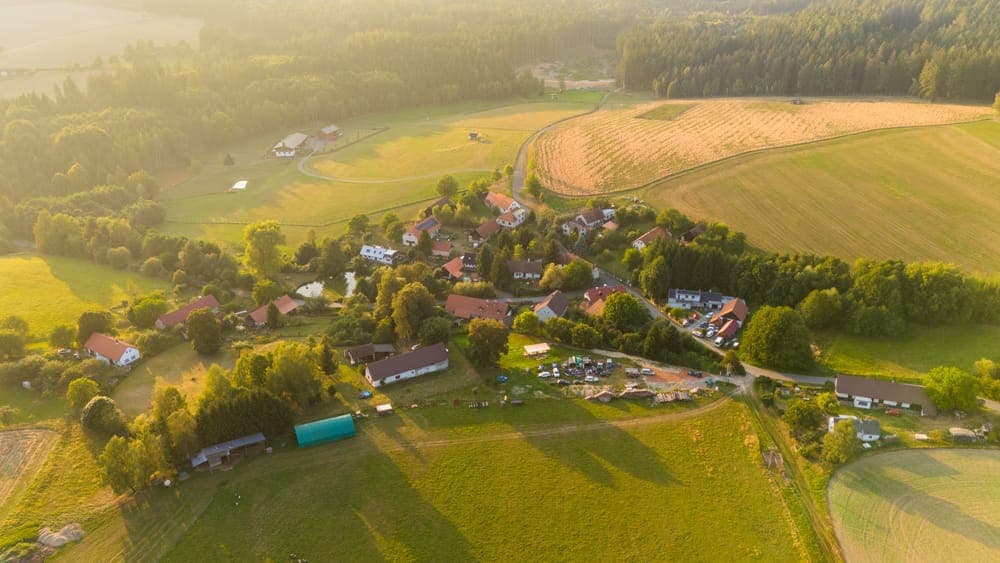
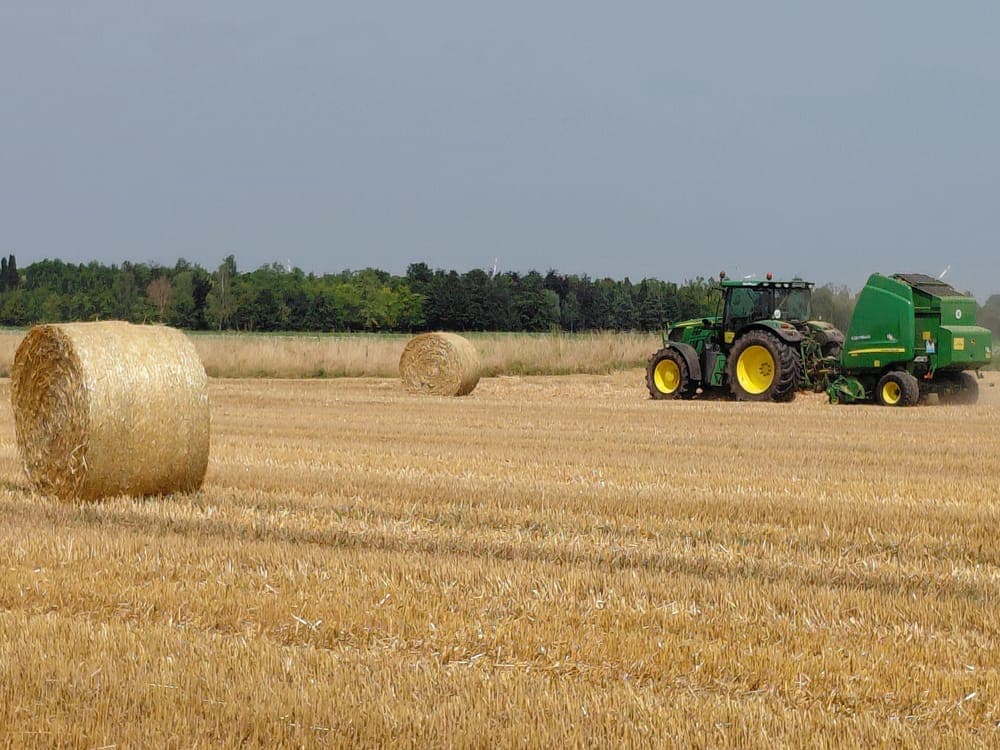
Search for a walkie talkie for property coverage and you'll find boxes advertising "up to 36 miles." Then you buy a pair, stand at the house, and can't raise the hay barn a mile away behind the ridge. The radios work. The property is the problem. Hills, creek bottoms, timber and steel buildings decide how far a radio reaches far more than the number on the package.
The fix is rarely one bigger handheld. It's a small system: handhelds for people on foot, a mobile radio in the truck, and one radio at the house or shop with its antenna up high where it can see most of the place. This guide walks through mapping the property, what each piece does, what to buy at each budget, and when a repeater is worth it. If you want ranked picks for working land, see our best radios for farm and ranch. The rest of our land and lease guides are on the hunting and land hub.
Map the property first
Before you buy anything, get a topo map or a satellite view of the place and mark three things:
- Where people are. The house, the shop, the barn, the gate, the stands, the back pasture, the pond. List who needs to reach whom. The house needing to reach the tractor is a different job from two hunters needing to reach each other.
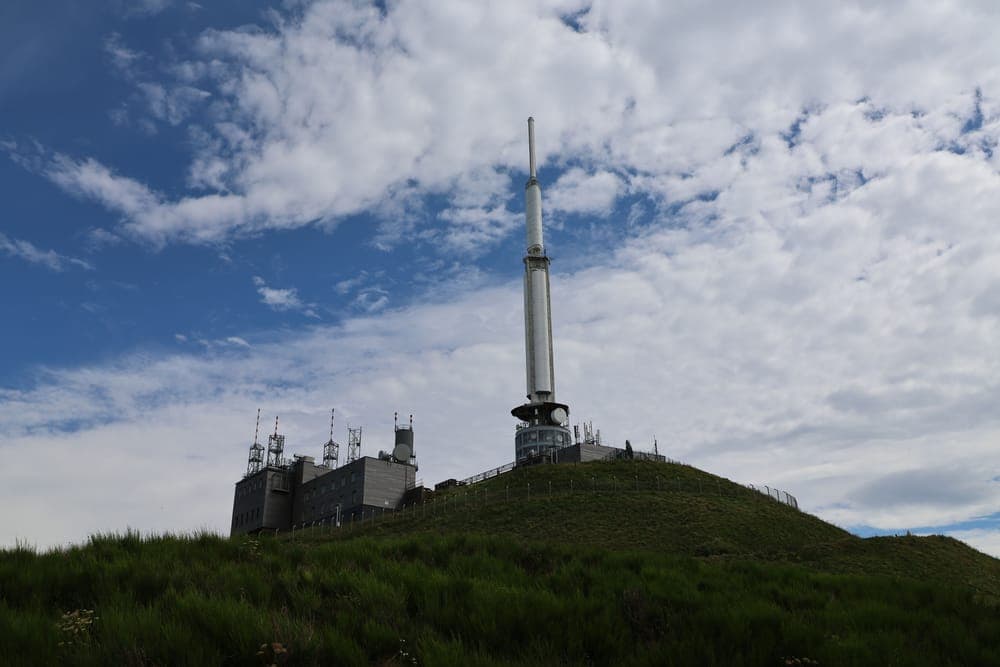
- High points. The hilltop by the water tank, the ridge behind the barn, the roof of the tallest building. An antenna on one of these can see down into places a handheld can't.
- Dead zones. Creek bottoms, the far side of a ridge, heavy timber, and the inside of steel buildings. These are where calls drop.
Then do a walk test. Leave one person at the house with a handheld, and drive or walk to each spot on your list with another. Call from each one and write down what works. This costs an afternoon and tells you more than any spec sheet. Often the pattern is simple: most of the property is fine, and a few spots behind terrain are not. Those spots are what the rest of this guide is about.
| Problem spot | Why calls drop | What usually fixes it |
|---|---|---|
| Creek bottom or draw | The ground itself sits between the radios | A base antenna up high that can see down into it, or a relay from the rim |
| Far side of a ridge | The ridge blocks line of sight | A repeater or base on the ridge, or a truck parked on top as a relay |
| Inside a steel shop or barn | The building shields a handheld inside it | A radio in the building with its antenna mounted outside, or step out the door |
| Heavy timber | Trees soak up and scatter the signal over distance | More antenna height at one end, or a GMRS radio with a better antenna |
What reach to expect
Every radio box has a big number on it. The makers' own fine print, and the FCC, are more useful. The FCC says FRS radios reach "generally less than one-half mile on the 0.5 watt channels and up to two miles on the 2 watt channels, depending on conditions" ( FCC consumer guide), and that GMRS users can expect "one to twenty-five miles depending on station class, terrain, and repeater use" (FCC GMRS page). Here is what some makers publish when they give a realistic figure rather than a maximum:
| Radio (type) | The maker's own realistic figure (advertised) |
|---|---|
| Midland GXT1000 (GMRS handheld) | "The GXT averages 1/2-2 miles in normal conditions" (Midland) |
| BTECH GMRS-V2 (GMRS handheld) | "Open line-of-sight (simplex): 1–5+ miles typical | With GMRS repeaters: 15–50+ miles" (BTECH) |
| Midland MXT115P PRO (15 W mobile) | "Up to 5 miles" neighborhood or dense forest; "up to 10 miles" suburban or rural; "up to 15 miles" mountain peak to mountain peak (Midland spec sheet) |
| BTECH GMRS-50V2 (50 W mobile/base) | "Typical simplex range may be around 2–5 miles in-town or wooded areas, 5–15 miles in open rural terrain" (BTECH) |
Read those figures together and the lesson is clear. A handheld is a one-to-two-mile tool in normal country. A radio with its antenna on a vehicle roof or a mast moves you up to the makers' figures of about 5 miles in timber and 5 to 15 miles in open rural country, and a repeater moves you further still. Terrain and height beat wattage. For the full story on range, see GMRS radio range and how far walkie-talkies can reach.
Handhelds: everywhere, but the weakest link
Everyone on foot needs a handheld, and on a small place they may be all you need. Their limits are physical: the antenna is short and sits at chest height, and the radio runs on a small battery. The FCC's consumer guide adds that FRS units "have antennas that are integrated with the unit," while GMRS units "may have detachable antennas" (our GMRS vs FRS page explains the rest). GMRS handhelds are typically rated at 5 watts by their makers.
For property coverage, the handheld feature that matters most is repeater channels. Without them, a handheld can only talk directly to another radio. With them, it can use a repeater on the high ground if you or a neighbor ever has one. Midland's GXT1000 and GXT1050 have none; the GXT3000VP4 has 8 (Midland). A removable antenna is the second thing worth having, because it lets you fit a longer whip for a stand or a ridge.
A mobile in the truck
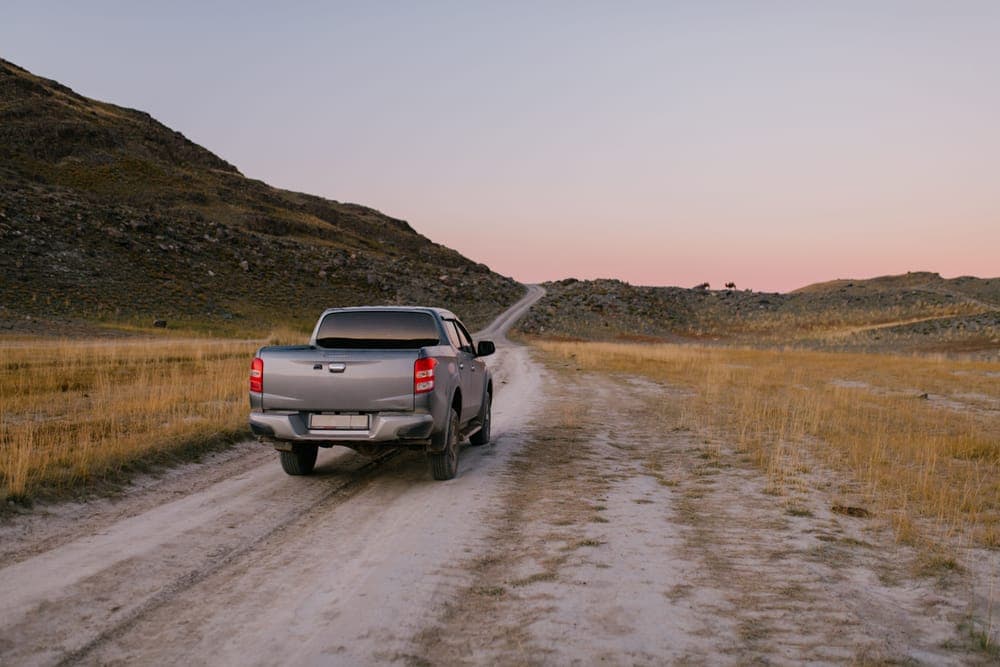
A GMRS mobile radio mounts in the vehicle and puts its antenna on the roof, above the cab that otherwise blocks a handheld used inside it. The FCC allows mobile stations up to 50 watts on the main channels (47 CFR 95.1767). That combination makes the truck the second-best radio on the property, and a rolling relay: park it on the ridge and it can hear both sides.
For an open-cab UTV, a side-by-side or a tractor, water rating matters. Midland rates the MXT115P PRO IP67 waterproof and dustproof, with PA and wired intercom jacks and a 3-year warranty (Midland). It plugs into a 12V socket and comes with a magnet-mount antenna. We rank more in-vehicle radios in best GMRS mobile radios, and how to install a GMRS radio in your vehicle covers mounting and wiring.
A base at the house, shop or barn
This is the radio that covers a property. A base station is, in the FCC's words, "a station at a fixed location that communicates directly with mobile stations and other base stations" ( 47 CFR 95.303), and it is allowed the same 50 watts as a mobile on the main channels (95.1767). The practical way to build one is a mobile radio, a DC power supply and a base antenna on a mast.
The antenna does most of the work. Mounted above the roofline, clear of the trees near the house, it can see down into draws and across pastures that a handheld at ground level never will. It also hears better: a handheld calling in from the back forty has only its own small power and short antenna, and a high base antenna is what picks that weak signal up. That's why it pays to spend on height before you spend on watts. We compare the two sides in GMRS handheld vs mobile range.
Four parts make a base:
- A mobile radio with an antenna jack. The BTECH GMRS-50V2 is rated 50/20/5 W with an SO-239 jack, and ships without an antenna. BTECH lists its power as 13.8 V DC, 20 A peak (BTECH).
- A DC power supply rated for that draw, because a mobile runs on 12-volt DC, not wall power.
- A base antenna. The Comet CA-GMRS is a 42-inch, GMRS-only (462–468 MHz) antenna with a 5.5 dBi stated gain, an SO-239 connector and a 135 mph wind rating, and it fits masts from 1.18 to 2.44 inches (Comet). On flat or gently rolling land, Comet's 10-foot CA-712EFC offers a stated 9 dBi (Comet), but high gain squeezes the signal toward the horizon, which can hurt radios sitting down in draws below the house. On steep ground, the lower-gain antenna is the safer pick. For a wooden post or a pole barn with no metal ground plane, the Nagoya NMO-HDC needs none (BTECH).
- Coax and a mast, neither of which comes in the box. Keep the coax run as short as the job allows.
More antenna choices, including vehicle whips, are ranked in our best GMRS antennas guide.
What to look for
Pulling the pieces together, here is the short list for each role:
- Handhelds: GMRS, repeater channels, and a battery you can back up with AAs. A removable antenna is a bonus.
- Truck or UTV mobile: full power on channels 15 to 22, repeater channels, and a water rating if the cab is open.
- Base radio: an SO-239 (or other standard) antenna jack, high power on the main channels, and a power supply sized for it.
- Base antenna: the connector that matches your radio and coax, a gain that suits your terrain, and a wind rating for an exposed mast.
Our picks for this job
A handheld pair, a truck radio, a base radio and its antenna
One pick for each role, chosen so the pieces work together: repeater-capable handhelds, an IP67 mobile for the truck or UTV, a 50 W radio for the house or shop, and a GMRS base antenna with the same SO-239 connector. All three radios need a GMRS license.
 Stock photo
Best Midland pair with repeater access
Midland GXT3000VP4 (2-pack)
The handheld pair for property work: 8 repeater channels, Li-ion packs with a 3 AA backup, USB-C charging and a flashlight. Splash-rated (JIS4) only. Needs a GMRS license.
Check price · Amazon#ad · Price set by Amazon · How we make money for the link to Midland GXT3000VP4 (2-pack)
 Stock photo
Best for open-cab UTVs and side-by-sides
Midland MXT115P PRO MicroMobile (15 W)
For the truck, UTV or tractor: 15 W, IP67, PA and intercom jacks, a magnet-mount antenna in the box and a 12V plug. Midland's chart says up to 10 miles suburban or rural. Needs a GMRS license.
Check price · Amazon#ad · Price set by Amazon · How we make money for the link to Midland MXT115P PRO MicroMobile (15 W)
- Stock photo
Best 50 W for a home or shop base
BTECH GMRS-50V2 (50 W mobile/base)
The base at the house or shop: 50 W with an SO-239 jack. Budget for a 13.8 V power supply, coax and an antenna, none of which is in the box. Needs a GMRS license.
Check price · Amazon#ad · Price set by Amazon · How we make money for the link to BTECH GMRS-50V2 (50 W mobile/base)
 Stock photo
Best GMRS base antenna for a house mast
Comet CA-GMRS Base Antenna
The mast antenna: GMRS-only tuning, 5.5 dBi stated gain, SO-239 to match the GMRS-50V2, a 135 mph wind rating and mounting hardware included. Coax and mast sold separately.
Check price · Amazon#ad · Price set by Amazon · How we make money for the link to Comet CA-GMRS Base Antenna
A private or nearby repeater
When a ridge splits the property and no base location sees both sides, a repeater is the answer. The FCC defines a repeater station as one "used to extend the communications range" of mobiles and handhelds by receiving on one channel and retransmitting on another, "typically with higher transmitting power from a favorable antenna location (typically high above the surrounding terrain)" (47 CFR 95.303). Put simply, it's a radio on the hill that repeats everyone's calls. BTECH's figure for its GMRS-V2 handheld jumps from "1–5+ miles typical" simplex to "15–50+ miles" with repeaters (BTECH), which gives a sense of what height does.
There are two ways to get one:
- Use a nearby repeater. myGMRS describes itself as a GMRS community "offering a repeater directory, license lookup, and forums" (myGMRS.com). Look for one near you, then ask the owner. The rule lets a repeater's licensee allow any person to use it "or alternatively, may limit the use of its GMRS repeater to specific persons" ( 47 CFR 95.1705), so permission comes first.
- Put up your own. A repeater station is allowed up to 50 watts on the main channels (95.1767), and it needs a licensed owner like any GMRS station. A dedicated repeater on the high point is the top-tier setup: it's the most expensive piece of this whole guide and the most involved to site, power and maintain. The FCC also says GMRS repeaters "may not be linked via the internet" ( FCC GMRS page).
Either way, the handhelds and mobiles need repeater channels to use it. Our GMRS repeaters guide explains input and output channels, tones and etiquette.
Setups by budget
Build in this order. Each tier keeps everything from the one before, so nothing you buy early gets wasted.
| Tier | What you add | What it covers | Examples from our list |
|---|---|---|---|
| Budget | Handhelds only | The house, yard and barns within a mile or so in open country | BTECH GMRS-V2 or a Midland GXT pair; license-free FRS for the yard |
| Mid-price | A mobile in the main truck or UTV | Most of a working property, with the truck as a relay | Midland MXT115P PRO, BTECH GMRS-20V2 (add an antenna) |
| Premium | A base radio at the house or shop on a mast antenna | Draws and back pastures the handhelds couldn't reach | BTECH GMRS-50V2 with a Comet CA-GMRS or Nagoya NMO-HDC |
| High-end | A repeater on the high point, or permission to use a nearby one | Both sides of a ridge; the whole place from any radio with repeater channels | Repeater-capable handhelds like the Midland GXT3000VP4 |
For most places, I'd stop at the premium tier: a good base antenna on a mast is the single biggest upgrade you can make. If your walk test still shows a hole behind a big hill, that's when the repeater conversation starts.
The license on a working property
Every setup above beyond FRS handhelds runs on GMRS, and "an FCC license is required to operate GMRS" (FCC). One license covers the licensee and immediate family, which the rule spells out as "the licensee's spouse, children, grandchildren, stepchildren, parents, grandparents, stepparents, brothers, sisters, aunts, uncles, nieces, nephews, and in-laws" ( 47 CFR 95.1705). New GMRS licenses go only to individuals at least 18 years old (same rule), so a hired hand or a hunting partner who isn't family needs a license of their own. A new GMRS application is $35 (fee code PRAM), per the FCC's fee table (checked September 2026; the FCC sets fees annually), and a license runs ten years. Start with our GMRS license guide.
Putting it together, step by step
- Mark the map: people, high points, dead zones.
- Walk test with two handhelds and write down what fails.
- Get the license before anyone transmits on GMRS.
- Pick a channel from 15 to 22 and one privacy code for the whole place. Channels 1 to 7 are capped at 5 watts ERP for GMRS (95.1767), so a base or mobile gives up its power advantage there.
- Put the base in first, with the antenna as high as you can safely get it.
- Add the truck mobile, then repeat the walk test from every dead zone.
- Only then think about a repeater for whatever is still dark.
If the property is also a hunting lease, our deer lease radio setup adds stand check-ins and quiet protocol on top of this plan. And if you started here because your phone won't work out there, our guide to walkie-talkies without cell service covers the basics.
How we scored this
Radios we claim to have lab-tested: 0
Plenty of radio sites say they range-tested everything they list. We haven't, and we say so. Every pick here is labeled Researched: we read each maker's published specs, manuals and range tables, check the license rules against the FCC, and score every radio on a public rubric. Every figure links to where it came from, and every range number is labeled “advertised.”
Scores are editorial judgments from that documented research, not test results. Commissions never set a score or decide a pick. The rubric and its weights are published.
Questions
Frequently asked
What is the best walkie-talkie for a large property?
Can I put a GMRS antenna on my house?
Can I use a mobile radio as a base station?
How far can a base station reach on a farm?
Do I need a repeater to cover my land?
Does one GMRS license cover my ranch hands?
Receipts
Sources
- FCC: General Mobile Radio Service (GMRS) page (checked 2026-09-22)
- FCC: Personal Radio Services consumer guide (checked 2026-09-22)
- FCC: Personal service and amateur application fees (checked 2026-09-22)
- 47 CFR 95.303, Personal Radio Services definitions (Cornell LII, checked 2026-09-22)
- 47 CFR 95.317, antenna structures and air navigation (Cornell LII, checked 2026-09-22)
- 47 CFR 95.1705, GMRS licenses and who may operate (Cornell LII, checked 2026-09-22)
- 47 CFR 95.1767, GMRS transmitting power limits (Cornell LII, checked 2026-09-22)
- U.S. CPSC: electrocution hazards from overhead power lines, May 1, 2002 (checked 2026-09-22)
- myGMRS.com: GMRS repeater directory and community (checked 2026-09-22)
- Midland: GXT1000VP4 product page and FAQ (checked 2026-09-22)
- Midland: GXT3000VP4 product page (checked 2026-09-22)
- Midland: MXT115P PRO product page (checked 2026-09-22)
- Midland: MXT115P PRO spec sheet PDF (checked 2026-09-22)
- BTECH: GMRS-50V2 product page (checked 2026-09-22)
- BTECH: GMRS-V2 product page (checked 2026-09-22)
- Comet: CA-GMRS product page (checked 2026-09-22)
- Comet: CA-712EFC product page (checked 2026-09-22)
- BTECH: Nagoya NMO-HDC product page (checked 2026-09-22)
We haven't tested the radios on this page and we don't pretend to. Specs and range figures come from each maker's own pages and manuals (linked on every product), and license, power and channel rules come from the FCC and 47 CFR Part 95. Range numbers are the maker's advertised claims and are labeled that way. Prices are set by Amazon and change often, so we don't print them. Where a figure isn't published, we say so. Read the full method.