Not legal advice. This page summarizes FCC rules (47 CFR Part 95) from the official sources linked in the text. Rules and fees checked . The FCC sets its fees annually and can change its rules, so confirm the current version on fcc.gov before you rely on it.
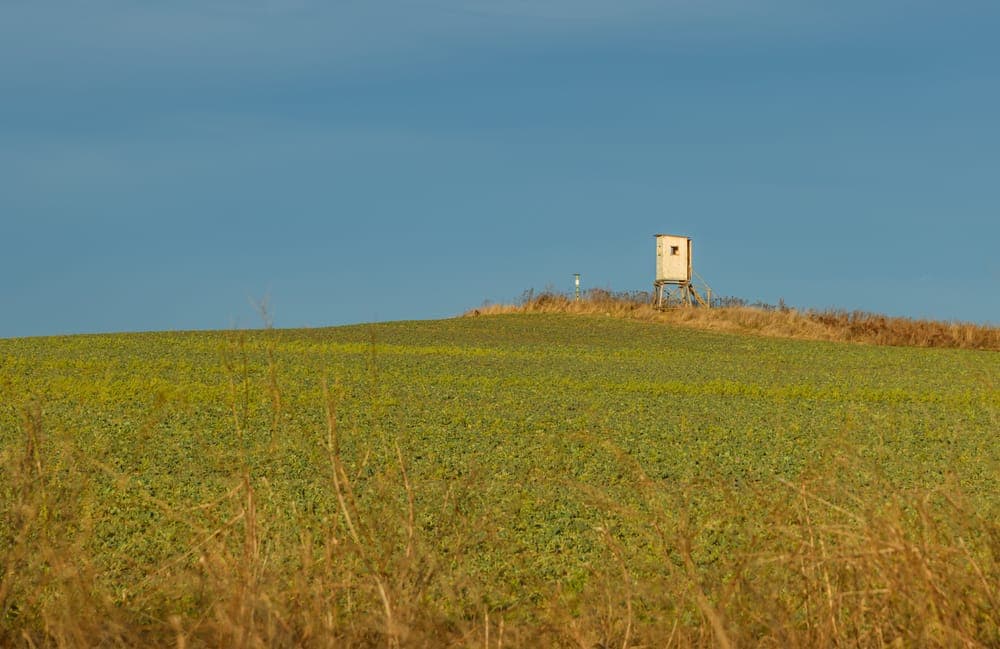
Most people shopping for walkie talkies for deer hunting are really solving a lease problem. Four or five stands, a truck parked at the gate, a camp trailer a mile back, and a phone that shows "No Service" the minute you pass the cattle guard. Radios fix that, but only if the whole group runs the same plan. A pair of radios in a drawer at camp is not a plan.
This page is that plan: who carries what, where the one radio with real reach goes, which channel the lease lives on, when everyone checks in, how to stay quiet on the stand, and what the FCC says about licensing a group of hunting buddies. If you only want our ranked picks, they're on our best hunting radios page. Everything else for the lease and the ranch lives on the hunting and land hub.
What a lease asks of a radio
Start with the honest numbers, because the box won't give them to you. Midland advertises "up to 36 miles" for its camo GXT1050. Its own spec sheet adds that the maximum "can only be achieved over water or open rural areas under optimum conditions", and its product page FAQ says "the GXT averages 1/2-2 miles in normal conditions." Plan on the small number.
The FCC is just as modest. It says FRS radios reach "generally less than one-half mile on the 0.5 watt channels and up to two miles on the 2 watt channels, depending on conditions" (FCC consumer guide), and that a GMRS user "can expect a communications range of one to twenty-five miles depending on station class, terrain, and repeater use" (FCC GMRS page). Station class is the key phrase. A handheld on a stand sits at the bottom of that range. A mobile or base radio with its antenna up high sits much higher.
On a real lease, what decides whether a call gets through is the ground between the two radios. A creek bottom, a ridge or a stretch of thick timber between stands will cost you more than any wattage number will buy back. Terrain and height beat wattage. That's why the plan below puts its money into one high antenna at camp rather than into bigger handhelds for everyone. Our guide to covering your property with radios goes deeper on mapping high points and dead zones.
Who carries what
A lease has three kinds of radio jobs, and each wants a different tool. Match the radio to the job and the group stays in touch. Hand everyone the same bubble-pack pair and the stand on the far side of the creek goes quiet.
| Where | What to carry | Why |
|---|---|---|
| Each stand or blind | A GMRS handheld with vibrate alert, plus an earpiece | Quiet check-ins, a way to call for help, a way to ask for a hand with the drag |
| The truck or side-by-side | A handheld, or a mobile radio with a roof antenna if it lives in that vehicle | The pickup driver needs to hear the stands while moving around the lease |
| Camp (cabin, trailer or shed) | A GMRS mobile radio run as a base, on an antenna mounted high on a mast | Height at camp lets one radio hear the far stands the handhelds can't reach directly |
| Whoever stays in camp | Listens on the camp radio and relays | A relay turns two weak links into two good ones |
The relay is the part most groups miss. If the stand on the north end can't hear the stand on the south end, both of them can often hear camp, because camp's antenna is up on a mast and theirs are in their hands. Someone at camp (or the first hunter back) repeats the message. It costs nothing but a person.
The camp radio and its mast
This is the one piece of gear that changes how far the lease can talk. A GMRS mobile radio is built for a vehicle, but at camp it works as a base station. The FCC allows mobile and base stations up to 50 watts on the main channels (47 CFR 95.1767), and more importantly, a mobile has an antenna jack. That lets you put the antenna on a mast above the roofline and the trees near camp, which is where the reach comes from.
Understand the trade before you spend. A strong camp radio can talk out to a handheld a long way, but the handheld still has to talk back with its own small power and short antenna. What helps both directions is antenna height: a camp antenna up high hears the handhelds better as well as reaching them better. So put your effort into getting the antenna up, clear of the roof and the nearest trees, before you pay for more watts. We compare the two form factors in GMRS handheld vs mobile range, and the antenna options are ranked in our best GMRS antennas guide.
A camp setup needs four parts, and only the radio comes with its own power cord:
- The radio. The Midland MXT275 is rated at 15 watts, is repeater capable, and has an SO-239 antenna jack according to its owner's manual. It ships with a 12V cord and a DC vehicle adapter, so at camp it needs a 12-volt source: a battery or a DC power supply.
- The antenna. A camp mast is usually a wooden post, a fence corner or a pipe, which is why the Nagoya NMO-HDC suits it: BTECH lists it as needing no ground plane (built-in counterpoise), tuned for 450 to 470 MHz (which takes in GMRS), with brackets and an NMO-to-SO-239 adaptor in the box.
- Coax. Not included with either piece. With an SO-239 jack at both ends, you need a run of coax with PL-259 plugs on each end, long enough to reach from the radio to the mast.
- The mast itself, set where it can't fall on anything that matters.
What to look for in each radio
With the jobs defined, the shopping list gets short:
- Stand handhelds: a vibrate alert and a way to silence the beeps, an earpiece jack, and the option to run on AA batteries so a dead pack doesn't end the hunt. Camo is nice but optional.
- The camp radio: an antenna jack, full power on channels 15 to 22 (see the channel plan below), and repeater channels if a GMRS repeater might ever be in the picture.
- The antenna: a connector that matches the radio, and a mount that works on whatever you can put up at camp.
- Earpieces: the right plug for your radio brand. This is where mixed-brand groups get caught out. Our earpiece and headset guide sorts them by plug.
Our picks for this job
One radio per job on the lease
A stand radio, a camp radio, the antenna that gets the camp radio up high, and earpieces for the stands. The earpieces are Midland's own, listed for every Midland handheld except the X-Talker T10, so they fit the GXT1050. Both radios need a GMRS license.
 Stock photo
Best camo GMRS pair for the deer stand
Midland GXT1050VP4 (camo 2-pack)
Camo, vibrate alert, silent operation and whisper mode for the stand, and it runs on the included NiMH packs or 4 AA batteries. Midland says to expect 1/2 to 2 miles in normal conditions, and it has no repeater channels. Needs a GMRS license.
Check price · Amazon#ad · Price set by Amazon · How we make money for the link to Midland GXT1050VP4 (camo 2-pack)
 Stock photo
Best 15 W with the controls on the mic
Midland MXT275 MicroMobile (15 W)
The camp radio: 15 W, repeater capable, with an SO-239 jack for a mast antenna. Plan on a 12V battery or power supply at camp and coax to the mast. Needs a GMRS license.
Check price · Amazon#ad · Price set by Amazon · How we make money for the link to Midland MXT275 MicroMobile (15 W)
 Stock photo
Best budget base or bull-bar antenna
Nagoya NMO-HDC Heavy Duty Antenna (155/465 MHz)
A 47-inch antenna that needs no ground plane, so it goes on a wooden post or pipe at camp. Brackets and an SO-239 adaptor are included; coax is not.
Check price · Amazon#ad · Price set by Amazon · How we make money for the link to Nagoya NMO-HDC Heavy Duty Antenna (155/465 MHz)
 Stock photo
Best for Midland radios on the stand
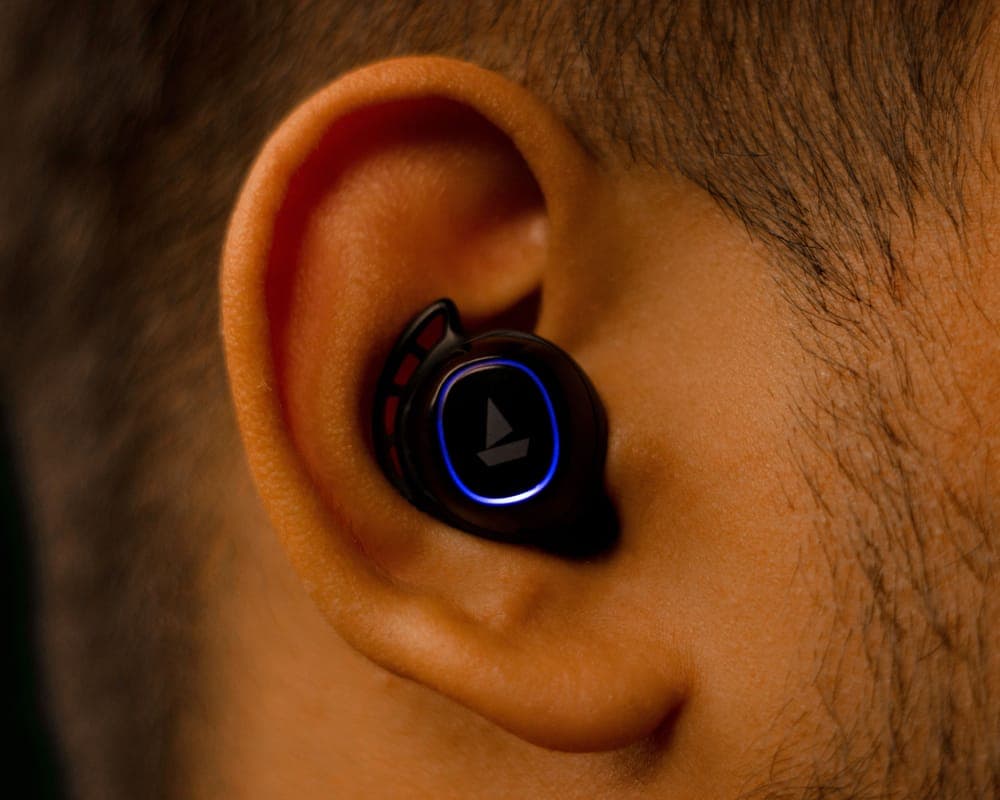
Midland AVPH3 Transparent In-Ear Headset (2-pack)
Two clear-tube earpieces with push-to-talk or VOX that Midland lists for every Midland FRS and GMRS radio except the X-Talker T10. One for each radio in a 2-pack.
Check price · Amazon#ad · Price set by Amazon · How we make money for the link to Midland AVPH3 Transparent In-Ear Headset (2-pack)
The channel and code plan
Every radio on the lease should be on the same channel and the same privacy code before anyone leaves camp. The question is which channel, and the FCC's power rules answer most of it.
- Channels 15 to 22 are the GMRS main channels. The FCC allows mobile and base stations up to 50 watts there (95.1767(a)), and FRS radios run at 2 watts on them (FCC FRS page). This is where a lease with a camp radio should live.
- Channels 1 to 7 are shared with FRS too, but the FCC caps GMRS radios on those 462 MHz interstitial channels at 5 watts ERP (95.1767(b)), and Midland's MXT275 manual keeps them on low power. Your camp radio gives up most of its advantage there.
- Channels 8 to 14 are the low-power channels: 0.5 watt for FRS (FCC FRS page) and for GMRS handhelds (95.1767(c)). Skip them for a lease.
Then add a privacy code. Privacy codes don't make your channel private. They filter out other groups on the same channel so you don't hear their chatter, but anyone on that channel with the code off still hears you. The FCC is plain that "none of the GMRS channels are assigned for the exclusive use of any system" and asks for "listen-before-talk" etiquette (FCC GMRS page). So spend a few evenings at camp before the season listening to your two candidate channels with the code turned off, and pick the quieter one.
| Plan item | Example (fill in your own) |
|---|---|
| Primary channel and code | One channel from 15 to 22, with one privacy code for the whole group |
| Backup channel | A second channel from 15 to 22, same code; switch at the next check-in if the primary gets busy |
| Call names | Name people by stand, not by first name: "Creek Stand", "North Ladder", "Camp", "Truck" |
| Radio lock | Turn on the keypad or channel lock once set, so a jacket sleeve doesn't change the channel |
Write the plan on a card and tape one inside the camp door. For how channels and codes work in general, see our walkie-talkie channel guide; for the words to use once you're on the air, see hunting radio channels and etiquette.
Check-in times
A radio that stays silent all morning tells you nothing. Is the hunter in the creek stand fine, or is he at the bottom of the ladder with a broken ankle? Fixed check-ins answer that without anyone having to break the quiet to ask. Ready.gov's planning advice boils down to the same idea: know how you'll contact one another and reconnect if separated, then practice the plan (Ready.gov, Make a Plan).
| When | Who calls | What to say |
|---|---|---|
| Settled in the stand | Each hunter, in stand order | "Creek Stand, in." Nothing more. |
| Mid-morning (pick a fixed time) | Camp or the truck calls the roll | Each stand answers in a whisper: "Creek Stand, OK." |
| Before climbing down | Each hunter | "North Ladder, coming down." |
| Back at the truck or camp | Each hunter | "North Ladder, at the truck." |
| Any shot, any tracking job | The shooter | Stand name, "shot, will check in at" a time, and whether help is wanted |
Agree in advance what happens after a missed check-in: one call on the backup channel, then someone walks to that stand. Decide it at supper, not on the radio at 9 a.m.
Quiet protocol on the stand
The worst radio on the lease is the one that beeps. Before opening morning, set every stand radio the same way:
- Call tones and key beeps off, vibrate on. The GXT1050 lists vibrate alert, silent operation and whisper mode on its spec sheet. Its animal call alerts are fun at camp; on the stand, leave them off.
- Earpiece in. A clear-tube earpiece keeps the incoming call in your ear instead of across the field.
- VOX off, or on its lowest sensitivity. Voice-operated transmit keys the radio on sound, and a windy stand is full of sound. Use push-to-talk unless you've checked VOX on a breezy day.
- Short, whispered calls. "Creek Stand, deer moving your way." No conversations until everyone's down.
One weather note: Midland rates the GXT1050 JIS4 (splash protection) and says that rating isn't met with an accessory plugged in (spec sheet). On a rainy sit, keep the radio under your jacket with the earpiece cord running out. The AVPH3 earpieces are listed on Midland's AVPH3 page with both push-to-talk and VOX options.
The GMRS license for a lease group
Every radio in this plan transmits on GMRS, and "an FCC license is required to operate GMRS" (FCC). The question for a lease is who one license covers, and the rule answers it word for word. Under 47 CFR 95.1705(c), a licensee may operate his or her own stations and "may allow his or her immediate family members to operate," and the rule defines them: "the licensee's spouse, children, grandchildren, stepchildren, parents, grandparents, stepparents, brothers, sisters, aunts, uncles, nieces, nephews, and in-laws."
Lease partners who aren't on that list aren't covered by your license, so each of them needs their own. A father and two sons can share one license. Three friends and their boys need three. The good news is that it is not much of a hurdle:
Our GMRS license guide covers whether it's worth it and what it allows, and how to get a GMRS license walks through the application. If some of the group won't license, they can still carry FRS radios, which are licensed by rule: the FCC says "an individual license is not required" (FCC FRS page). FRS radios talk with GMRS radios on the shared channels, just with fixed antennas and FRS power.
One more rule that isn't the FCC's. Some states limit how radios can be used during the hunt itself. Montana's rule, for example, prohibits two-way communication, radios included, "while in the act of hunting game animals or wolves to aid in the taking or locating of live animals," while exempting use "for the use of safety or other legitimate purposes" (Mont. Admin. R. 12.6.1010). Check your own state's regulations before you start calling deer across the lease.
The battery plan
A lease radio plan fails the same way every season: somebody's radio dies at 10 a.m. because it sat in the truck all week. Build the batteries into the plan.
- Charge every handheld at camp every night. Make it the same routine as unloading the rifle.
- Carry AAs. The GXT1050 runs on its NiMH packs or 4 AA alkaline batteries, per Midland's owner's manual. A zip bag with four spares in each hunter's pack means a dead pack is a two-minute fix.
- Keep spares warm. Carry the spare set in an inside pocket rather than in a pack sitting on the ground.
- Power the camp radio separately. A mobile run as a base needs its own 12-volt source. If camp has no grid power, a deep-cycle battery that gets charged with the generator or the truck keeps it on the air.
The lease radio checklist
Print this, or copy it onto the plan card at camp.
| Item | Who | When |
|---|---|---|
| Each licensee has a GMRS license and knows their call sign | Every non-family member of the group | Before the season |
| Primary and backup channel (15 to 22) and one privacy code chosen | Whoever runs the radios | Before the season |
| Every radio set to the plan, keypad locked, call tones off, vibrate on | Each hunter | First night at camp |
| Camp radio on its mast, coax run, 12-volt source charged | Camp | First night at camp |
| Radio check from every stand to camp | Each hunter, walking the stands | Scouting day |
| Check-in times and missed-check-in procedure agreed | The whole group | Supper before opening day |
| Earpiece fitted, spare AAs in a zip bag | Each hunter | Every morning |
| Handhelds on the charger | Each hunter | Every night |
| Where a phone gets signal on the lease, written on the plan card | Whoever finds it | Scouting day |
The radio check on scouting day matters most. Walk to every stand, call camp, and note which stands only reach camp and which reach each other. That tells you where you need a relay. If the far stands still can't make it, the next steps are a higher camp antenna or a GMRS repeater, both covered in how to cover your property with radios.
How we scored this
Radios we claim to have lab-tested: 0
Plenty of radio sites say they range-tested everything they list. We haven't, and we say so. Every pick here is labeled Researched: we read each maker's published specs, manuals and range tables, check the license rules against the FCC, and score every radio on a public rubric. Every figure links to where it came from, and every range number is labeled “advertised.”
Scores are editorial judgments from that documented research, not test results. Commissions never set a score or decide a pick. The rubric and its weights are published.
Questions
Frequently asked
What are the best walkie-talkies for deer hunting?
Do walkie-talkies work in the woods for hunting?
Does one GMRS license cover my whole hunting lease?
What channel should a hunting group use?
Are quiet walkie-talkies for hunting worth it?
Is it legal to use radios while deer hunting?
Receipts
Sources
- FCC: General Mobile Radio Service (GMRS) page (checked 2026-09-22)
- FCC: Family Radio Service (FRS) page (checked 2026-09-22)
- FCC: Personal Radio Services consumer guide (checked 2026-09-22)
- FCC: Personal service and amateur application fees (checked 2026-09-22)
- 47 CFR 95.1705, who may operate GMRS stations (Cornell LII, checked 2026-09-22)
- 47 CFR 95.1751, GMRS station identification (Cornell LII, checked 2026-09-22)
- 47 CFR 95.1767, GMRS transmitting power limits (Cornell LII, checked 2026-09-22)
- Midland: GXT1050VP4 product page and FAQ (checked 2026-09-22)
- Midland: GXT1050VP4 spec sheet PDF (checked 2026-09-22)
- Midland: GXT1000/1050 series owner's manual (Rev J) PDF (checked 2026-09-22)
- Midland: MXT275 product page (checked 2026-09-22)
- Midland: MXT275 owner's manual PDF (checked 2026-09-22)
- Midland: MXT275 spec sheet PDF (checked 2026-09-22)
- BTECH: Nagoya NMO-HDC product page (checked 2026-09-22)
- Midland: AVPH3 headset product page (checked 2026-09-22)
- U.S. CPSC: electrocution hazards from overhead power lines, May 1, 2002 (checked 2026-09-22)
- Ready.gov: Make a Plan (checked 2026-09-22)
- Mont. Admin. R. 12.6.1010, two-way electronic communication while hunting (Cornell LII, checked 2026-09-22)
We haven't tested the radios on this page and we don't pretend to. Specs and range figures come from each maker's own pages and manuals (linked on every product), and license, power and channel rules come from the FCC and 47 CFR Part 95. Range numbers are the maker's advertised claims and are labeled that way. Prices are set by Amazon and change often, so we don't print them. Where a figure isn't published, we say so. Read the full method.