Not legal advice. This page summarizes FCC rules (47 CFR Part 95) from the official sources linked in the text. Rules and fees checked . The FCC sets its fees annually and can change its rules, so confirm the current version on fcc.gov before you rely on it.
Quick picks
The picks at a glance
| # | Product | Best for | Score | Price |
|---|---|---|---|---|
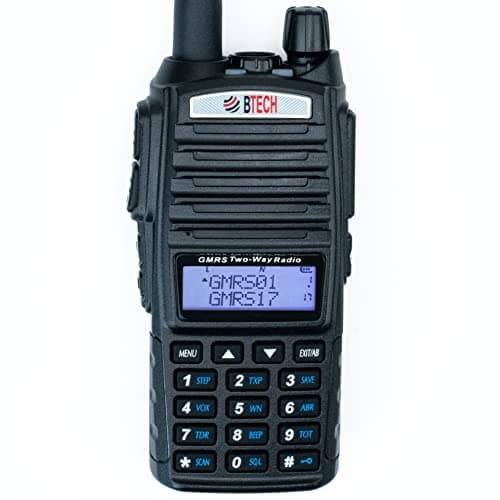
| 1 | No photo BTECH GMRS-50V2 (50 W mobile/base) 50 W with 20 W and 5 W steps, quad watch, repeater channels and a plain SO-239 antenna jack. BTECH says to wire it to a battery or fuse block, which is exactly what a bench power supply gives you. | Best radio to base-stationGMRS licensePremium | 7.5/10Researched | Check price · Amazon #ad · Disclosure |
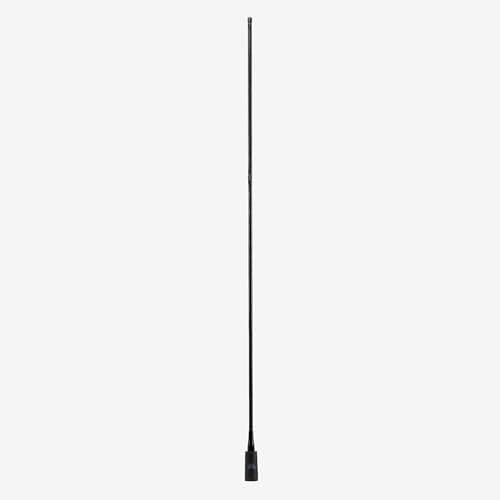
| 2 | 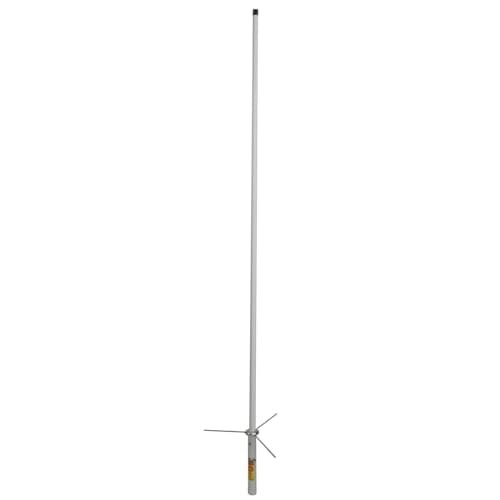 Comet CA-GMRS Base Antenna A 42 in GMRS-only radome, 5.5 dBi, SO-239 jack, rated to 135 mph, hardware included. Tuned for 462-468 MHz, so nothing is given away to a second band. | Best base antenna for most propertiesAccessoryMid-price | 7.7/10Researched | $110.99Amazon #ad · Disclosure |
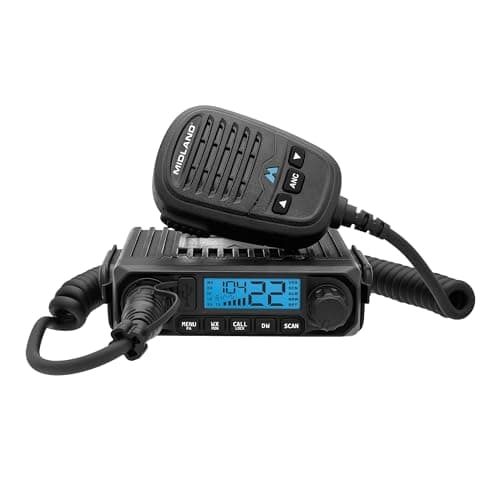
| 3 | 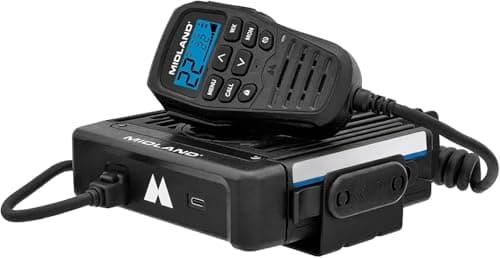 Midland MXT575 MicroMobile (50 W) The least fiddly 50 W radio here: Midland publishes its own terrain range chart, and it arrives with a magnet-mount antenna you can use while the mast goes up. | Best plug-and-play 50 WGMRS licenseHigh-end | 7.2/10Researched | $439.99Amazon #ad · Disclosure |
| 4 | 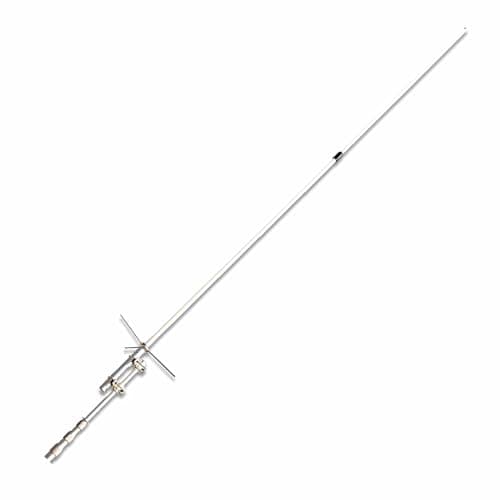 Comet CA-712EFC 9 dBi Base Antenna 10 ft 5 in and 9 dBi, the most stated gain here. Worth it on flat or rolling ground; the wrong choice if your radios sit in draws below the house. | Best for flat, open landAccessoryPremium | 7.1/10Researched | $224.99Amazon #ad · Disclosure |
| 5 | No photo BTECH GMRS-20V2 (20 W compact mobile) 20 W, IP67, and it runs from the included 12V plug, so a shop or barn base needs nothing more than a socket and an antenna. | Best small base for a shopGMRS licenseMid-price | 7.8/10Researched | Check price · Amazon #ad · Disclosure |
#ad · Prices come live from Amazon, last checked November 2, 2026. Scores are ours, built from published specs, manuals and FCC rules. Photos come from each product's Amazon listing; a radio we can't show a real photo of is left blank rather than illustrated. Tap a row for the full write-up.
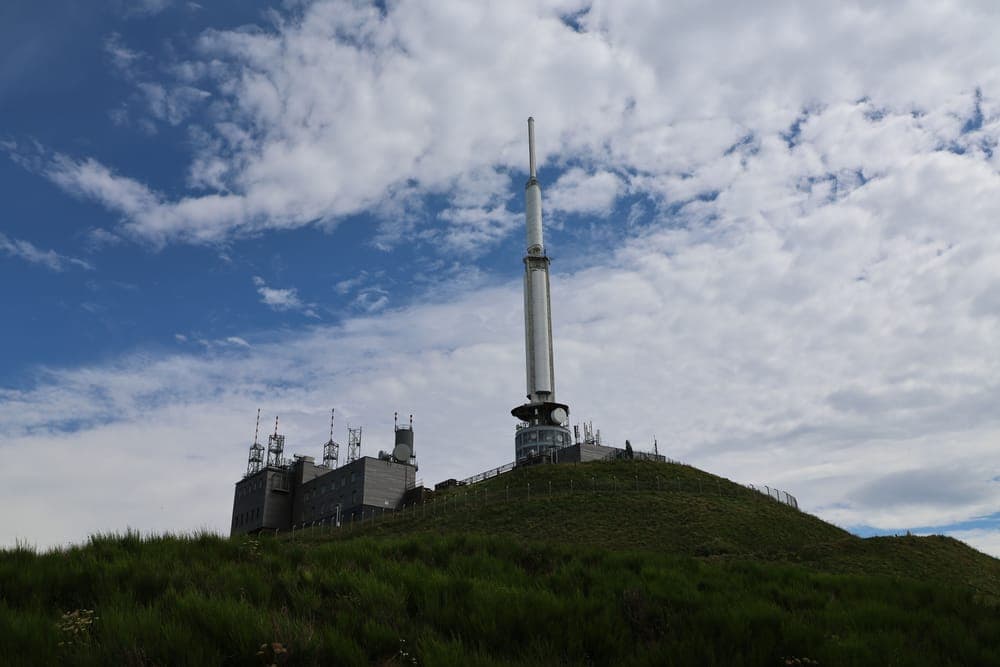
There is no product on the market called a "GMRS base station". What people mean by the phrase is a GMRS mobile radio that lives indoors, fed by a mains power supply instead of a vehicle battery, with its antenna up on a mast or a chimney instead of on a roof rack. Build it that way and one radio in the kitchen or the shop can hold a conversation with handhelds all over a property — which is the whole point, and the reason people search for it after a handheld-to-handheld attempt across the same land disappoints them.
So this page ranks the parts you actually buy: two radios worth basing, two base antennas, and a compact radio for a second station in an outbuilding. Our GMRS mobile radios page covers the same radios as vehicle installs, and GMRS antennas covers the vehicle and handheld side.
What a GMRS base station actually is
Four parts, and you need all four:
- A GMRS mobile radio with an external antenna jack — 20 W or 50 W, with repeater channels if you have a repeater nearby.
- A 13.8 V DC power supply rated above the radio's peak draw. BTECH specifies 20 A peak for the GMRS-50V2, so a 25-30 A supply is the sane choice; a 5 W or 20 W radio needs far less.
- A base antenna on a mast, mounted as high as you can safely get it and clear of the roof.
- Coax and connectors that match. The radios here use SO-239, so PL-259 coax. The Comet CA-712EFC uses N-female, so you need N-to-PL-259 coax or an adapter.
Nobody sells all four in one box, and that is the single most common reason a first GMRS base build stalls on the bench.
What the FCC allows at a fixed station
How we picked
Every product is scored on our published rubric — radios on real-world reach, ease of use, toughness and weather, power and battery, field features and value; antennas on gain and height for the job, fit and connector match, build and weather, install burden and value. The method is on how we rank radios, and every figure here comes from the maker's own published specification. These are research picks, not test results.
For a base station we weighted the antenna jack and connector match far more heavily than usual, because a base radio with the wrong jack is a bench ornament, and discounted battery and portability entirely — a base radio never leaves the shelf.
The picks in detail
1. BTECH GMRS-50V2: the radio to base-station
50 W, selectable down to 20 W and 5 W, 256 programmable channels with GMRS transmit on 1-7 and 15-30, quad watch, repeater support, NOAA weather reception, and a plain SO-239 antenna jack (BTECH GMRS-50V2 page). BTECH rates it at 13.8 V DC, 20 A peak, and states plainly that it should be connected to a battery or fuse block rather than a cigarette outlet.
In a vehicle that caveat is a chore. At a base station it is irrelevant, because a bench power supply is exactly a 13.8 V fuse-block connection with a mains plug on the other end. That is why this radio, which sits a price tier below Midland's 50 W radios, is the best value of anything here once it stops moving. BTECH publishes an honest typical simplex figure too — around 2 to 5 miles in town or wooded areas, 5 to 15 in open rural terrain — rather than a bare maximum.
Buy it if you are happy to add a power supply and an antenna and want the most radio for the money. Skip it if you want one box that works out of the carton: there is no antenna included, and 256 channels is a menu to learn.
2. Comet CA-GMRS: the antenna that does the work
A 42-inch single-section radome tuned only for 462-468 MHz, 5.5 dBi stated gain, SO-239 jack, 150 W rating, 135 mph wind rating, VSWR 1.5:1 or less, mounting hardware for a 1.18-2.44 in mast included, 2 lb 2 oz (Comet CA-GMRS page).
Being GMRS-only is the feature. A dual-band antenna compromises both bands to cover both; this one is cut for the band you are actually transmitting on, takes the same PL-259 coax as the radios above, and survives weather that would fold a thin dual-bander. For most properties it is simply the right answer, and the only remaining variable is how high you put it.
Buy it if you have a mast, a chimney bracket or a pole you can get above the roofline. Skip it if the antenna would end up in an attic or on a porch rail: you would be paying for gain and throwing away the height that matters more.
3. Midland MXT575: the plug-and-play 50 W
50 W on the main channels with 8 repeater channels, a detachable control-mic design and a magnetic-mount antenna in the box (Midland MXT575 page). Midland is also unusual in publishing a terrain-by-terrain range chart rather than one headline number.
For a base station the included magnet-mount is not the long-term antenna — it wants a steel ground plane and it will be indoors. But it does let you put the station on the air the day it arrives, confirm the radio and the license, and find your local repeaters before the mast goes up. That is worth real money to a first-time builder.
Buy it if you want mainstream support, a documented range chart and the shortest path to transmitting. Skip it if you are optimizing cost per watt: the BTECH gives you the same 50 W for less, at the price of a power supply you were buying anyway.
4. Comet CA-712EFC: for flat, open land
10 ft 5 in of two-piece white fiberglass, 9 dBi stated gain, 460-470 MHz, N-female connector, 200 W rating, 112 mph maximum wind speed, 2 lb 13 oz (Comet CA-712EFC page).
High gain on a vertical antenna does not create signal; it squashes the radiation pattern flatter, trading coverage above and below for reach at the horizon. On flat or gently rolling land, where every radio you are talking to sits near your own horizon, that trade is excellent. On steep ground, where handhelds are down in draws well below the house, it is a bad trade and the 5.5 dBi CA-GMRS covers more of your actual property.
Buy it if your land is open, your mast is sturdy and your radios are roughly level with you. Skip it if the terrain drops away sharply, or if you do not want to source N-to-PL-259 coax.
5. BTECH GMRS-20V2: the small second station
20 W or 5 W, 200 channels preloaded with the 30 GMRS channels, IP67, tri watch, NOAA weather, SOS alarm, a control-mic body measuring 4 x 1.5 x 4 in at 14.9 oz, and a 12V cigarette-plug cable in the box (BTECH GMRS-20V2 page). Note that the same page quotes both a 1-5 mile typical simplex range and a "75 Mile" maximum in its details table; the first figure is the useful one.
This is the radio for a shop, barn or workshop that wants its own radio on the wall rather than a handheld on a charger. It runs from a 12V socket or a small supply, it shrugs off dust and damp, and it is small enough to screw under a shelf.
Buy it if you want a second, simpler station in an outbuilding. Skip it if it is your only station: on a property where 50 W is available, start with 50 W.
The published specs side by side
In detail
The picks, in full
Rank 01
Best radio to base-station
BTECH GMRS-50V2 (50 W mobile/base)
50 W with 20 W and 5 W steps, quad watch, repeater channels and a plain SO-239 antenna jack. BTECH says to wire it to a battery or fuse block, which is exactly what a bench power supply gives you.
Published specsResearched · every figure sourced
How the 7.5 score breaks down
- Real-world reach (30%)
- 9
- Ease of use (20%)
- 6
- Toughness & weather (15%)
- 5
- Power & battery (15%)
- 8
- Field features (10%)
- 8
- Value (10%)
- 8
What the specs support
- 50 W with 20 W and 5 W steps, a list-price tier below Midland's 50 W MicroMobiles
- Quad watch and VHF/UHF scanner receive
- Standard SO-239 jack for any GMRS mobile or base antenna
- BTECH publishes a typical simplex range (2-5 miles in town or woods), not just a max figure
Where it falls short
- Needs direct 13.8 V wiring and an antenna bought separately
- IP54 splash resistance only
- 256 channels and many menus mean more setup than a Midland
Skip this if…
…Skip it if you want to plug into a 12V socket and drive off: BTECH says the GMRS-50V2 needs a direct battery or fuse-block connection, and it ships without an antenna.
#ad · Price as of November 2, 2026 · How we make money for the link to BTECH GMRS-50V2 (50 W mobile/base)
Rank 02
Best base antenna for most properties
Comet CA-GMRS Base Antenna
A 42 in GMRS-only radome, 5.5 dBi, SO-239 jack, rated to 135 mph, hardware included. Tuned for 462-468 MHz, so nothing is given away to a second band.
Published specsResearched · every figure sourced
| Frequency | 462-468 MHz (GMRS and UHF business) |
|---|---|
| Stated gain | 5.5 dBi |
| Length | 42 inches, single-section radome |
| Connector | SO-239 (UHF female) |
| Power / wind | 150 W max; 135 mph wind rating |
| Mast / hardware | Attaches to mast diameter 1.18-2.44 in; mounting hardware included |
| VSWR / weight | 1.5:1 or less; 2 lb 2 oz |
How the 7.7 score breaks down
- Gain & height for the job (30%)
- 8
- Fit & connector match (25%)
- 9
- Build & weather (20%)
- 8
- Install burden (15%)
- 5
- Value (10%)
- 7
What the specs support
- Tuned only for 462-468 MHz, so there's no dual-band compromise
- SO-239 takes standard PL-259 coax, the same jack type as the BTECH GMRS-50V2 mobile/base
- 135 mph wind rating, and mounting hardware is included
Where it falls short
- No coax, mast or lightning grounding in the box, and the mast height does most of the work
- Needs a mobile or base radio with an antenna jack; FRS radios and fixed-antenna handhelds can't use it
Skip this if…
…Skip it if you can't mount a mast above your roofline: a base antenna in an attic or on a porch rail gives up the height that makes it worth buying.
#ad · Price as of November 2, 2026 · How we make money for the link to Comet CA-GMRS Base Antenna
Rank 03
Best plug-and-play 50 W
Midland MXT575 MicroMobile (50 W)
The least fiddly 50 W radio here: Midland publishes its own terrain range chart, and it arrives with a magnet-mount antenna you can use while the mast goes up.
Published specsResearched · every figure sourced
How the 7.2 score breaks down
- Real-world reach (30%)
- 9
- Ease of use (20%)
- 7
- Toughness & weather (15%)
- 4
- Power & battery (15%)
- 8
- Field features (10%)
- 7
- Value (10%)
- 6
What the specs support
- 50 W on high, the top power in Midland's MicroMobile line
- Hideaway body with the controls on the mic frees dash space in Jeeps and side-by-sides
- 8 split-tone repeater channels for reaching a local GMRS repeater
- Midland publishes a terrain chart (20-25 miles with partial obstruction), not just a max figure
Where it falls short
- Midland states no IP or water rating for the MXT575; the MXT500 is listed as water resistant
- Same list-price tier as the MXT500, which adds a PA function and noise canceling
- Channels 1-7 stay on low power (manual), so full power is only on 15-22 and the repeater channels
Skip this if…
…Skip it if the radio will ride in an open-cab UTV or tractor: Midland lists no water rating for the MXT575, so the IP67 MXT115P PRO or the water-resistant MXT500 fits that job better.
#ad · Price as of November 2, 2026 · How we make money for the link to Midland MXT575 MicroMobile (50 W)
Rank 04
Best for flat, open land
Comet CA-712EFC 9 dBi Base Antenna
10 ft 5 in and 9 dBi, the most stated gain here. Worth it on flat or rolling ground; the wrong choice if your radios sit in draws below the house.
Published specsResearched · every figure sourced
| Frequency / SWR | 460-470 MHz; SWR 1.5:1 or less |
|---|---|
| Stated gain | 9 dBi |
| Length / build | 10 ft 5 in; two-piece white fiberglass |
| Connector | N-female |
| Power / wind | 200 W max; 112 mph max wind speed |
| Weight | 2 lb 13 oz |
| Mast diameter | 1.25-2.50 in (dealer listing) |
How the 7.1 score breaks down
- Gain & height for the job (30%)
- 9
- Fit & connector match (25%)
- 7
- Build & weather (20%)
- 7
- Install burden (15%)
- 4
- Value (10%)
- 6
What the specs support
- Highest stated gain here (9 dBi), for flat or rolling land where the radios sit near the horizon
- Covers the whole GMRS band inside its 460-470 MHz range
- 200 W rating sits well above the 50 W GMRS limit for base and repeater stations (47 CFR 95.1767)
Where it falls short
- N-female connector: GMRS mobiles such as the BTECH GMRS-50V2 use SO-239, so you need N-to-PL-259 coax or an adapter
- At 10 ft 5 in and rated for 112 mph (the CA-GMRS is rated for 135 mph), it needs a sturdy, well-braced mast
- High gain squeezes the pattern toward the horizon, which can hurt radios sitting well below the antenna
Skip this if…
…Skip it if your property is steep, with radios down in draws below the house: a 9 dBi antenna focuses energy at the horizon, and the 5.5 dBi CA-GMRS is the safer pick for hilly ground.
#ad · Price as of November 2, 2026 · How we make money for the link to Comet CA-712EFC 9 dBi Base Antenna
Rank 05
Best small base for a shop
BTECH GMRS-20V2 (20 W compact mobile)
20 W, IP67, and it runs from the included 12V plug, so a shop or barn base needs nothing more than a socket and an antenna.
Published specsResearched · every figure sourced
How the 7.8 score breaks down
- Real-world reach (30%)
- 8
- Ease of use (20%)
- 6
- Toughness & weather (15%)
- 9
- Power & battery (15%)
- 8
- Field features (10%)
- 8
- Value (10%)
- 8
What the specs support
- IP67 at the mid list-price tier
- Runs from the included 12V cigarette-plug cable
- Control-mic design lets the small body hide under a seat
- Tri watch and scanner receive
Where it falls short
- No antenna in the box
- Programming-heavy: 200 channels, with CHIRP and a cable for bulk setup
- The page's 75-mile figure contradicts its own 1-5 mile typical-range statement
Skip this if…
…Skip it if you want one box with everything: the GMRS-20V2 ships without an antenna, so it can't transmit until you add a GMRS mobile antenna and mount.
#ad · Price as of November 2, 2026 · How we make money for the link to BTECH GMRS-20V2 (20 W compact mobile)
Building the station, in order
Do it in this order and nothing is wasted, because each step either works or tells you what is wrong before you have spent on the next one.
- Get the license first. One individual license covers the household and every radio in it. How to get a GMRS license is the walk-through, and it is a form and a fee rather than an exam.
- Radio and power supply on the bench. A 13.8 V supply rated comfortably above the radio's peak draw. Check you can hear your local repeaters and your own handhelds before anything goes on a roof.
- Mast and antenna. Height above the roofline first, gain second. Mount it clear of metal roofing, gutters and anything you would not want a transmitter next to.
- Coax, cut long and run clean. Buy good coax with the connector your antenna actually uses. A long run of thin cable will quietly eat more signal than the gain figure you paid for.
- Program the channels you will use, not all 256. Simplex channel for the family, a repeater pair if there is one, NOAA on a scan slot.
- Then match the handhelds. A base is only useful if the radios in people's pockets are on the same channel and code — see GMRS handhelds.
Height beats watts
This is the part the watt figures hide. UHF at GMRS frequencies travels essentially line-of-sight, so what limits a base station is almost never the transmitter — it is the hill, the treeline or the roof between the two antennas. Ten extra feet of mast routinely does more for coverage than the jump from 20 W to 50 W, because it moves the antenna past an obstruction instead of pushing harder into one.
It also explains the other asymmetry people notice: the base hears handhelds further away than handhelds hear the base, because the handheld is transmitting 2-5 W from hip level into a tall receiving antenna. Our handheld vs mobile range page works through the numbers, and covering a property with radios maps the same problem over acreage.
If height alone cannot get you over the terrain, the next step is a repeater rather than more power. Local GMRS repeaters are listed on myGMRS and RepeaterBook, and GMRS repeaters explains how access works.
What to look for
- An external antenna jack. Non-negotiable. Any radio with a fixed antenna, including every FRS handheld, cannot be a base station.
- Repeater channels. If there is a repeater within reach, the radio must support the split-frequency channels to use it.
- A matching connector. SO-239 on the radio means PL-259 coax. Check the antenna's jack before you buy the cable, not after.
- A power supply with headroom. Size it above the radio's peak amps, not its average. A supply that sags on transmit sounds like a broken radio.
- Gain matched to your terrain. 5.5 dBi for hills and mixed ground, 9 dBi for flat and open. More gain is not better, it is different.
- NOAA weather reception if you are rural. All three radios here receive the NWS broadcasts (NOAA Weather Radio), which makes the base station useful on days nobody is talking on it.
How we scored this
Every pick here is backed by the paperwork
Every pick is labeled Researched: we read each maker's published specs, manuals and range tables, check the license rules against the FCC, and score every radio on a public rubric out of 10. Every figure links to where it came from, and every range number is labeled “advertised” so you can see the difference between the box and the terrain.
Scores are our editorial judgment on that documented evidence. Commissions never set a score or decide a pick. The rubric and its weights are published.
What changed
- Published.
Questions
Frequently asked
Can you use a GMRS mobile radio as a base station?
How much power can a GMRS base station run?
Do you need a separate license for a GMRS base station?
What antenna is best for a GMRS base station?
Can two GMRS base stations talk to each other?
Receipts
Sources
- BTECH: GMRS-50V2 product page (checked 2026-10-11)
- BTECH: GMRS-20V2 product page (checked 2026-10-11)
- Midland: MXT575 MicroMobile product page (checked 2026-10-11)
- Comet: CA-GMRS base antenna product page (checked 2026-10-11)
- Comet: CA-712EFC base antenna product page (checked 2026-10-11)
- FCC: General Mobile Radio Service (GMRS) page (checked 2026-10-11)
- 47 CFR 95.1705, GMRS eligibility: individuals and immediate family (via Cornell LII, checked 2026-10-11)
- 47 CFR 95.1767, GMRS transmitting power limits (via Cornell LII, checked 2026-10-11)
- 47 CFR 95.1787, GMRS fixed stations may communicate only with mobile and hand-held stations (via Cornell LII, checked 2026-10-11)
- NOAA / NWS: NOAA Weather Radio All Hazards (checked 2026-10-11)
- myGMRS: GMRS repeater directory (checked 2026-10-11)
- RepeaterBook: GMRS repeater directory (checked 2026-10-11)
Specs and range figures come from each maker's own pages and manuals, linked on every product, and license, power and channel rules come from the FCC and 47 CFR Part 95. Range numbers are the maker's advertised claims and are labeled that way, so you can tell the box number from the terrain number. Prices come live from Amazon with the time we checked. Read the full method.