Not legal advice. This page summarizes FCC rules (47 CFR Part 95) from the official sources linked in the text. Rules and fees checked . The FCC sets its fees annually and can change its rules, so confirm the current version on fcc.gov before you rely on it.
Outage kits are assembled around light and information: a flashlight, a crank radio, maybe a power bank. Both of those are receiving. Not one of them answers the question people actually have at hour six, which is where is everyone and are they all right.
That gap is the whole point of this page. The fix is cheap, it is legal without any paperwork if you buy the right service, and it takes about ten minutes to set up properly. Everything below is cited to the FCC, the rule text or the National Weather Service.
The gap in every outage kit
A NOAA weather radio is receive-only. So is a crank radio, a shortwave set and a scanner. They are superb at telling you a warning has been issued (NWS: NOAA Weather Radio) and completely unable to tell your family where you are.
Cell networks usually survive the first hours of an outage on tower batteries and then degrade — and well before they fail, they congest, which is why texts get through when calls do not. A pair of handheld radios bypasses the network entirely for the distances that actually matter in an outage: house to street, house to neighbor, car to house, one end of a property to the other.
The kit list
- A S.A.M.E. weather radio for the house, programmed to your county, with alkaline backup. This is the part that wakes you.
- A portable radio with its own power — crank, solar or alkaline — for AM/FM news once the power is out and for the go-bag.
- Two-way radios, one per person or one per location. FRS or GMRS; see the next section.
- Spare batteries in the sizes your kit actually uses, checked twice a year.
- A power bank for phones, because the radio's battery is for the radio.
- A written channel plan taped inside the lid of the box. The piece everyone skips.
- A paper contact list, because the numbers live in a phone that may be dead.
FRS or GMRS: the one decision that has a legal answer
FRS is licensed by rule. Anyone may use an FRS radio, at any age, with no application and no fee (FCC: Family Radio Service). If the radios will be handed to neighbors, friends or a volunteer group, FRS is the correct and only clean answer.
GMRS needs one individual FCC license, which covers the holder and their immediate family — spouse, children, parents, grandparents, siblings and in-laws (47 CFR 95.1705). No exam, ten years, and in return you get more power, removable antennas and repeater access (FCC: GMRS). For a household kit it is usually worth it; for a neighborhood kit it is the wrong tool, because the license does not stretch to the neighbors.
Either way the radio must be certified for the service it is used on (47 CFR 95.1761) — a programmable ham handheld is not an FRS radio. The full decision is in GMRS vs FRS and do you need a GMRS license?
What to buy
Our picks for this job
A kit that hears the warning and talks back
One radio from each row of the list. Mix the FRS and GMRS picks according to who will be holding them.
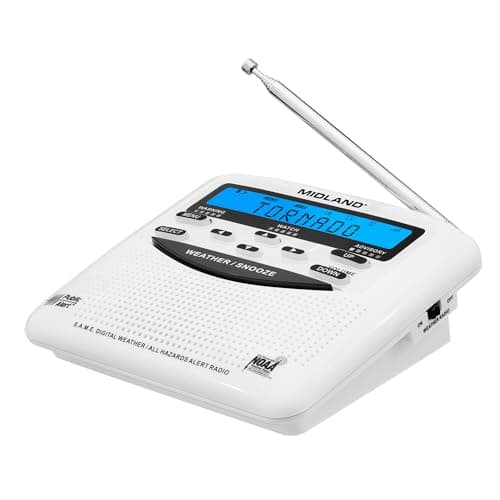
Best NOAA alert radio for the house
Midland WR120B NOAA Weather Alert Radio
The alerting half: S.A.M.E. for up to 25 counties with AA backup, so the siren is only ever your county's warning.
$45.99Amazon#ad · Price as of November 6, 2026 · How we make money for the link to Midland WR120B NOAA Weather Alert Radio
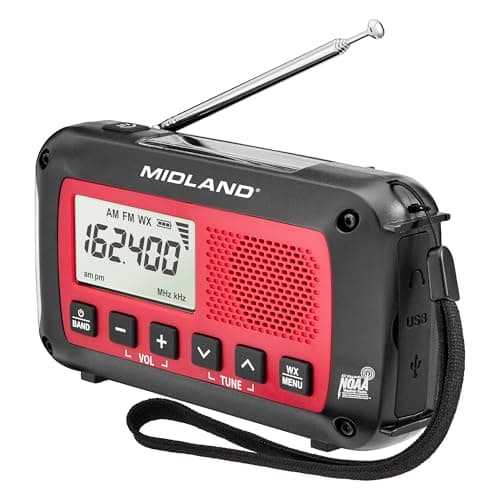
Best crank radio for a go-bag
Midland ER40 Emergency Crank Weather Radio
The powered half: crank, solar and USB charging on a replaceable 2600 mAh pack, with AM/FM for local news and enough left for a phone.
$59.99Amazon#ad · Price as of November 6, 2026 · How we make money for the link to Midland ER40 Emergency Crank Weather Radio
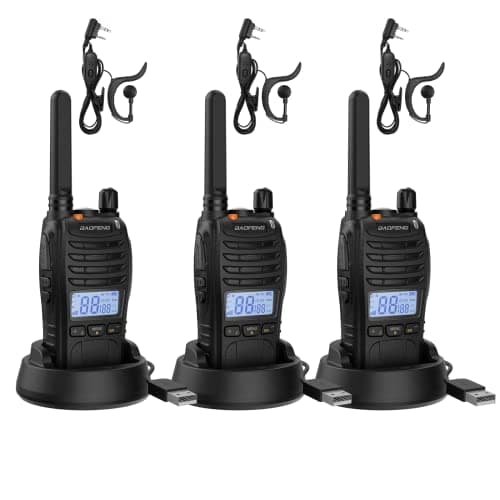
Best license-free Baofeng multi-pack
Baofeng BF-88ST Pro FRS (multi-pack)
License-free FRS in a multi-pack with a headset per radio — the right buy when radios get handed to neighbors.
$41.99Amazon#ad · Price as of November 6, 2026 · How we make money for the link to Baofeng BF-88ST Pro FRS (multi-pack)
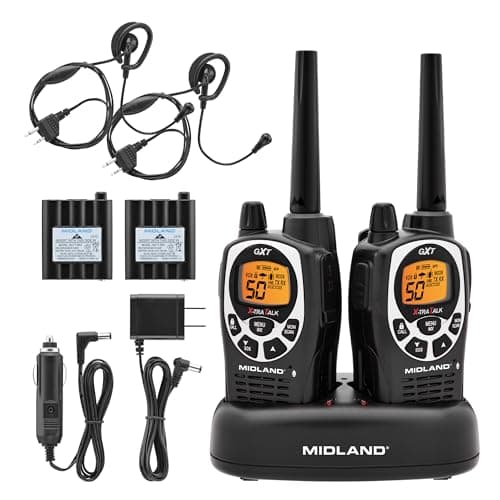
Best simple GMRS pair for families
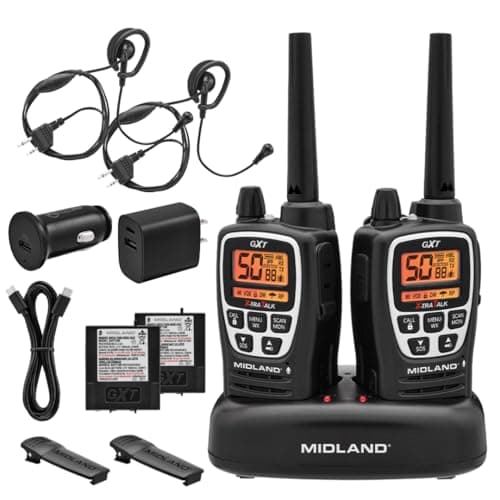
Midland GXT1000VP4 (2-pack)
The licensed family pair: NOAA alerts, 142 codes and an AA fallback. One GMRS license covers your immediate family.
$89.99Amazon#ad · Price as of November 6, 2026 · How we make money for the link to Midland GXT1000VP4 (2-pack)
Best waterproof radio for paddlers
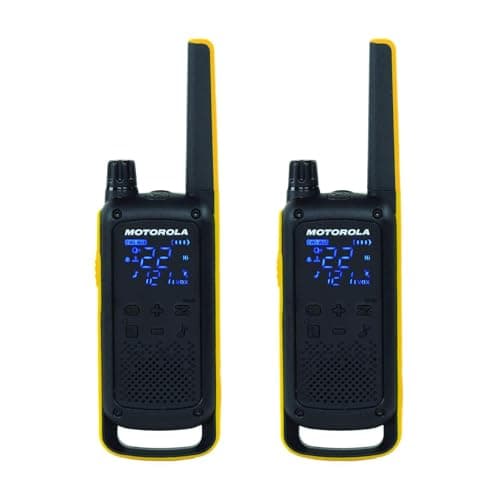
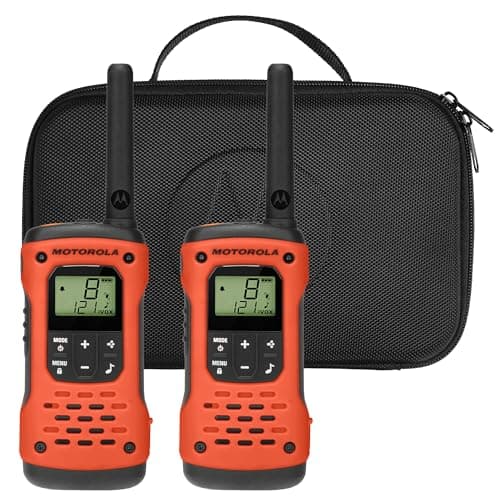
Motorola Talkabout T605 H2O (2-pack)
IP67 and it floats, running on the NiMH pack or three AA cells. The pick if flooding is your scenario.
$116.99Amazon#ad · Price as of November 6, 2026 · How we make money for the link to Motorola Talkabout T605 H2O (2-pack)
The one-page channel plan
This is the cheapest part of the kit and the one that makes it work. Write it down, tape it inside the lid, and give a copy to everyone who holds a radio:
- Primary channel and code. Pick one and write it down. Not the factory default, which is what every other radio in the neighborhood is also on.
- A backup channel, in case the primary is busy.
- Check-in times. Radios eat batteries when they are on all day. "On the hour for five minutes" keeps everyone synchronized and the batteries alive.
- Who calls whom, and in what order. The same list as your family communication plan.
- The out-of-area contact everyone texts when they get a bar of signal.
Privacy codes are worth one line of explanation on the plan: they are a squelch filter, not encryption, and anyone on the channel with codes off hears everything — see what privacy codes really do.
Batteries and charging, in the order they fail
- Standardize on one cell size if you can. A kit where the radios, the weather radio and the flashlight all take AA is a kit with one spare pack to manage.
- Keep alkalines for storage, rechargeables for use. Lithium packs self-discharge in a closet; alkaline cells do not.
- Check twice a year, on the same day you do smoke alarms.
- Keep the phone power bank separate from the radio. The crank radio's pack is small, and charging a phone from it is a partial charge at best.
- Pick radios with an alkaline fallback where you can. A rechargeable-only radio has exactly one life per outage — see walkie-talkie battery life.
The limits to plan around
Handheld radios do not reach as far as the box claims, and an outage does not change the terrain. Plan on the maker's own terrain figures rather than the headline mileage — how far walkie-talkies really reach has the table. Inside a house with steel and concrete, expect less again: radios in concrete buildings explains why.
GMRS repeaters can extend things a long way, but only if one exists near you and its owner permits use, and a repeater on grid power may not survive the outage you are planning for (GMRS repeaters). Plan the kit around simplex — radio to radio — and treat anything else as a bonus. If you want the broader argument, do walkie-talkies work if the grid goes down? is the page.
How we scored this
Every pick here is backed by the paperwork
Every pick is labeled Researched: we read each maker's published specs, manuals and range tables, check the license rules against the FCC, and score every radio on a public rubric out of 10. Every figure links to where it came from, and every range number is labeled “advertised” so you can see the difference between the box and the terrain.
Scores are our editorial judgment on that documented evidence. Commissions never set a score or decide a pick. The rubric and its weights are published.
What changed
- Published.
Questions
Frequently asked
What should be in a power outage communication kit?
Do I need a license for emergency radios?
Will walkie-talkies work when the power is out?
Can I use radios to call 911 in an outage?
How many radios do we need?
Receipts
Sources
- FCC: Family Radio Service (FRS) page (checked 2026-11-05)
- FCC: General Mobile Radio Service (GMRS) page (checked 2026-11-05)
- NWS: NOAA Weather Radio FAQ (checked 2026-11-05)
- 47 CFR 95.1705, GMRS licensee and immediate family (via Cornell LII, checked 2026-11-05)
- 47 CFR 95.1761, GMRS equipment certification (via Cornell LII, checked 2026-11-05)
Specs and range figures come from each maker's own pages and manuals, linked on every product, and license, power and channel rules come from the FCC and 47 CFR Part 95. Range numbers are the maker's advertised claims and are labeled that way, so you can tell the box number from the terrain number. Prices come live from Amazon with the time we checked. Read the full method.