Not legal advice. This page summarizes FCC rules (47 CFR Part 95) from the official sources linked in the text. Rules and fees checked . The FCC sets its fees annually and can change its rules, so confirm the current version on fcc.gov before you rely on it.
Battery life is the specification that decides whether a radio is useful, and it is the one makers describe most loosely. Published figures range from "up to 9 hours" to "4 to 6 days" on radios of the same class — and two different pages from the same manufacturer sometimes disagree about the same model.
How the hour figures are made
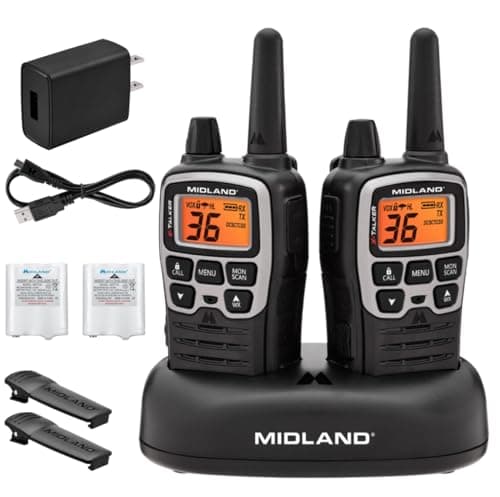
Two-way radio runtime is normally quoted against a duty cycle: a ratio of time spent transmitting, receiving and sitting idle. Midland states the convention openly for one of its radios — "around 5 hours at 90-5-5 when being used on Hi power" (Midland T71VP3), meaning 90% idle, 5% receiving, 5% transmitting.
That is the key to reading every other claim. A "3 day" figure is a radio switched on and barely used; a busy crew radio on the same pack might manage a single shift. Transmitting costs far more than receiving, and receiving costs far more than idling.
The three battery types
- Alkaline AA or AAA. The longest runtime per radio and by far the best shelf life, which is why they belong in an emergency kit. No charging infrastructure needed. The cost is waste and the hassle of carrying spares.
- NiMH rechargeable packs. What most mid-price family radios ship with. Cheap to run, and usually the lower of the two runtime figures a maker publishes. They self-discharge in storage, so a pack left for a year is not ready.
- Li-ion packs. What the modern rugged radios use: more capacity for the weight, USB-C charging, and far better charge retention in storage. The best of them are replaceable, so you can carry a second pack instead of a charger.
The feature that matters most is not the chemistry, it is whether there is a fallback. A radio that takes AAs when the pack dies cannot be stranded; a radio with a sealed internal battery can.
Published numbers, side by side
- Motorola T470: up to 12 hours on the 800 mAh NiMH pack, up to 28 hours on three AA alkalines (T470 datasheet). More than double, from the cheaper battery.
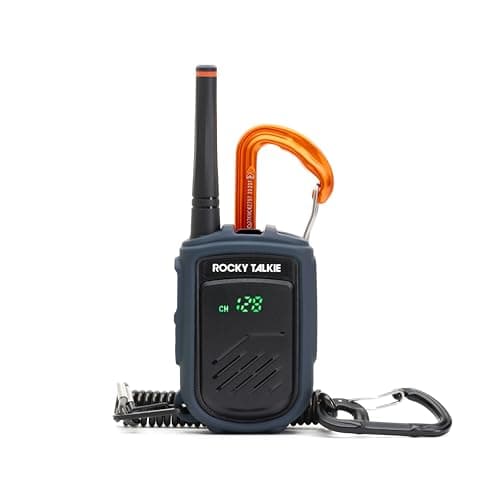
- Rocky Talkie Expedition: a replaceable 7.4 V 1800 mAh Li-ion, rated 4 to 6 days per charge (Rocky Talkie) — a figure that assumes trail use, not constant talking.
- Midland GXT3000VP4: a 1800 mAh Li-ion with a four-hour USB-C recharge and a three-AA fallback; Midland publishes both 27 hours and 18 hours for it (GXT3000VP4).
- Retevis RT22: a 1000 mAh Li-ion with USB-C and a quoted 12 to 24 hours of standby (Retevis RT22) — note that standby is not use.
One thing none of these figures depends on is transmit power class: FRS radios are capped at 2 watts on the main channels (47 CFR 95.567, FCC: FRS), so a cheap radio and an expensive one draw similar current when they talk. The difference is the battery.
Our picks for this job
Four radios by battery strategy
One for multi-day trips, one for a drawer, one with both options, and one for a shift.
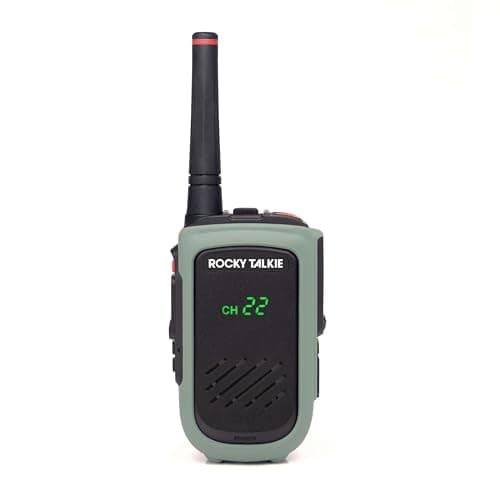
Best rugged GMRS for backcountry trips
Rocky Talkie Expedition Radio (single radio)
The multi-day answer: a replaceable Li-ion rated 4 to 6 days, USB-C charging, and the option of carrying a spare pack instead of a charger.
$195.00Amazon#ad · Price as of November 2, 2026 · How we make money for the link to Rocky Talkie Expedition Radio (single radio)
Best Motorola for storm kits
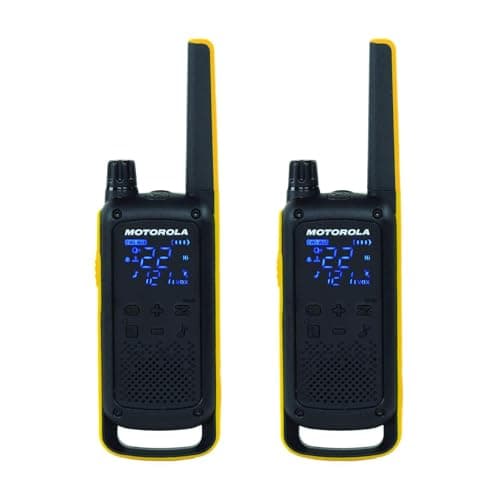
Motorola Talkabout T470 (2-pack)
The storm-drawer answer: 12 hours on the pack, a published 28 hours on three AA alkalines, and NOAA alerts while it sits.
$89.99Amazon#ad · Price as of November 2, 2026 · How we make money for the link to Motorola Talkabout T470 (2-pack)
Best Midland pair with repeater access
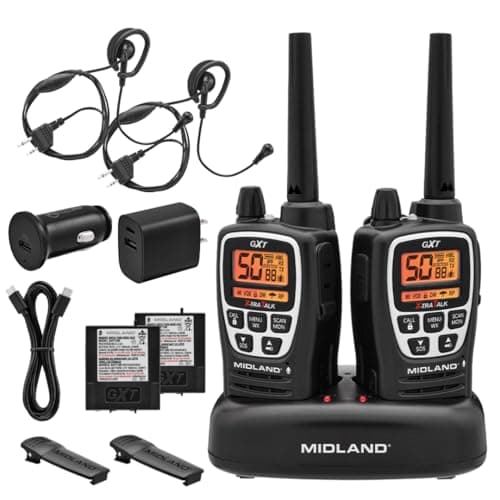
Midland GXT3000VP4 (2-pack)
Both strategies in one radio: a Li-ion pack with a four-hour USB-C recharge, plus a 3 AA fallback for when there is no power.
$159.99Amazon#ad · Price as of November 2, 2026 · How we make money for the link to Midland GXT3000VP4 (2-pack)
Best cheap pair for short-range crews
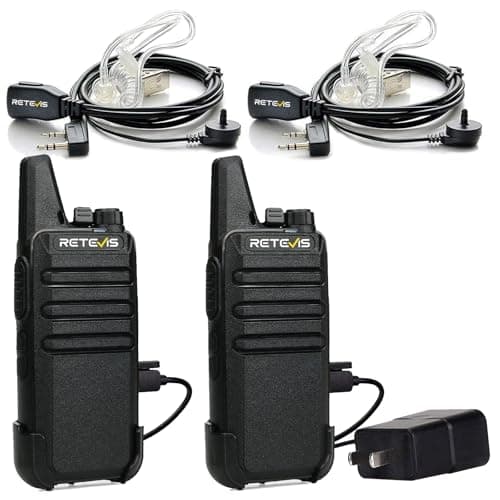
Retevis RT22 (2-pack)
The shift radio: a small 1000 mAh Li-ion, USB-C, and little else to drain it - no screen, no weather receiver, no flashlight.
$29.98Amazon#ad · Price as of November 2, 2026 · How we make money for the link to Retevis RT22 (2-pack)
Seven ways to make a charge last
- Use low power. If the group is close, the high setting is spending battery on range you do not need — see walkie-talkie watts explained.
- Turn the squelch up slightly so the radio is not opening on noise all day.
- Switch off VOX unless you need it. It keeps the microphone circuit working constantly.
- Set a privacy code so the speaker stays quiet on a busy channel. It is not privacy, but it is battery (how codes actually work).
- Turn the backlight and roger beep off. Small, constant, free savings.
- Use scheduled check-ins instead of leaving everyone monitoring all day.
- Keep it warm in winter. Cold drops usable capacity on every chemistry; an inside pocket is worth hours — and some radios publish a temperature range, like the Baofeng GT-18's 0 to 40 degrees C.
Storing radios you are not using
Take alkaline cells out of radios that will sit for months — a leaking cell ruins the contacts. Store Li-ion packs part-charged rather than full or empty, keep them out of a hot car, and top them up a couple of times a year. For anything in an emergency kit, keep a sealed pack of alkalines beside the radios and replace it when you change your smoke-alarm batteries; that is the plan in do walkie-talkies work if the grid goes down.
If you are shopping specifically for runtime, the rechargeable comparison is in best rechargeable walkie-talkies.
How we scored this
Every pick here is backed by the paperwork
Every pick is labeled Researched: we read each maker's published specs, manuals and range tables, check the license rules against the FCC, and score every radio on a public rubric out of 10. Every figure links to where it came from, and every range number is labeled “advertised” so you can see the difference between the box and the terrain.
Scores are our editorial judgment on that documented evidence. Commissions never set a score or decide a pick. The rubric and its weights are published.
What changed
- Published.
Questions
Frequently asked
How long do walkie-talkie batteries last?
Are alkaline batteries better than rechargeable packs?
Why do makers quote different battery lives for the same radio?
Does transmitting on high power drain the battery faster?
Can I carry a spare battery for my walkie-talkie?
Receipts
Sources
- Motorola Solutions: T470 datasheet PDF, NiMH and AA runtimes (checked 2026-09-22)
- Rocky Talkie: Expedition Radio product page, 4-6 day figure (checked 2026-09-22)
- Midland: GXT3000VP4 product page, battery and recharge figures (checked 2026-09-22)
- Midland: GXT67 PRO FAQs, the 16-hour and 4-day figures (checked 2026-09-22)
- Midland: X-Talker T71VP3 product page, the 90-5-5 duty cycle (checked 2026-09-22)
- Retevis: RT22 product page, standby figure (checked 2026-09-29)
- FCC: Family Radio Service (FRS) page (checked 2026-10-17)
- 47 CFR 95.567, FRS power limits per channel (via Cornell LII, checked 2026-10-17)
Specs and range figures come from each maker's own pages and manuals, linked on every product, and license, power and channel rules come from the FCC and 47 CFR Part 95. Range numbers are the maker's advertised claims and are labeled that way, so you can tell the box number from the terrain number. Prices come live from Amazon with the time we checked. Read the full method.