Not legal advice. This page summarizes FCC rules (47 CFR Part 95) from the official sources linked in the text. Rules and fees checked . The FCC sets its fees annually and can change its rules, so confirm the current version on fcc.gov before you rely on it.
The contenders
Side by side
 Stock photo
Buy for UTVs, side-by-sides and farm machines
Midland MXT115P PRO MicroMobile (15 W)
The current MXT115. 15 W high and 5 W low, the only IP67 rating of the three, PA and wired intercom jacks, PC programming and a 3-year warranty, powered from a 12V socket. The display and knob sit on the radio, so it needs a spot you can see.
Check price · Amazon#ad · Price set by Amazon · How we make money for the link to Midland MXT115P PRO MicroMobile (15 W)
- Stock photo
Buy for a clean dash in a closed cab
Midland MXT275 MicroMobile (15 W)
15 W with every control on the mic and the radio body tucked under the dash or on the console. Plugs into a 12V socket and takes an upgraded antenna on its SO-239 jack, but Midland publishes no water rating and lists no PA or intercom jack.
Check price · Amazon#ad · Price set by Amazon · How we make money for the link to Midland MXT275 MicroMobile (15 W)
- Stock photo
Buy when distance is the problem
Midland MXT575 MicroMobile (50 W)
50 W on high, the most the FCC allows a GMRS mobile, in the same hideaway control-mic layout as the MXT275. Midland's manual wires it to the fuse block or battery, and Midland publishes no water rating for it.
Check price · Amazon#ad · Price set by Amazon · How we make money for the link to Midland MXT575 MicroMobile (50 W)
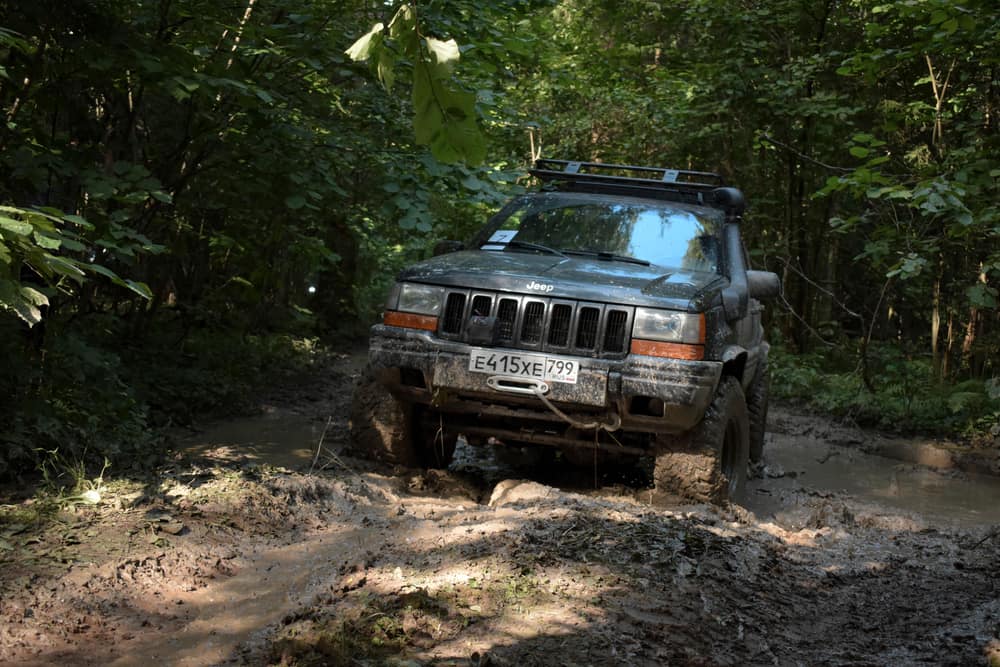
Here's the usual situation. Three or four rigs on a forest road, the lead Jeep drops over a ridge, and every phone in every cab shows no bars. A handheld used inside a steel cab has to talk through the roof and doors. A MicroMobile fixes most of that by putting the antenna on the roof and more power behind it, and these three Midland models split the job three ways.
One naming note first. Midland now sells the MXT115 as the MXT115P PRO, and its owner's manual still calls it the MXT115, so that's the radio this page compares. Everything below comes from Midland's product pages, spec sheets and manuals, linked as we go. If you're still deciding whether you want a Midland at all, start with our best GMRS mobile radios roundup.
The specs side by side
Two things jump out. The MXT115P PRO and the MXT275 are both 15 W radios in the same list-price tier, while the MXT575 is 50 W and a tier up. And only one of the three has a water rating at all.
Every difference, line by line
| What | MXT115P PRO | MXT275 | MXT575 |
|---|---|---|---|
| Power | 15 W high, 5 W low | 15 W, Hi/Lo (low figure not published) | 50 W high; manual lists Hi/Lo, spec sheet Hi/Mi/Lo |
| Layout | Compact radio with display, knob and buttons on its face | Hideaway radio body; every control on the mic | Hideaway radio body; every control on the mic |
| Water rating | IP67 waterproof and dustproof | None published; manual says do not immerse | None published; manual says do not immerse |
| Repeater channels | 8, with split privacy tones | 8 split-tone | 8 split-tone |
| Privacy codes | 154 (50 CTCSS / 104 DCS), plus 28 preset privacy channels | 142 (38 CTCSS / 104 DCS) | 142 (38 CTCSS / 104 DCS) |
| Antenna in the box | 2.1 dB magnetic-mount antenna | 2.1 dB magnetic-mount antenna; SO-239 jack | Magnet-mount antenna with cable (spec sheet: NMO antenna, large magnetic base, metal plate) |
| Power hookup | 12V plug, or hardwire | 12V plug, or cut the plug and hardwire | Manual: fused lead to the fuse block or battery |
| Extra jacks | External speaker, PA speaker, wired intercom | External speaker, speaker mic | External speaker, intercom (manual), speaker mic |
| NOAA weather alerts | Yes | Yes | Yes |
| USB-C port for a phone | Yes | Yes | Yes |
| PC programming | Yes | Not listed | Not listed |
| Size | 4 13/16 x 5 1/16 x 1 7/16 in with bracket | 1.4 x 5 x 4.2 in; 1.3 lb | 5.5 x 1.5 x 7.3 in; 3 lb |
| Warranty | 3 years | 1 year (manual) | 1 year |
Sources: MXT115P PRO product page and manual; MXT275 product page, spec sheet and manual; MXT575 product page, spec sheet and manual. Midland's documents disagree on the MXT575's power steps: the manual lists only Hi and Lo, the spec sheet lists Hi, Mi and Lo, and the FAQ on Midland's MXT500 page gives 25 W medium and 5 W low for the MXT575.
15 W vs 50 W: what the power actually buys
The FCC lets a GMRS mobile run up to 50 watts on the main channels: "The transmitter output power of mobile, repeater and base stations must not exceed 50 Watts" (47 CFR 95.1767). The MXT575 sits at that ceiling. Midland pitches the two 15 W radios with the line "15 Watts triples the power of traditional handheld radios," since GMRS handhelds are typically rated at 5 W by their makers.
So the MXT575 has more than three times the power of the other two. That does not mean three times the reach, and Midland's own charts show it. These are the maker's advertised figures, not distances anyone on this site measured:
| Terrain (Midland's wording) | MXT115P PRO (15 W) | MXT275 (15 W) | MXT575 (50 W) |
|---|---|---|---|
| No obstruction | "Up to 15 miles" mountain peak to mountain peak | "50 Miles MAX" | "75 Miles MAX" |
| Partial obstruction | "Up to 10 miles" suburban or rural | "10-15 Miles IDEAL" | "20-25 Miles IDEAL" |
| Major obstruction | "Up to 5 miles" neighborhood or dense forest | "5-10 Miles OBSTRUCTED" | "10-15 Miles OBSTRUCTED" |
Sources: MXT115P PRO spec sheet, MXT275 spec sheet, MXT575 spec sheet. Read that table slowly. By Midland's own figures, going from 15 W to 50 W moves the heavy-obstruction estimate from 5-10 miles to 10-15. That's more reach, but nowhere near triple. And Midland's two 15 W charts don't agree with each other: the MXT275 and the MXT115P PRO share the same power and the same 2.1 dB magnet antenna, yet one sheet says 50 miles max and the other says 15. The MXT275 and MXT575 sheets say it themselves: "These are estimated distances based on field use and advertised ranges. Actual distance may vary." Plan on the bottom row, not the top one.
Terrain and antenna height beat wattage. The FAQ on Midland's MXT575 page puts it plainly: two radios a mile apart with a large hill between them "may not communicate at all," while two radios ten miles apart, mountaintop to mountaintop, "may communicate perfectly fine." All three manuals give the same antenna advice: "Mount the antenna as high on the vehicle as possible. The higher the better." And the FCC's own expectation for GMRS is "one to twenty-five miles depending on station class, terrain, and repeater use" ( FCC GMRS page).
So when does 50 W earn its place? When the distance is long and mostly open, or you're calling a base with a tall antenna: a ranch truck raising the house across open pasture, a lead vehicle miles ahead on desert two-track, a group strung out across a wide valley. In a creek bottom or a tight canyon, a better antenna, a higher mount or a repeater will do more than the extra 35 watts. Our best GMRS antennas guide covers the antenna side, and GMRS handheld vs mobile range explains what a roof antenna changes.
Two catches apply to all three radios. First, channels 1 to 7 stay on low power. Those are the 462 MHz interstitial channels, which the FCC caps at 5 watts ERP (47 CFR 95.1767), and Midland's manuals lock them there; the MXT275 manual says they "cannot be removed from the Low transmit power setting." Midland's manuals also keep these mobiles off channels 8 to 14. Full power happens only on channels 15 to 22 and the repeater channels, so if your group lives on channel 3 out of habit, you're never using the power you paid for. Second, power only helps the signal you send. The handheld answering you still has its own small power and antenna, so plan around the weakest radio in the group, not the strongest.
Controls on the mic vs a radio on the dash
The MXT275 and MXT575 use what Midland calls a "Fully-Integrated Control Mic" with a hideaway radio unit. The microphone carries the display and every button: power, channel up and down, volume, menu, scan, weather, monitor, lock and push-to-talk (MXT575 manual). The radio body is "designed to be installed under the dash or vertically on the center console," per both manuals. In a Jeep or a side-by-side where dash space is scarce, that's the appeal: all you see is a mic on its clip and a coiled cord.
The trade-offs are box size and a small screen. The MXT575's hideaway body is the bigger box, 5.5 x 1.5 x 7.3 inches and 3 lb on its spec sheet, against 1.4 x 5 x 4.2 inches and 1.3 lb for the MXT275, so measure the space under the seat or dash before you buy.
The MXT115P PRO is a conventional compact radio. The display, a power and volume knob, and the menu, weather, call, dual-watch and scan buttons sit on the radio's face; the mic carries push-to-talk, channel up and down, and the noise-canceling button (MXT115P manual). Midland calls it "compact enough for any dashboard," but it does need a spot where you can see the display and reach the knob. On a washboard road, I'd rather have a real volume knob I can find by feel than a pair of small buttons on a mic.
Water and dust: the difference that decides open rigs
Midland rates the MXT115P PRO "IP67 waterproof and dustproof," and its mic is listed as IP67 too (MXT115P PRO page). Midland publishes no IP or water rating for the MXT275 or the MXT575, and both manuals say "DO NOT immerse the radio in water."
In a closed cab, that barely matters. In an open side-by-side, a tractor with no cab, or a Jeep with the doors and top off, the radio lives with rain, creek splash, dust and the pressure washer on Sunday night. That's where the IP67 rating earns its keep, and it's the single biggest reason the MXT115P PRO is my pick for open rigs, even over the 50 W radio.
Repeater channels: all three have them
All three list 8 repeater channels with split tones, which lets you set a separate transmit and receive privacy code the way many repeaters expect. You switch them on in the menu; on the MXT115P PRO, Midland says turning the repeater option on adds "eight additional channels" shown as 15 RPT to 22 RPT, with the transmit frequency offset for reaching a repeater.
That matters more than the wattage gap for a lot of people. A GMRS repeater usually sits on a hilltop or tower, hears your radio and re-sends it from up high, which is why "repeater use" is in the FCC's own range expectation. In broken country with a repeater in range, a 15 W radio working through it can reach places a 50 W radio on its own can't. Many repeaters are run by clubs or individuals, so ask before you key up.
Install: antenna, mount and power
What's in the box. All three come ready to talk: a magnetic-mount antenna, a mount for the radio and a power cord are in every box. The two 15 W radios' cords end in a DC vehicle adapter; the MXT575 spec sheet lists an NMO stock antenna with a large magnetic base and a metal plate for the magnet mount.
The antenna. A magnet mount on a steel roof is the fastest install there is. Midland's manuals add three rules worth following: mount it as high as possible and in the center of the surface, avoid metal covered by fiberglass or vinyl, and route the 19.7-foot (6-meter) cable through a door or trunk opening using the existing weather stripping. When you're ready to upgrade, the MXT275 manual lists an SO-239 antenna jack, and Midland sells higher-gain MicroMobile antennas as accessories, from 3 dB to 7.5 dB on the MXT575 page.
Power: 12V socket or hardwire. This is the real install split. The two 15 W radios plug into a 12V socket. Midland's FAQ on the MXT115P PRO page says it "does not require hardwiring," and its power cord and 12V adapter each carry a 5 A fuse. The MXT275 manual says to "simply plug the connector into the vehicle's cigarette lighter," or cut the cord just after the adapter for a hardwired install. The MXT575 manual describes only the hardwired route: the red lead, with its in-line fuse holder, to the fuse block or straight to the battery positive, and the black lead to the frame, because "a good direct metal-to-metal ground is essential for optimum performance." Midland doesn't publish a current draw for any of the three in the documents we cite, so use the fused cord it supplies.
Whichever you wire, Midland suggests the accessory terminal on the fuse block or ignition switch "so the radio automatically turns off when the ignition is turned off." If your 12V socket stays live with the key off, unplug the radio at camp. Our step-by-step GMRS radio install guide walks through mounting, cable routing and power.
Which one for your rig
- UTV or side-by-side: MXT115P PRO. IP67 for the dust and the rain, a wired intercom jack (TA5 mini XLR, per the manual) for helmet comms, and 12V plug-in power if the machine has a socket. The other two have no water rating, which rules them out for me in an open cab.
- Daily-driver Jeep or pickup: MXT275. The hideaway body keeps the dash clean, the 12V plug means no wiring, and 15 W on a roof antenna covers a weekend trail group that stays within a few miles. If the Jeep runs doors-off all summer, step to the MXT115P PRO instead.
- Overland rig: MXT575. Long gaps between vehicles on remote routes are where 50 W helps, and an overland build often already has an auxiliary fuse panel to wire it into. Pair it with a better roof antenna. Our best GMRS radios for overlanding ranks it against the rest, and the convoy radio guide covers channels and roles on the trail.
- Farm truck: MXT115P PRO for the yard and fields. IP67, a PA jack for yard announcements and a 3-year warranty. Midland also sells it as the MXT115AGVP3 bundle with an NMO antenna, a mirror or roll-bar bracket and a 20-foot cable for machines. If the truck has to raise the house from the far pasture, the MXT575 or MXT500 is the better tool. See our best radios for farm and ranch.
What about the MXT500?
The MXT500 is the other 50 W MicroMobile, in the same list-price tier as the MXT575. Midland lists 50 W high, 25 W medium and 5 W low; a PA function; automatic noise canceling; optional PC programming; and a 1-year warranty (MXT500 page). It also carries a water rating, though Midland states it two ways: IP66 on the product page and IPX6 in the owner's manual. Read it as IPX6, the conservative figure, which rates water protection but says nothing about dust. Like the MXT575, its manual wires it to the fuse block or battery.
Pick the MXT500 over the MXT575 if you want 50 W with a water rating and a PA. Pick the MXT575 if the hideaway control-mic layout matters more. One quirk to know: Midland's MXT575 page opens with "The MXT500 delivers" a massive 50 watts, which looks like a copy error. The MXT575's own spec list ("Full 50W Radio") and spec sheet are what this page cites.
All three need a GMRS license
Every radio on this page is GMRS, and Midland marks each one "GMRS License Required." The FCC is plain: "An FCC license is required to operate GMRS," licenses run for a ten-year term, you must be 18 or older to apply, and once you hold one "any family member, regardless of age, can operate GMRS stations and units within the licensed system" (FCC GMRS page). The FCC's consumer guide calls that "immediate family" ( FCC consumer guide). There's no exam. The fee is $35 per the FCC's fee table (checked September 2026).
The FCC issues a call sign with the license, and Midland's MXT275 manual says it "should be used for station identification." The license covers your family, not your friends, so plan on each household in the convoy holding its own. If some of the group carry license-free FRS radios, they can still talk with you on the shared channels; Midland lists all three MicroMobiles as compatible with FRS and GMRS radios. Our GMRS license guide covers the rest.
The verdict
For most people shopping these three, the MXT115P PRO is the safest buy: 15 W, the only water rating in the group, a 12V plug, PA and intercom jacks and the longest warranty. The MXT275 is the pick when a clean dash in a closed cab matters most and the group stays fairly close. The MXT575 is worth the higher tier only when distance, not terrain, is your problem, and you're ready to hardwire it and mount a good antenna up high. Whichever you choose, the antenna and the channel you pick will decide more than the watts on the box.
In detail
The contenders, in full
Stock photoBuy for UTVs, side-by-sides and farm machines
Midland MXT115P PRO MicroMobile (15 W)
The current MXT115. 15 W high and 5 W low, the only IP67 rating of the three, PA and wired intercom jacks, PC programming and a 3-year warranty, powered from a 12V socket. The display and knob sit on the radio, so it needs a spot you can see.
Published specsResearched · not tested by us
How the 8.0 score breaks down
- Real-world reach (30%)
- 8
- Ease of use (20%)
- 7
- Toughness & weather (15%)
- 9
- Power & battery (15%)
- 8
- Field features (10%)
- 8
- Value (10%)
- 8
What the specs support
- IP67 waterproof and dustproof, the best rating of the Midland mobiles here
- PA and wired intercom jacks for farm yards and UTV helmets
- 3-year warranty, against 1 year on the MXT500
- Midland's terrain chart is modest and useful: up to 5 miles in dense forest
Where it falls short
- 15 W, not 50 W: less margin over broken terrain
- Midland's manual limits channels 1-7 and several preset privacy channels to 5 W
- The stock antenna is a 2.1 dB magnet mount; an NMO roof antenna needs extra parts
Skip this if…
…Skip it if you need to reach a base or a truck well past 15 miles across broken terrain: Midland's own chart tops out at 15 miles peak to peak, and a 50 W MXT500 on a roof antenna is the better tool.
#ad · Price set by Amazon · How we make money for the link to Midland MXT115P PRO MicroMobile (15 W)
Stock photoBuy for a clean dash in a closed cab
Midland MXT275 MicroMobile (15 W)
15 W with every control on the mic and the radio body tucked under the dash or on the console. Plugs into a 12V socket and takes an upgraded antenna on its SO-239 jack, but Midland publishes no water rating and lists no PA or intercom jack.
Published specsResearched · not tested by us
How the 6.9 score breaks down
- Real-world reach (30%)
- 8
- Ease of use (20%)
- 7
- Toughness & weather (15%)
- 4
- Power & battery (15%)
- 8
- Field features (10%)
- 6
- Value (10%)
- 7
What the specs support
- Plugs into a 12V socket, with no hardwiring needed
- Hideaway body and control mic keep the dash clear
- Repeater capable, and the SO-239 jack takes an upgraded antenna
Where it falls short
- Midland states no IP or water rating
- No PA or intercom jack listed, unlike the MXT115P PRO
- Channels 1-7 stay on low power (manual)
Skip this if…
…Skip it if the radio goes in an open-cab tractor or UTV that sees rain and dust: Midland states no water rating for the MXT275, while the MXT115P PRO at the same 15 W is IP67.
#ad · Price set by Amazon · How we make money for the link to Midland MXT275 MicroMobile (15 W)
Stock photoBuy when distance is the problem
Midland MXT575 MicroMobile (50 W)
50 W on high, the most the FCC allows a GMRS mobile, in the same hideaway control-mic layout as the MXT275. Midland's manual wires it to the fuse block or battery, and Midland publishes no water rating for it.
Published specsResearched · not tested by us
How the 7.2 score breaks down
- Real-world reach (30%)
- 9
- Ease of use (20%)
- 7
- Toughness & weather (15%)
- 4
- Power & battery (15%)
- 8
- Field features (10%)
- 7
- Value (10%)
- 6
What the specs support
- 50 W on high, the top power in Midland's MicroMobile line
- Hideaway body with the controls on the mic frees dash space in Jeeps and side-by-sides
- 8 split-tone repeater channels for reaching a local GMRS repeater
- Midland publishes a terrain chart (20-25 miles with partial obstruction), not just a max figure
Where it falls short
- Midland states no IP or water rating for the MXT575; the MXT500 is listed as water resistant
- Same list-price tier as the MXT500, which adds a PA function and noise canceling
- Channels 1-7 stay on low power (manual), so full power is only on 15-22 and the repeater channels
Skip this if…
…Skip it if the radio will ride in an open-cab UTV or tractor: Midland lists no water rating for the MXT575, so the IP67 MXT115P PRO or the water-resistant MXT500 fits that job better.
#ad · Price set by Amazon · How we make money for the link to Midland MXT575 MicroMobile (50 W)
How we scored this
Radios we claim to have lab-tested: 0
Plenty of radio sites say they range-tested everything they list. We haven't, and we say so. Every pick here is labeled Researched: we read each maker's published specs, manuals and range tables, check the license rules against the FCC, and score every radio on a public rubric. Every figure links to where it came from, and every range number is labeled “advertised.”
Scores are editorial judgments from that documented research, not test results. Commissions never set a score or decide a pick. The rubric and its weights are published.
What changed
- Published.
Questions
Frequently asked
Which is better, the Midland MXT575 or the MXT275?
What is the difference between the Midland MXT115 and MXT275?
What is the range of the Midland MXT575?
Does the Midland MXT275 need to be hardwired?
Is the Midland MXT575 better than the MXT500?
Do I need a license for a Midland MXT radio?
Receipts
Sources
- Midland: MXT115P PRO product page and FAQ (checked 2026-09-22)
- Midland: MXT115P PRO spec sheet PDF (checked 2026-09-22)
- Midland: MXT115P owner's manual, Rev C PDF (checked 2026-09-22)
- Midland: MXT275 product page (checked 2026-09-22)
- Midland: MXT275 spec sheet PDF (checked 2026-09-22)
- Midland: MXT275 owner's manual PDF (checked 2026-09-22)
- Midland: MXT575 product page, spec list and FAQ (checked 2026-09-22)
- Midland: MXT575 spec sheet PDF (checked 2026-09-22)
- Midland: MXT575 owner's manual PDF (checked 2026-09-22)
- Midland: MXT500 product page and FAQ (checked 2026-09-22)
- Midland: MXT500 owner's manual PDF (checked 2026-09-22)
- FCC: General Mobile Radio Service (GMRS) page (checked 2026-09-22)
- FCC consumer guide: Personal Radio Services (checked 2026-09-22)
- FCC: Personal service and amateur application fees (checked 2026-09-22)
- 47 CFR 95.1767, GMRS transmitting power limits, via Cornell LII (checked 2026-09-22)
We haven't tested the radios on this page and we don't pretend to. Specs and range figures come from each maker's own pages and manuals (linked on every product), and license, power and channel rules come from the FCC and 47 CFR Part 95. Range numbers are the maker's advertised claims and are labeled that way. Prices are set by Amazon and change often, so we don't print them. Where a figure isn't published, we say so. Read the full method.