Quick picks
The picks at a glance
| # | Product | Best for | Score | Price |
|---|---|---|---|---|
| 1 | 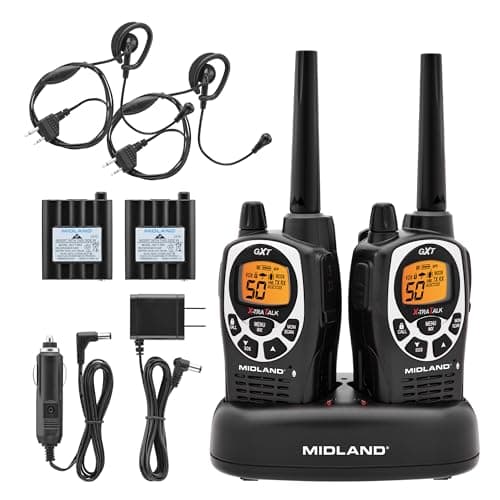 Midland GXT1000VP4 (2-pack) A simple two-radio pack with NOAA weather alerts, whisper mode and a 4 AA fallback. Midland's own figure is 1/2 to 2 miles, which covers any campground. | Best all-round RV pairGMRS licenseMid-price | 6.1/10Researched | Check price · Amazon #ad · Disclosure |
| 2 | 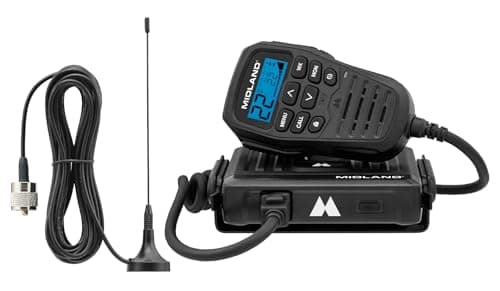 Midland MXT275 MicroMobile (15 W) 15 W from the tow vehicle with the controls on the mic and the body hidden, plus a magnetic roof antenna, for talking rig to rig instead of handheld to handheld. | Best for traveling in convoyGMRS licensePremium | 6.9/10Researched | $199.99Amazon #ad · Disclosure |
| 3 | 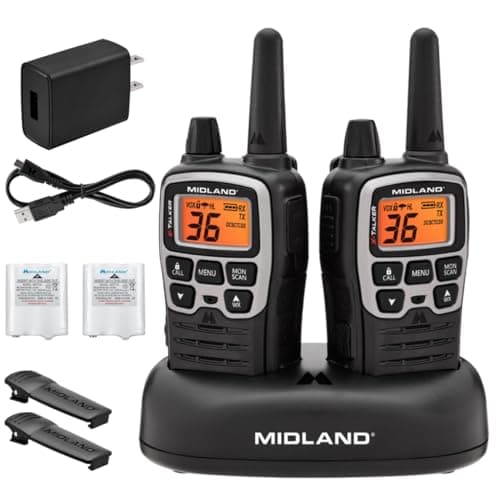 Midland X-Talker T71VP3 (2-pack) The same parking and hitching job with no FCC license at all, plus silent operation and three AA cells as the backup. | Best license-free pairNo licenseMid-price | 5.7/10Researched | $81.49Amazon #ad · Disclosure |
| 4 | 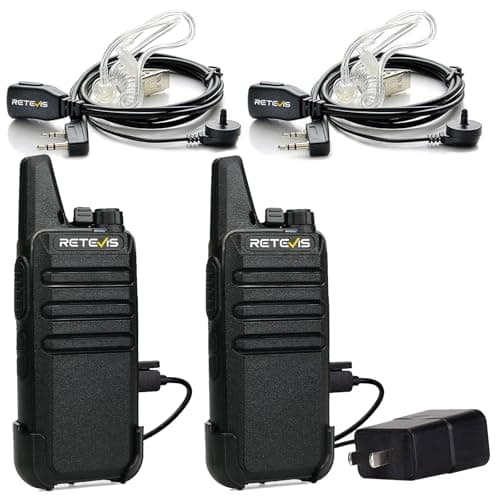 Retevis RT22 (2-pack) Screenless, pre-paired and tiny, with a USB-C battery and an honest 0.5 to 2 mile rating. Nothing to set up before you back in. | Best cheap pair for backing inNo licenseBudget | 5.5/10Researched | $39.99Amazon #ad · Disclosure |
| 5 | 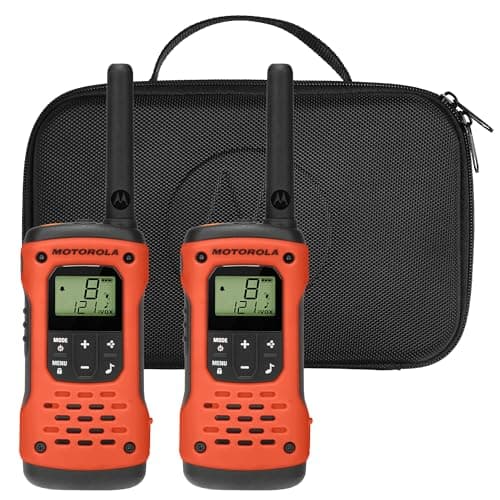 Motorola Talkabout T605 H2O (2-pack) IP67 and it floats, so the dump station, the lake and a rainy hookup are not a problem. Up to 23 hours on three AA cells. | Best around water and hookupsNo licenseMid-price | 6.8/10Researched | $94.45Amazon #ad · Disclosure |
| 6 | 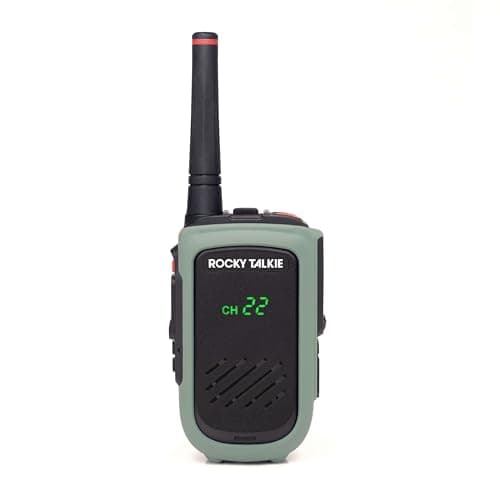 Rocky Talkie Expedition Radio (single radio) 5 W GMRS, 8 repeater channels, a removable antenna and a 4 to 6 day battery, for dispersed sites far from a host or a cell tower. | Best for boondockingGMRS licensePremium | 7.9/10Researched | $195.00Amazon #ad · Disclosure |
#ad · Prices come live from Amazon, last checked October 5, 2026. Scores are ours, built from published specs, manuals and FCC rules. Photos come from each product's Amazon listing; a radio we can't show a real photo of is left blank rather than illustrated. Tap a row for the full write-up.
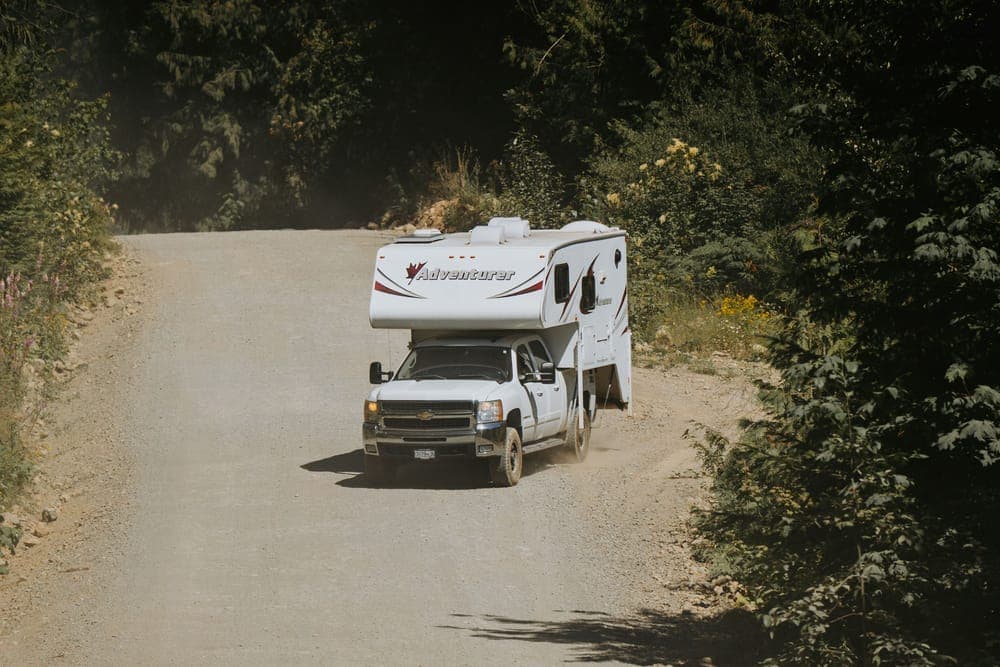
RV radios get bought for one moment: the one where somebody is behind a 30-foot trailer in a tree-lined site, shouting over a diesel, while the driver watches a mirror that shows nothing useful. Two cheap radios fix that completely. Phones do not — a call drops, a speakerphone echoes, and the campground with the best sites usually has the worst signal.
But "a radio for the RV" is really three different purchases, and the mistake is buying one radio for all three. Backing in needs 50 feet of clear audio. Hitching up needs the same. Keeping two rigs together on a highway needs 10 times the reach of any handheld, which means a radio in the dash and an antenna on the roof. This page covers all three, and says which pick is for which.
The three jobs in an RV
1. Parking and hitching. Short range, hands often full, one person spotting. What matters here is loud clear audio, a radio that is already on the right channel when you grab it, and ideally hands-free talking so the spotter can keep both hands up. Range is irrelevant: you are 40 feet apart.
2. Around camp and out from camp. Kids at the playground, somebody walking to the shower block, two couples taking different trails. This is where a mile or two of reach and a weather receiver start to matter, because campgrounds sit in valleys and under trees and afternoon storms arrive without a phone alert.
3. Convoy travel. Two rigs on the interstate, a lead vehicle calling exits, fuel stops and the low bridge ahead. Handhelds will not do this reliably at highway spacing. A 15 W GMRS mobile with a roof antenna will, and it is the single biggest upgrade in RV comms. Our convoy radio guide goes through the protocol.
How we picked
Every radio is scored on our published rubric — real-world reach, ease of use, toughness and weather, power and battery, field features and value — from the makers' own product pages, spec sheets and manuals. The method is on how we rank radios. These are research picks from published specs, not test results, and every figure links to its source. Availability was confirmed on each maker's own store on 2026-10-05.
For the RV use case, the weighting changed in three ways:
- Simplicity beat range. A radio that is pre-paired, or that pairs in one button press, is worth more here than two extra advertised miles nobody will ever get.
- A battery plan B mattered. An RV has 12 V everywhere, but it also has a week between hookups. AA or AAA fallback earned points; so did USB-C, because every rig has a USB socket.
- Weather alerts earned a place. You are sleeping in a thin-walled box in a field. A NOAA receiver is worth more in an RV than almost anywhere else (NWS: NOAA Weather Radio).
The picks in detail
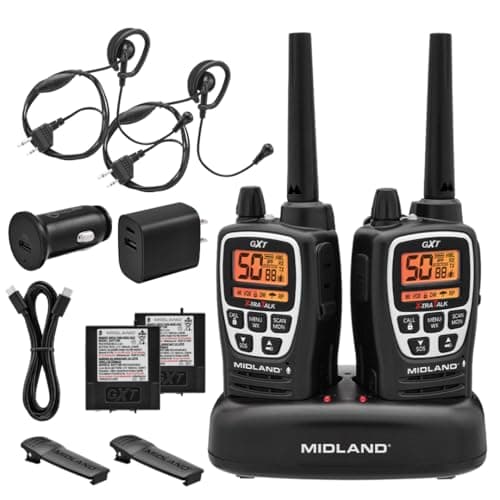
1. Midland GXT1000VP4: best all-round RV pair
The default answer, and the radio you see clipped to more RV awnings than anything else. It is a two-radio pack with 50 channels, 142 privacy codes, NOAA weather alert with Weather Scan, an SOS siren, whisper mode, silent operation and nine-level hands-free eVOX, and it runs on the included NiMH packs or four AA batteries (Midland GXT1000VP4 page).
Credit to Midland for being honest about reach where almost nobody is: alongside the "up to 36 miles" on the box, its own page says the GXT "averages 1/2-2 miles in normal conditions." For an RV that is exactly the right answer — half a mile covers every campground loop in America, and nothing a handheld does will cover a highway convoy anyway.
The cost is the license. These are GMRS radios, and Midland says so plainly: a GMRS license from the FCC, one application that covers you and your immediate family (FCC GMRS page). No exam — see how to get a GMRS license.
Buy it if you want one pack that handles parking, camp and storms, and you will do the paperwork. Skip it if you want repeater access or a real water rating: there are no repeater channels, and the JIS4 rating is splash-only — and it is lost when a headset is plugged in.
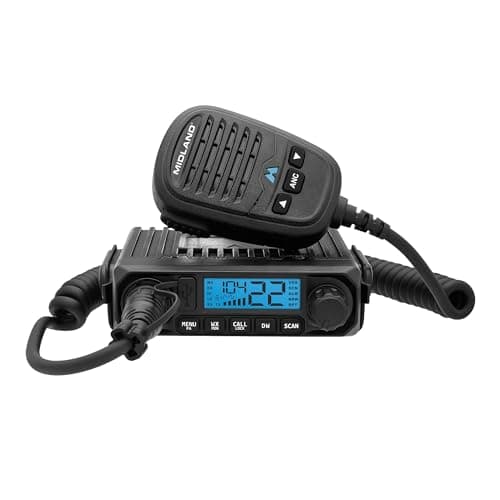
2. Midland MXT275 MicroMobile: best for traveling in convoy
The pick that actually solves the second rig. 15 W instead of a handheld's couple of watts, a magnetic 2.1 dB antenna on the roof instead of a stub by your ear, all the controls built into the mic and the radio body hidden away, and 8 split-tone repeater channels (Midland MXT275 page). It runs off a 12 V socket, so there is no hardwiring and no dash surgery — which is why it suits a tow vehicle or a Class C far better than a bolted-in radio.
Two things to know. Midland's manual notes that "due to output power regulations channels 1 through 7 cannot be removed from the Low transmit power setting", so your convoy channel should be one of 15 to 22. And Midland states no water or dust rating for it, which matters if the radio ends up in an open-cab UTV instead. If you want the family, our MicroMobile MXT115 vs MXT275 vs MXT575 comparison lines the three up.
Buy it if you travel with another rig, or want the range to reach a GMRS repeater on a mountain pass. Skip it if the only job is parking: it sits at the premium tier, which is a lot of radio for a 50-foot conversation.
3. Midland X-Talker T71VP3: best license-free pair
Everything the GXT1000 does for the parking-and-camp job, with no FCC paperwork at all. Midland's top license-free X-Talker: 36 listed channels, 121 privacy codes, Weather Alert Radio with Weather Scan, silent operation, nine-level eVOX, a headphone jack, and two 1000 mAh packs with a desktop charger and a 3 AA fallback in the box (Midland T71VP3 page).
FRS is licensed by rule — no form, no fee (FCC FRS page) — in exchange for a 2 W cap on the main channels (47 CFR 95.531). Across a campground loop you will not notice. Be realistic about Midland's own runtime note too: "around 5 hours at 90-5-5 when being used on Hi power", which is why the AA bay is on the spec list.
Buy it if nobody in the rig wants to hold a license. Skip it if you are buying for the "38 miles" on the box — see range claims explained for where that number comes from.
4. Retevis RT22: best cheap pair for backing in
If the radios exist purely so one person can say "two more feet, then hard left", this is the honest minimum. A pre-paired 2 W FRS pair with no screen at all, a knob and two buttons, a 1000 mAh Li-ion on a Type-C port, VOX for hands-free spotting, and a published range of "0.5 to 2 miles" (Retevis RT22 page). They come out of the box on the same channel and code, so there is nothing to set before you back in.
The limits are easy to live with here and worth stating: 16 channels rather than 22, so they cannot meet a neighbor's radio on every FRS channel, no weather receiver, and only light water resistance against rain and droplets.
Buy it if parking and hitching are the whole job and you want to spend the least. Skip it if you also want NOAA alerts or camp-wide reach.
5. Motorola Talkabout T605 H2O: best around water and hookups
Dump stations, fresh-water fills, lake sites and rain all point to the same radio. Motorola lists IP67 including submersion to one meter for 30 minutes, a body that floats face up on the supplied NiMH pack, a water-activated flashlight, and 11 NOAA weather channels with alerts (Motorola TALKABOUT T600 series page). Its datasheet gives up to 9 hours on the pack and up to 23 hours on three AA cells (T605 datasheet).
That AA figure is the best on this page, and in a rig between hookups it is the number that counts. The T605 pack also includes a case, spare batteries and earpieces, which is a genuinely useful bundle for a storage bay.
Buy it if the radios will get wet, or the rig spends time near water. Skip it if the budget is tight: it is the priciest FRS pair here, and headset use is for dry conditions only.
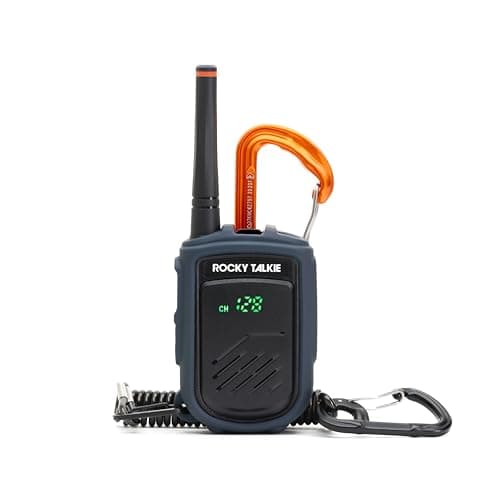
6. Rocky Talkie Expedition Radio: best for boondocking
For dispersed sites, forest roads and anywhere with no host, no hookups and no bars. 5 W GMRS, IP67 to one meter, a replaceable 1800 mAh Li-ion over USB-C rated at 4 to 6 days, 8 GMRS repeater channels, NOAA weather monitoring, and a removable SMA-male antenna with both a 7.5 cm and a 17 cm whip in the box (Rocky Talkie Expedition Radio page).
Rocky Talkie also publishes terrain-by-terrain figures rather than one box number: 2 to 8 miles in mountains, 0.5 to 5 in forest and hills, up to 1.5 miles in a city. Those are the only honest numbers for a radio you are relying on 20 miles down a forest service road. Pair it with a repeater and the reach changes entirely — GMRS repeaters explained.
Buy it if you camp away from other people and want a radio that will still be charged on day five. Skip it if you want a pair cheaply: it is sold one radio at a time at the premium tier.
In detail
The picks, in full
Rank 01
Best all-round RV pair
Midland GXT1000VP4 (2-pack)
A simple two-radio pack with NOAA weather alerts, whisper mode and a 4 AA fallback. Midland's own figure is 1/2 to 2 miles, which covers any campground.
Published specsResearched · every figure sourced
How the 6.1 score breaks down
- Real-world reach (30%)
- 5
- Ease of use (20%)
- 7
- Toughness & weather (15%)
- 5
- Power & battery (15%)
- 7
- Field features (10%)
- 7
- Value (10%)
- 7
What the specs support
- Midland publishes a realistic figure (1/2 to 2 miles in normal conditions), so you know what the pair will really do
- Runs on the included NiMH packs or 4 AA batteries, so a dead pack doesn't end the day
- NOAA weather alerts, SOS siren and e-VOX hands-free are built in
Where it falls short
- No repeater channels, and Midland doesn't state the transmit power
- JIS4 is splash protection only, and it's lost when a headset is plugged in
- Slow desktop charging (12 hours) with no USB port
Skip this if…
…Skip it if you need to reach across a ridge or hit a local repeater: there are no repeater channels, and Midland itself says to expect 1/2 to 2 miles in normal conditions.
#ad · Price as of October 5, 2026 · How we make money for the link to Midland GXT1000VP4 (2-pack)
Rank 02
Best for traveling in convoy
Midland MXT275 MicroMobile (15 W)
15 W from the tow vehicle with the controls on the mic and the body hidden, plus a magnetic roof antenna, for talking rig to rig instead of handheld to handheld.
Published specsResearched · every figure sourced
How the 6.9 score breaks down
- Real-world reach (30%)
- 8
- Ease of use (20%)
- 7
- Toughness & weather (15%)
- 4
- Power & battery (15%)
- 8
- Field features (10%)
- 6
- Value (10%)
- 7
What the specs support
- Plugs into a 12V socket, with no hardwiring needed
- Hideaway body and control mic keep the dash clear
- Repeater capable, and the SO-239 jack takes an upgraded antenna
Where it falls short
- Midland states no IP or water rating
- No PA or intercom jack listed, unlike the MXT115P PRO
- Channels 1-7 stay on low power (manual)
Skip this if…
…Skip it if the radio goes in an open-cab tractor or UTV that sees rain and dust: Midland states no water rating for the MXT275, while the MXT115P PRO at the same 15 W is IP67.
#ad · Price as of October 5, 2026 · How we make money for the link to Midland MXT275 MicroMobile (15 W)
Rank 03
Best license-free pair
Midland X-Talker T71VP3 (2-pack)
The same parking and hitching job with no FCC license at all, plus silent operation and three AA cells as the backup.
Published specsResearched · every figure sourced
How the 5.7 score breaks down
- Real-world reach (30%)
- 4
- Ease of use (20%)
- 8
- Toughness & weather (15%)
- 4
- Power & battery (15%)
- 6
- Field features (10%)
- 7
- Value (10%)
- 7
What the specs support
- AA fallback plus 1000 mAh packs and a full charging kit
- Weather Scan, silent mode and hands-free eVOX
- Works with any other FRS or GMRS radio on the shared FRS channels
Where it falls short
- Midland's own runtime figure is about 5 hours on high power
- Only "water resistant"; no IP rating
- Transmit power isn't published, and FRS rules still cap what it can do
Skip this if…
…Skip it if you're buying it for the "38 miles": through hills and trees it's still a fixed-antenna FRS radio, and a GMRS radio is the real step up in reach.
#ad · Price as of October 5, 2026 · How we make money for the link to Midland X-Talker T71VP3 (2-pack)
Rank 04
Best cheap pair for backing in
Retevis RT22 (2-pack)
Screenless, pre-paired and tiny, with a USB-C battery and an honest 0.5 to 2 mile rating. Nothing to set up before you back in.
Published specsResearched · every figure sourced
How the 5.5 score breaks down
- Real-world reach (30%)
- 4.5
- Ease of use (20%)
- 8
- Toughness & weather (15%)
- 3
- Power & battery (15%)
- 6
- Field features (10%)
- 4
- Value (10%)
- 8
What the specs support
- States 2 W and a realistic 0.5 to 2 mile range
- USB-C Li-ion and very light
- Pre-paired out of the box; no screen to confuse anyone
Where it falls short
- Only 16 channels, so it can't reach every FRS channel another family's radio might use
- No weather channel, and only light water resistance
Skip this if…
…Skip it if you need NOAA alerts or will match channels with other brands' 22-channel radios: it has 16 channels and no weather receiver.
#ad · Price as of October 5, 2026 · How we make money for the link to Retevis RT22 (2-pack)
Rank 05
Best around water and hookups
Motorola Talkabout T605 H2O (2-pack)
IP67 and it floats, so the dump station, the lake and a rainy hookup are not a problem. Up to 23 hours on three AA cells.
Published specsResearched · every figure sourced
How the 6.8 score breaks down
- Real-world reach (30%)
- 4
- Ease of use (20%)
- 8
- Toughness & weather (15%)
- 9
- Power & battery (15%)
- 7
- Field features (10%)
- 8
- Value (10%)
- 8
What the specs support
- IP67 and it floats face up, with a flashlight that switches on when it hits the water
- Runs on the NiMH pack or three AA batteries, so a dead pack isn't the end of the day
- The T605 pack adds a case, spare batteries and earpieces
Where it falls short
- Motorola doesn't publish the transmit power; reach is ordinary FRS
- It may not float with some AA batteries, per Motorola
- Headset use is for dry conditions only
Skip this if…
…Skip it if you need to talk between boats or trucks miles apart: IP67 keeps it alive in the lake, but a fixed-antenna FRS radio won't cover that distance.
#ad · Price as of October 5, 2026 · How we make money for the link to Motorola Talkabout T605 H2O (2-pack)
Rank 06
Best for boondocking
Rocky Talkie Expedition Radio (single radio)
5 W GMRS, 8 repeater channels, a removable antenna and a 4 to 6 day battery, for dispersed sites far from a host or a cell tower.
Published specsResearched · every figure sourced
| Service / license | GMRS (FRS compatible); GMRS license required, US use only |
|---|---|
| Transmit power | 5 W |
| Channels | 22 channels, 121 privacy codes (CTCSS and DCS); channel lock, high/low power, scan, dual channel watch |
| Repeater and antenna | Repeater capable (8 GMRS repeater channels); removable SMA-male antenna, 7.5 cm and 17 cm antennas included |
| Water rating | IP67 (1 meter submersion) |
| Battery | Replaceable 7.4 V 1800 mAh Li-ion, USB-C; "4–6 days" per chargeAdvertised |
| Weather and weight | NOAA weather channels and emergency alert monitoring; 9.1 oz |
| Advertised range | "max range of over 35 miles, with 2–8 miles more typical in backcountry terrain"Advertised |
| Maker's terrain figures | Line-of-sight 35+ miles; mountains 2 to 8 miles; forest/hills 0.5 to 5 miles; rivers 0.5 to 3 miles; city up to 1.5 milesAdvertised |
How the 7.9 score breaks down
- Real-world reach (30%)
- 8
- Ease of use (20%)
- 8
- Toughness & weather (15%)
- 9
- Power & battery (15%)
- 8
- Field features (10%)
- 7
- Value (10%)
- 6
What the specs support
- Removable SMA antenna with short and long options, plus 8 repeater channels
- IP67 with a replaceable Li-ion battery and USB-C, rated for 4-6 days
- The maker publishes terrain-by-terrain range, not just a box number
- Channel lock and a simple 22-channel layout
Where it falls short
- Sold as a single radio, so a pair lands firmly in the premium tier
- No VOX hands-free or flashlight listed by the maker
Skip this if…
…Skip it if you don't want a GMRS license: it's a GMRS radio, and Rocky Talkie's license-free Mountain Radio (FRS, 2 W) covers most trail use.
#ad · Price as of October 5, 2026 · How we make money for the link to Rocky Talkie Expedition Radio (single radio)
Backing in and hitching up: the only features that matter
At 40 feet apart every radio on earth has enough range, so judge on the things that actually go wrong.
- Already on the right channel. A pre-paired pair, or a radio with a channel lock, means nobody is reading a screen while a trailer rolls. The Retevis pair ships matched; Rocky Talkie radios have a channel lock.
- Hands-free talking. VOX or eVOX lets the spotter keep both hands up and still talk. Midland puts nine levels of eVOX on the GXT1000 and T71VP3 for exactly this.
- Loud, clear audio over a diesel. This is where a cheap toy-grade radio fails outright. See toy walkie-talkies vs real FRS radios.
- An earpiece, if you park at night. A speaker at full volume at 10 pm in a quiet loop makes you the neighbor everyone remembers. Our earpiece and headset guide covers connector matching, which is the part people get wrong.
Talking rig to rig on the road
This is where handhelds disappoint people, and it is not the radios' fault. A handheld has a stub antenna at seat height inside a metal box, and at highway spacing with a hill between you it simply will not hold a conversation. Two things fix it, in this order.
Height and the antenna do more than watts. Any mobile radio with a magnetic antenna on the roof outperforms a handheld inside the cab by a wide margin, before you count the power. The MXT275 includes the antenna and mount.
Then power. Midland rates the MXT275 at 15 W against a GMRS handheld's 5 W, and regulations keep channels 1 to 7 on the low setting, so pick a convoy channel from 15 to 22. If you want the step up from there, best GMRS radios for overlanding covers the 50 W class, and how to install a GMRS radio walks the mounting and grounding.
What about CB? Truckers still use channel 19, and for highway traffic information a CB has a real advantage: everyone around you already has one. It is a different band with different behavior — GMRS vs CB lays out which to pick, and best CB radios has the hardware if that is your answer.
Campgrounds, channels and etiquette
Three practical things nobody tells you in the manual.
Pick a channel away from the crowd. Channel 1 and channel 22 are the two most-used channels in any busy campground, because they are the ends of the dial. Pick something in the middle and add a privacy code — which filters what you hear but does not make the conversation private, as privacy codes explained covers. Our walkie-talkie channels guide has the full list.
Charge on the 12 V, not the inverter. Everything here except the budget Midland pairs charges over USB; running a 2000 W inverter to fill two radios is a waste of battery. If you want radios that all run off one USB-C cable, see best rechargeable walkie-talkies.
Weather alerts earn their keep in a trailer. A NOAA receiver monitors a government transmitter and sounds a tone when it broadcasts an alert, with no cell signal involved (NWS: NOAA Weather Radio). The honest limit: the alert covers that transmitter's whole area, roughly a 40-mile radius, not your site. It is a reason to look at the sky, not a county-targeted warning.
What to look for
- A pair, not a single radio. Parking needs two radios on day one. Rocky Talkie and Midland GXT67 PRO radios are sold singly; the Midlands and the Motorola come as packs.
- NOAA weather alert, not just NOAA channels. Alert mode watches in the background; channels only help if somebody checks.
- A battery fallback or USB-C. Ideally both. A week off hookups is normal; a proprietary cradle you left at home is not recoverable.
- Hands-free (VOX/eVOX) and a headset jack, for spotting and for quiet loops at night.
- Decide the license question up front. GMRS buys power, repeater access and a mobile radio option; FRS buys zero paperwork. GMRS vs FRS is the short version.
- Do not buy a handheld for convoy work. No handheld on any list will reliably hold a highway-spaced conversation. That job needs a mobile radio and a roof antenna.
How we scored this
Every pick here is backed by the paperwork
Every pick is labeled Researched: we read each maker's published specs, manuals and range tables, check the license rules against the FCC, and score every radio on a public rubric out of 10. Every figure links to where it came from, and every range number is labeled “advertised” so you can see the difference between the box and the terrain.
Scores are our editorial judgment on that documented evidence. Commissions never set a score or decide a pick. The rubric and its weights are published.
What changed
- Published.
Questions
Frequently asked
What is the best walkie-talkie for an RV?
Do you need a license for walkie-talkies in an RV?
How far do RV walkie-talkies really reach?
Can you use walkie-talkies to back up a travel trailer?
Are walkie-talkies or a CB better for RV convoy travel?
Do RV walkie-talkies work without cell service?
Receipts
Sources
- Midland: GXT1000VP4 product page, NOAA alerts, AA fallback and the 1/2-2 mile figure (checked 2026-10-05)
- Midland: MXT275 MicroMobile product page, 15 W, control mic and included antenna (checked 2026-10-05)
- Midland: T71VP3 X-Talker product page, Weather Scan, eVOX and 90-5-5 runtime (checked 2026-10-05)
- Retevis: RT22 product page, 2 W, Type-C battery and 0.5-2 mile range (checked 2026-10-05)
- Motorola Solutions: TALKABOUT T600 H2O series product page (checked 2026-09-29)
- Motorola Solutions: T605 H2O datasheet PDF, NiMH and AA runtimes (checked 2026-09-29)
- Rocky Talkie: Expedition Radio product page, 5 W, IP67, 4-6 day battery and terrain range (checked 2026-10-05)
- FCC: Family Radio Service (FRS) page (checked 2026-10-05)
- FCC: General Mobile Radio Service (GMRS) page (checked 2026-10-05)
- 47 CFR 95.531, FRS channel power limits (via Cornell LII, checked 2026-10-05)
- NWS: NOAA Weather Radio All Hazards (checked 2026-10-05)
Specs and range figures come from each maker's own pages and manuals, linked on every product, and license, power and channel rules come from the FCC and 47 CFR Part 95. Range numbers are the maker's advertised claims and are labeled that way, so you can tell the box number from the terrain number. Prices come live from Amazon with the time we checked. Read the full method.