You're in the aisle, or on a product page, looking at two pairs of license-free radios. One says "up to 20 miles." The other says "up to 38 miles." You need to reach the truck at the far end of the property, where the phone has no signal, so the bigger number looks like the answer. It usually isn't. This page decodes the number on the box, puts it next to what the same maker says in its own fine print, and answers the question people type into search bars: do long range walkie-talkies with 100 miles of range exist?
We don't run our own range trials. Everything below is quoted from a maker's product page, spec sheet, manual or FAQ, or from the FCC, and each one is linked. For the terrain-by-terrain version of the same evidence, see how far walkie-talkies really reach.
What the number on the box means
The headline range is a best case: two radios with a clear, straight path between them, usually from high ground. The makers say so themselves, if you find the asterisk.
- Motorola's footnote for its larger Talkabouts: "Mountain to valley - up to 35 miles, open water - up to 6 miles, neighborhood - up to 2 miles" (Motorola T800 page). Its lineup page adds that the 35 miles is "in ideal line-of-sight conditions" (Motorola lineup).
- Midland's GXT spec sheet: "Maximum range can only be achieved over water or open rural areas under optimum conditions" (GXT1000VP4 spec sheet).
- Midland's T10 FAQ: "The 'up to' range is under optimal conditions (ex: over open water, desert, or mountain top to mountain top)" (Midland T10 page).
- Midland's MXT575 spec sheet, under its range chart: "These are estimated distances based on field use and advertised ranges. Actual distance may vary" (MXT575 spec sheet).
So the number on the box isn't a lie, exactly. It's the answer to a question you aren't asking: how far can this radio talk from one mountaintop to another? You want to know how far it talks from a creek bottom to a pickup behind a hill.
The claim vs the same maker's own fine print
Here are radios from our catalog with the headline figure in one column and the same company's smaller figure in the next. Both columns are advertised numbers, quoted from the maker.
| Radio (service) | Headline claim | The same maker's fine print |
|---|---|---|
| Motorola Talkabout T800 / T600 / T470 series (FRS) | "up to 35 miles" | "open water - up to 6 miles, neighborhood - up to 2 miles" (Motorola) |
| Motorola Talkabout T110 (FRS) | "up to 16-mile range" | "Open Water: Up to 3 miles / Neighborhood: Up to 0.5 miles" (Motorola) |
| Midland GXT1000VP4 (GMRS) | "Up to 36 miles" | "The GXT averages 1/2-2 miles in normal conditions" (Midland FAQ) |
| Rocky Talkie Mountain Radio (FRS) | "tested max range of 35+ miles" | "though 1–5 miles is typical in backcountry terrain"; city "up to 1 mile" (Rocky Talkie) |
| Rocky Talkie Expedition Radio (GMRS) | "max range of over 35 miles" | "with 2–8 miles more typical in backcountry terrain" (Rocky Talkie) |
| BCA BC Link 2.0 (FRS) | "Line of Sight Range Up to 40 mi" | "Terrain Range 0.5 to 6 mi" (BCA page); the manual says "Approximately 6 miles line of sight" (BCA manual) |
| Midland MXT575 (GMRS mobile, 50 W) | "75 Miles MAX" | "20-25 Miles IDEAL" (partial obstruction); "10-15 Miles OBSTRUCTED" (Midland spec sheet) |
| BTECH GMRS-20V2 (GMRS mobile, 20 W) | "Talking Range Maximum 75 Mile" | "Typical simplex range may be around 1–5 miles in-town or wooded areas, 5–15 miles in open rural terrain" (BTECH page) |
Read down the right-hand column and a consistent picture shows up. Handhelds: a half mile to a few miles on real ground, up to about 8 in the mountains for the best-specified GMRS radio. Vehicle radios: a few miles in town or timber, 10 to 25 in open country. That's a long way from 35, and further still from 100.
It's also worth noticing who publishes the smaller number at all. Rocky Talkie and BCA print terrain rows on the product page. Motorola and Midland put theirs in a footnote, a spec sheet or an FAQ. Some makers skip the headline and print a modest figure outright: Retevis lists its RT22 at "0.5 to 2 miles" ( Retevis RT22 page), and Midland says its GXT67 PRO "can easily reach up to 5 miles, depending on the terrain" (Midland GXT67 PRO page). Those are the numbers I'd trust first.
Why a bigger FRS number isn't more reach
Here are the headline claims on the license-free FRS radios in our catalog: Motorola T110, up to 16 miles. Midland T10, up to 20. Midland T31, 26. Midland T51, 28. Midland T61, 32. Motorola T470, T600 and T800, 35. Cobra ACXT645, 35 (Cobra). Midland T71, 38 (Midland). Cobra RX680, 38 (Cobra). At the other end, Baofeng's GT-18 claims "up to 3 miles" ( Baofeng).
Now the rule they all live under. The FCC caps FRS at 2 W ERP on channels 1 to 7 and 15 to 22 and 0.5 W on 8 to 14 (FCC FRS page), and says FRS-only units "have antennas that are integrated with the unit" (FCC consumer guide). So a "38-mile" FRS radio is allowed no more power than a "20-mile" one, and neither can take a bigger antenna. The FCC's own expectation for all of them is "up to two miles on the 2 watt channels, depending on conditions."
That doesn't make every FRS radio identical. Build, battery, channel lock and how well the radio hears a weak signal all differ. But if you're choosing between two license-free pairs on the strength of 20 miles vs 38, you're comparing marketing, not reach. Our best walkie-talkies without a license ranks FRS radios on the things that do differ.
Why the gap is so big
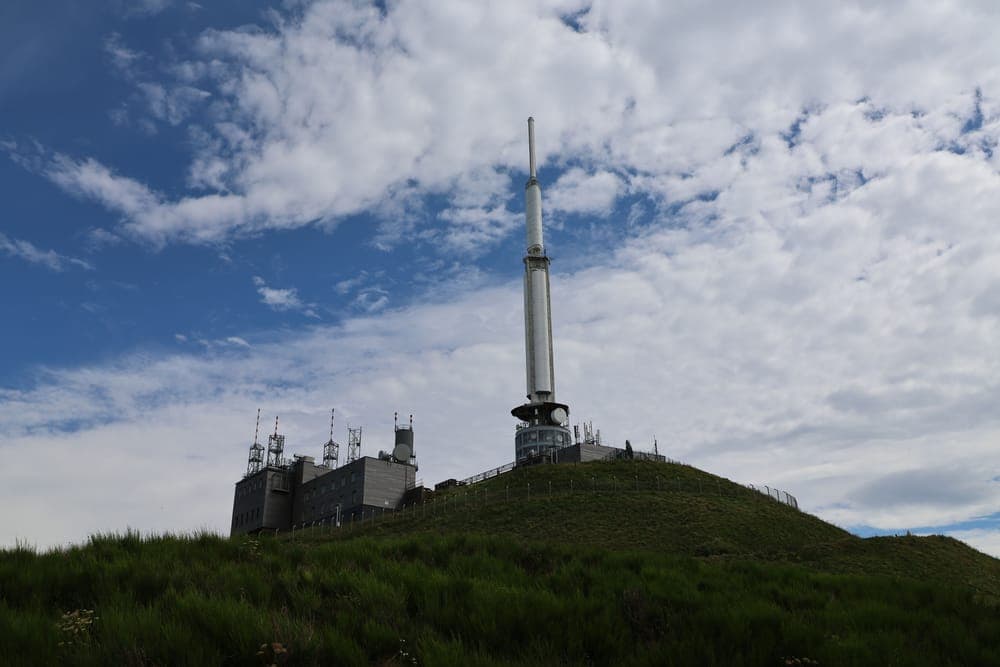
FRS and GMRS radios work around 462 and 467 MHz, and at those frequencies the signal mostly travels in a straight line. Midland's mobile-radio FAQ says range "has the most to do with line of sight," and that two radios a mile apart with "a large hill between them" may not communicate at all, while two radios "ten miles apart with nothing between them (picture a mountain top to a mountain top)" may do fine (Midland MXT575 FAQ). The box number is the mountaintop case. Your lease, your trail and your campground are the hill case.
Height is the other half. The FCC's definition of a repeater says it works from "a favorable antenna location (typically high above the surrounding terrain)" (47 CFR 95.303). A person standing in timber has none of that. The full explanation, with every maker's terrain figures in one table, is on how far can walkie-talkies reach.
Long range walkie-talkies, 100 miles: do they exist?
Not in anything we can find support for. Across the 52 radios in our catalog (license-free FRS handhelds, GMRS handhelds, GMRS vehicle radios and CB radios), the biggest handheld claims are 40 miles: Midland's T290VP4 GMRS pair, "Xtreme Range* - Up to 40 miles" (Midland T290VP4 page), and BCA's line-of-sight figure for the BC Link 2.0. The biggest numbers of any radio are 75 miles, and both belong to vehicle radios: Midland's 50 W MXT575 and BTECH's 20 W GMRS-20V2. Both makers put their own obstructed or typical figures at 10 to 15 miles and 1 to 5 miles.
The FCC's expectation for GMRS, the higher-powered licensed service, is "one to twenty-five miles depending on station class, terrain, and repeater use" (FCC GMRS page). The same page says repeaters "may not be linked via the internet" to extend communications across a large area. So there is no legal way to chain GMRS repeaters into long-haul coverage either.
What about searches for 1,000 or 3,000 miles, or "nationwide" walkie-talkies? Anything that talks that far isn't going radio to radio. It rides on a cellular or internet connection, which is exactly what's missing where phones don't work. We compare those devices and apps with real radios in walkie-talkies vs walkie-talkie apps.
What is the longest range walkie-talkie you can buy?
It depends what you mean, so here are the honest answers to the three versions of the question.
Handheld to handheld, no repeater: a GMRS handheld rated at 5 W with a removable antenna. The largest backcountry terrain figure any handheld maker in our catalog publishes is Rocky Talkie's 2 to 8 miles in mountains for its Expedition Radio (Rocky Talkie Expedition page). Midland's GXT67 PRO is listed at "up to 5 miles, depending on the terrain." Both need a GMRS license.
With help from a repeater: any repeater-capable GMRS radio. BTECH's GMRS-V2 page lists 1 to 5+ miles typical in open line-of-sight simplex and "with GMRS repeaters: 15–50+ miles (terrain and repeater height dependent)" (BTECH GMRS-V2 page). That's advertised, but it's the biggest honest jump available to a handheld. Our GMRS repeaters guide explains how they work and how to use one.
From a vehicle or a base: a GMRS mobile radio with its antenna on the roof. GMRS mobile, base and repeater stations may run up to 50 W on the main channels (47 CFR 95.1767), and Midland lists 20 to 25 miles with partial obstruction for its 50 W MXT575.
License-free: every FRS radio shares the same power ceiling and fixed antenna, so no FRS radio is the long-range winner on the rules. Pick one whose maker tells you the real number, and plan on the FCC's two miles. The ranked answer, across all of these, is our best long-range walkie-talkies list.
What actually buys distance
- GMRS instead of FRS. Higher power and, per the FCC, units that "may have detachable antennas" (FCC consumer guide). It takes a license, which covers your family. See GMRS radio range for what each station type reaches.
- A repeater. Someone else's tower or hilltop does the work your handheld can't.
- A mobile radio with a roof antenna. Midland's MXT275 manual says to mount the antenna "as high as possible on your vehicle" (Midland MXT275 manual), and Midland's page for its 15 W MXT115P PRO says it "triples the effective range of standard handheld radios" (Midland MXT115P PRO page). That's a claim like any other, but Midland backs it with a terrain chart. Our GMRS handheld vs mobile range comparison covers the trade-off.
- Height. The ridge, the stand, the second-story window, a base antenna on a mast. Free, and the single biggest lever you control. For a whole property, see our farm and ranch radio picks.
How to read any range claim in 30 seconds
- Find the asterisk. If the number has one, the footnote describes ideal conditions. Read it.
- Look for a terrain row. Mountains, forest, city, neighborhood, obstructed. That's your number. If there isn't one, use the FCC's expectation for the service.
- Check the service. FRS means no license and a 2 W ceiling. GMRS means a license and more headroom. If you can't tell, the radio's channels and power decide it under the FCC's rules.
- Check the antenna. Fixed, or removable so you can fit a longer one?
- Check for repeater channels. Without them, a GMRS radio can't use a repeater.
- Plan on the smallest number the maker prints for ground like yours. Anything more is a good day.
Radios with honest fine print
If you've read this far, you want a radio whose maker tells you what it really does. These three come with modest, specific figures from the maker, and between them they cover the no-license handheld, the GMRS handheld and the vehicle radio.
Our picks for this job
Radios whose makers print the small number
Each maker below publishes a terrain-based or modest range figure alongside (or instead of) a headline number. Two need a GMRS license; one doesn't.
 Stock photo
Best Midland handheld for wet weather
Midland GXT67 PRO (single radio)
Needs a GMRS license. Midland skips the 36-mile headline here and says 'up to 5 miles, depending on the terrain'; rated at 5 W, IP67, with 8 repeater channels.
Check price · Amazon#ad · Price set by Amazon · How we make money for the link to Midland GXT67 PRO (single radio)
 Stock photo
Best for climbers and ski tourers
Rocky Talkie Mountain Radio (single radio)
No license. Rocky Talkie prints the 35+ mile maximum and, right beside it, 1 to 5 miles in mountains and up to 1 mile in the city.
Check price · Amazon#ad · Price set by Amazon · How we make money for the link to Rocky Talkie Mountain Radio (single radio)
 Stock photo
Best for open-cab UTVs and side-by-sides
Midland MXT115P PRO MicroMobile (15 W)
Needs a GMRS license. A 15 W, IP67 vehicle radio with a plain chart: up to 15 miles peak to peak, 10 suburban or rural, 5 in neighborhoods or dense forest.
Check price · Amazon#ad · Price set by Amazon · How we make money for the link to Midland MXT115P PRO MicroMobile (15 W)
What else you'll need: a GMRS license for the GXT67 PRO and the MXT115P PRO, two of each handheld (both are sold as single radios), and a steel roof or mount for the MXT115P PRO's magnetic antenna. More range guides are on the Real Range hub.
How we scored this
Radios we claim to have lab-tested: 0
Plenty of radio sites say they range-tested everything they list. We haven't, and we say so. Every pick here is labeled Researched: we read each maker's published specs, manuals and range tables, check the license rules against the FCC, and score every radio on a public rubric. Every figure links to where it came from, and every range number is labeled “advertised.”
Scores are editorial judgments from that documented research, not test results. Commissions never set a score or decide a pick. The rubric and its weights are published.
Questions
Frequently asked
What is the longest range walkie talkie you can buy?
Are there walkie-talkies with a 100-mile range?
Why do walkie-talkie boxes say 35 or 38 miles?
Is a 38-mile FRS radio better than a 20-mile one?
Do licensed walkie-talkies reach farther?
What range should I actually plan on?
Receipts
Sources
- FCC: General Mobile Radio Service (GMRS) page (checked 2026-09-22)
- FCC: Family Radio Service (FRS) page (checked 2026-09-22)
- FCC consumer guide: Personal Radio Services (checked 2026-09-22)
- 47 CFR 95.303, definitions (Cornell LII, checked 2026-09-22)
- 47 CFR 95.1767, GMRS transmitting power limits (Cornell LII, checked 2026-09-22)
- Motorola Solutions: Talkabout T800 series page (checked 2026-09-22)
- Motorola Solutions: Talkabout T110 series page (checked 2026-09-22)
- Motorola Solutions: consumer Talkabout lineup page (checked 2026-09-22)
- Midland: GXT1000VP4 product page and FAQ (checked 2026-09-22)
- Midland: GXT1000VP4 spec sheet PDF (checked 2026-09-22)
- Midland: GXT67 PRO product page and FAQ (checked 2026-09-22)
- Midland: X-Talker T10 product page and FAQ (checked 2026-09-22)
- Midland: X-Talker T31VP product page (checked 2026-09-22)
- Midland: X-Talker T51VP3 product page (checked 2026-09-22)
- Midland: X-Talker T61VP3 product page (checked 2026-09-22)
- Midland: X-Talker T71VP3 product page (checked 2026-09-22)
- Midland: T290VP4 X-Talker GMRS product page (checked 2026-09-22)
- Midland: MXT575 product page and FAQ (checked 2026-09-22)
- Midland: MXT575 spec sheet PDF (checked 2026-09-22)
- Midland: MXT115P PRO product page and FAQ (checked 2026-09-22)
- Midland: MXT115P PRO spec sheet PDF (checked 2026-09-22)
- Midland: MXT275 owner's manual PDF (checked 2026-09-22)
- Rocky Talkie: Mountain Radio product page (checked 2026-09-22)
- Rocky Talkie: Expedition Radio product page (checked 2026-09-22)
- Backcountry Access: BC Link 2.0 product page (checked 2026-09-22)
- Backcountry Access: BC Link 2.0 owner's manual (checked 2026-09-22)
- BTECH: GMRS-V2 product page (checked 2026-09-22)
- BTECH: GMRS-20V2 product page (checked 2026-09-22)
- Cobra: RX680 product page (checked 2026-09-22)
- Cobra: ACXT645 product page (checked 2026-09-22)
- Retevis: RT22 product page (checked 2026-09-22)
- Baofeng: GT-18 FRS radio product page (checked 2026-09-22)
We haven't tested the radios on this page and we don't pretend to. Specs and range figures come from each maker's own pages and manuals (linked on every product), and license, power and channel rules come from the FCC and 47 CFR Part 95. Range numbers are the maker's advertised claims and are labeled that way. Prices are set by Amazon and change often, so we don't print them. Where a figure isn't published, we say so. Read the full method.