Not legal advice. This page summarizes FCC rules (47 CFR Part 95) from the official sources linked in the text. Rules and fees checked . The FCC sets its fees annually and can change its rules, so confirm the current version on fcc.gov before you rely on it.
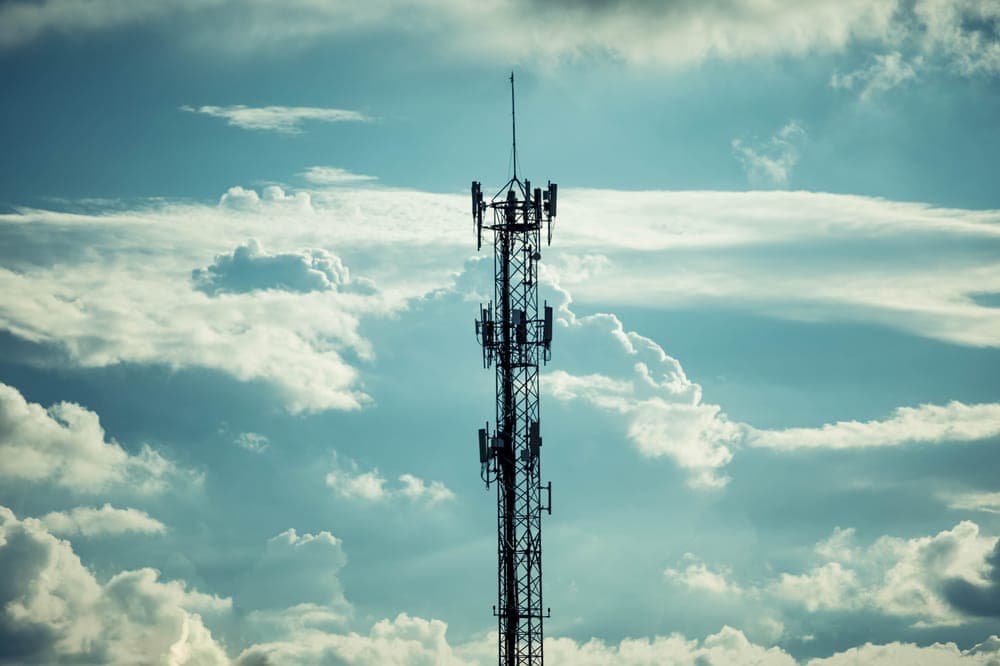
Two things set your range, and only one of them is about the radio. The first is the rule your radio is built to, which caps its transmit power. The second is what sits between the two antennas - a hill, a treeline, a wall, a crowd - and at these frequencies that is usually the whole story. Which means most of what genuinely increases range is about where the antenna is, not how much power is behind it.
Below, the changes that work, in the order of how much they give you per dollar. The first three are free.
Why your range is what it is
The other half is physics. UHF at 462 MHz travels close to line of sight. Terrain blocks it, and building materials absorb it: NIST's measurement work on signal attenuation in structures documents how much is lost going into and through buildings (NIST: attenuation and variability measurements). That is why doubling your power buys far less than you would expect, and why moving twenty feet uphill can buy more than any purchase on this page. Background on how far walkie talkies reach.
The free fixes, in order of effect
- Get higher. The single biggest free gain. Walk to the top of the rise, stand on the tailgate, move to an upstairs window, step out from behind the building. You are not adding power, you are removing the obstruction - and at UHF that is what range is made of.
- Hold the radio properly. Antenna vertical, radio away from your torso, hand off the antenna. Your body absorbs UHF, so a radio held against your chest talks noticeably less far than the same radio held out at head height. This is free and most people are doing it wrong.
- Get out of the vehicle, or get the antenna outside it. A metal body and metalized windscreen glass are a poor place to transmit from. If the radios have to stay in the vehicles, that is the argument for a mobile radio with a roof antenna - see handheld vs mobile range.
- Use the high-power channels. On FRS, channels 8-14 are capped at 0.5 W by rule. If you are on one of them, moving to channel 1-7 or 15-22 is a fourfold power increase for free.
- Clear the squelch and the codes. Set both radios to privacy code 0 while you test. A weak signal that cannot open a code-filtered squelch sounds identical to no signal at all, and this accounts for a surprising share of "my radios have no range" complaints. See privacy codes.
- Talk differently. Short, slow, specific transmissions get through marginal conditions that swallow a long sentence. Press, pause, speak across the mic, release.
A better antenna (if your radio allows it)
This is the first thing worth spending money on, and the catch is in the eligibility. An FRS radio's antenna may not be removable by rule, so there is nothing to upgrade. A GMRS handheld with an SMA connector is a different matter: the stock stubby antenna is a compromise for pocketability, and a longer half-wave whip is a real improvement in both directions.
Three things to get right:
- The connector gender. SMA-female radios (the BTECH GMRS-V2, Baofeng UV-5G) take SMA-male antennas such as the Nagoya NA-771G. SMA-male radios take the opposite. Getting this wrong is the most common wasted antenna purchase.
- The band. Buy an antenna tuned for GMRS frequencies, not a wideband scanner whip. A dual-band antenna compromises both bands to cover both.
- Height over gain, for a base. A mast-mounted base antenna above the roofline does more for a property than any gain figure. Our GMRS base stations page works through that build, and GMRS antennas covers vehicle and handheld options.
A repeater: the only big jump
Everything above is incremental. A repeater is the one change that reorders the problem: a receiver and transmitter on a hilltop or a tower listens on the 467 MHz repeater inputs and retransmits on the matching 462 MHz outputs, so two handhelds that cannot hear each other at all can both hear the machine.
BTECH, to take one maker that publishes both numbers, rates its GMRS-V2 at 1 to 5+ miles simplex and 15 to 50+ miles through a repeater. That is the scale of the difference, and no antenna or power setting comes close to it.
What you need:
- A GMRS license, because repeaters are GMRS-only. FRS radios cannot transmit on the repeater inputs at all.
- A repeater-capable radio. Many consumer GMRS radios, including the Midland GXT1000, do not have the split-frequency channels.
- A repeater within reach, plus its output channel and input tone. Directories: myGMRS and RepeaterBook.
- Permission, where the owner asks for it. Many GMRS repeaters are privately run and ask you to request access - a community norm rather than an FCC rule, but one worth respecting.
Full detail on GMRS repeaters.
What to buy
Our picks for this job
A radio that can be upgraded, and three antennas
All four assume GMRS, because FRS radios cannot legally take a different antenna. Check connector gender before buying any handheld whip: these are SMA-female radio fitments.
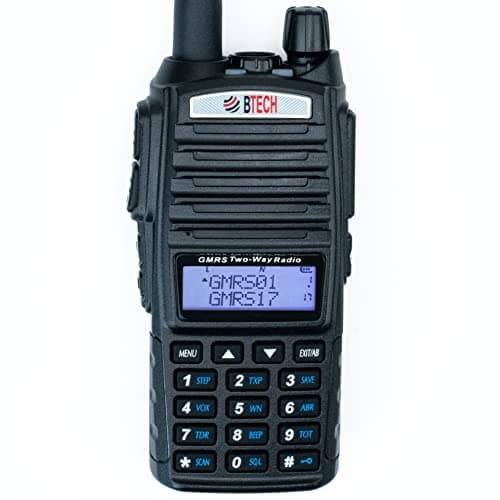
Best budget GMRS for repeater users
BTECH GMRS-V2 (single radio)
Needs a GMRS license. The cheap way into an upgradeable radio: 5 W, repeater capable, SMA-female antenna jack. BTECH publishes 1 to 5+ miles simplex and 15 to 50+ through a repeater.
Check price · Amazon#ad · Price as of November 2, 2026 · How we make money for the link to BTECH GMRS-V2 (single radio)
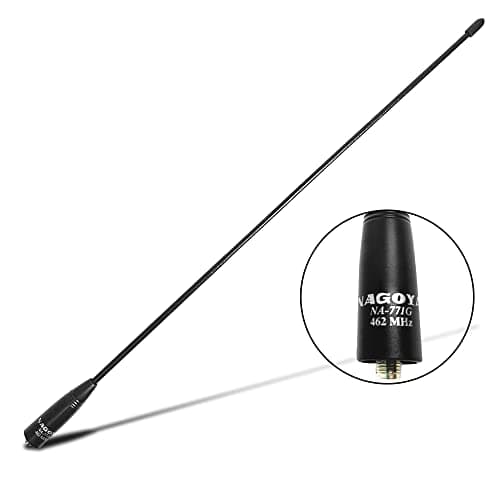
Best budget whip for SMA-female radios
Nagoya NA-771G GMRS Whip (SMA-female)
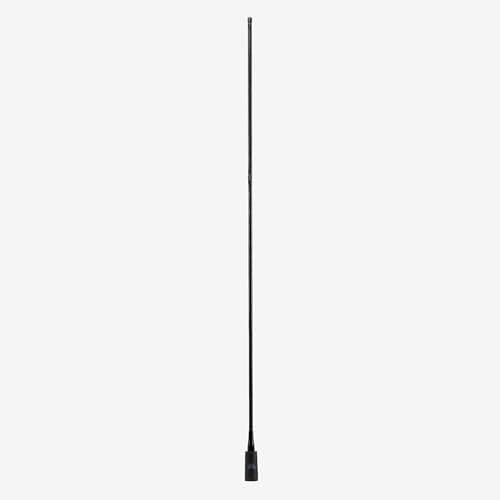
A 15.6 in half-wave GMRS whip for SMA-female radios like the GMRS-V2. The single best value upgrade on a handheld; it will not fit SMA-male radios.
$20.98Amazon#ad · Price as of November 2, 2026 · How we make money for the link to Nagoya NA-771G GMRS Whip (SMA-female)
- NagoyaNo image
Best no-drill vehicle antenna
Nagoya UT-72G Magnetic Mount GMRS Antenna
A magnetic-mount GMRS antenna that puts the radiating element on the roof of the vehicle instead of inside it. Often a bigger gain than any handheld whip.
Check price · Amazon#ad · Price as of November 2, 2026 · How we make money for the link to Nagoya UT-72G Magnetic Mount GMRS Antenna
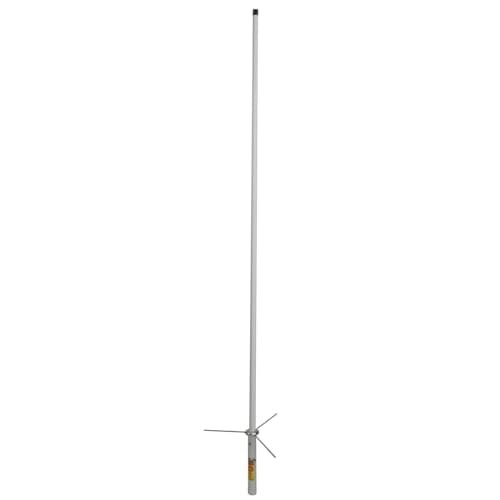
Best GMRS base antenna for a house mast
Comet CA-GMRS Base Antenna
A 42 in GMRS-only base antenna, 5.5 dBi, SO-239, rated to 135 mph with hardware included. For a house or shop mast, this plus height is the real answer.
$110.99Amazon#ad · Price as of November 2, 2026 · How we make money for the link to Comet CA-GMRS Base Antenna
What does not work
- A "range extender" for FRS radios. There is no such legal device. FRS radios may not have a removable antenna and may not be modified (47 CFR 95.531, 47 CFR 95.1761). Anything sold as an FRS range booster is either a different radio, an accessory that does something else, or illegal to use.
- An amplifier on a handheld. Outside the certification, and on GMRS the channel power limits still apply regardless of what is bolted on.
- Buying the radio with the biggest number on the box. The 36-mile radio and the 16-mile radio are both FRS at 2 W. See range claims explained.
- Adding privacy codes. They filter what you hear. They do nothing for range, and can make a weak signal inaudible.
- Buying more channels. A 50-channel radio has the same 22 real frequencies as a 22-channel one.
- Expecting power to beat terrain. A ridge between two radios is close to absolute at UHF. Height, or a repeater.
If you are stuck on FRS
If a license is not an option - radios going to other people's children, a work crew, event staff - then your ceiling is set and the honest answer is to work inside it. Use the free fixes above, pick the 2 W channels, get height wherever you can, and plan around a realistic half a mile to two miles. Then design around the gap: agreed check-in times, a physical meeting point, and a phone for anything that has to get through.
If a license is an option, GMRS is the answer to this whole page: more power, a removable antenna, repeater access, and vehicle or base installs. It is an application and a fee rather than an exam - how to get a GMRS license, and GMRS vs FRS for the comparison. FRS itself is documented on the FCC FRS page.
How we scored this
Every pick here is backed by the paperwork
Every pick is labeled Researched: we read each maker's published specs, manuals and range tables, check the license rules against the FCC, and score every radio on a public rubric out of 10. Every figure links to where it came from, and every range number is labeled “advertised” so you can see the difference between the box and the terrain.
Scores are our editorial judgment on that documented evidence. Commissions never set a score or decide a pick. The rubric and its weights are published.
What changed
- Published.
Questions
Frequently asked
How can I increase the range of my walkie talkie?
Is there a range extender for walkie talkies?
Does a longer antenna really improve walkie talkie range?
Does more power mean more range?
Will a repeater work with my FRS walkie talkie?
Receipts
Sources
- FCC: Family Radio Service (FRS) page (checked 2026-10-11)
- FCC: Personal Radio Services consumer guide (checked 2026-10-11)
- 47 CFR 95.531, FRS power limits and non-removable antenna (via Cornell LII, checked 2026-10-11)
- 47 CFR 95.1705, GMRS eligibility (via Cornell LII, checked 2026-10-11)
- 47 CFR 95.1761, GMRS transmitter certification and no modification (via Cornell LII, checked 2026-10-11)
- 47 CFR 95.1767, GMRS transmitting power limits (via Cornell LII, checked 2026-10-11)
- NIST: measurements in support of public safety communications, attenuation and variability (checked 2026-10-11)
- BTECH: GMRS-V2 product page, simplex and repeater range figures (checked 2026-10-11)
- BTECH: Nagoya NA-771G GMRS whip product page (checked 2026-10-11)
- BTECH: Nagoya UT-72G magnetic mount antenna product page (checked 2026-10-11)
- Comet: CA-GMRS base antenna product page (checked 2026-10-11)
- myGMRS: GMRS repeater directory (checked 2026-10-11)
- RepeaterBook: GMRS repeater directory (checked 2026-10-11)
Specs and range figures come from each maker's own pages and manuals, linked on every product, and license, power and channel rules come from the FCC and 47 CFR Part 95. Range numbers are the maker's advertised claims and are labeled that way, so you can tell the box number from the terrain number. Prices come live from Amazon with the time we checked. Read the full method.