Not legal advice. This page summarizes FCC rules (47 CFR Part 95) from the official sources linked in the text. Rules and fees checked . The FCC sets its fees annually and can change its rules, so confirm the current version on fcc.gov before you rely on it.
Quick picks
The picks at a glance
| # | Product | Best for | Score | Price |
|---|---|---|---|---|
| 1 |  Midland MXT275 MicroMobile (15 W) 15 W, the body hides under a seat, and every control lives on the mic. It plugs into a 12V socket, so a Wrangler needs no hardwiring at all. | Best GMRS radio for a JeepGMRS licensePremium | 6.9/10Researched | Check price · Amazon #ad · Disclosure |
| 2 | Midland MXT115P PRO MicroMobile (15 W) The same 15 W, but IP67. It is the one Midland mobile rated for a cab that fills with rain and dust when the top is off. | Best for a doorless or topless JeepGMRS licensePremium | 8.0/10Researched | Check price · Amazon #ad · Disclosure |
| 3 | Midland MXT575 MicroMobile (50 W) 50 W and the same hideaway-plus-control-mic layout. Midland publishes no water rating for it, so keep it in a hardtop. | Best when you want every wattGMRS licenseHigh-end | 7.2/10Researched | Check price · Amazon #ad · Disclosure |
| 4 | BTECH GMRS-20V2 (20 W compact mobile) 20 W at a tier below the Midlands, and it takes programming from a computer, which is how most Jeep clubs load a repeater list. | Best value mobile for a trail rigGMRS licenseMid-price | 7.8/10Researched | Check price · Amazon #ad · Disclosure |
| 5 | 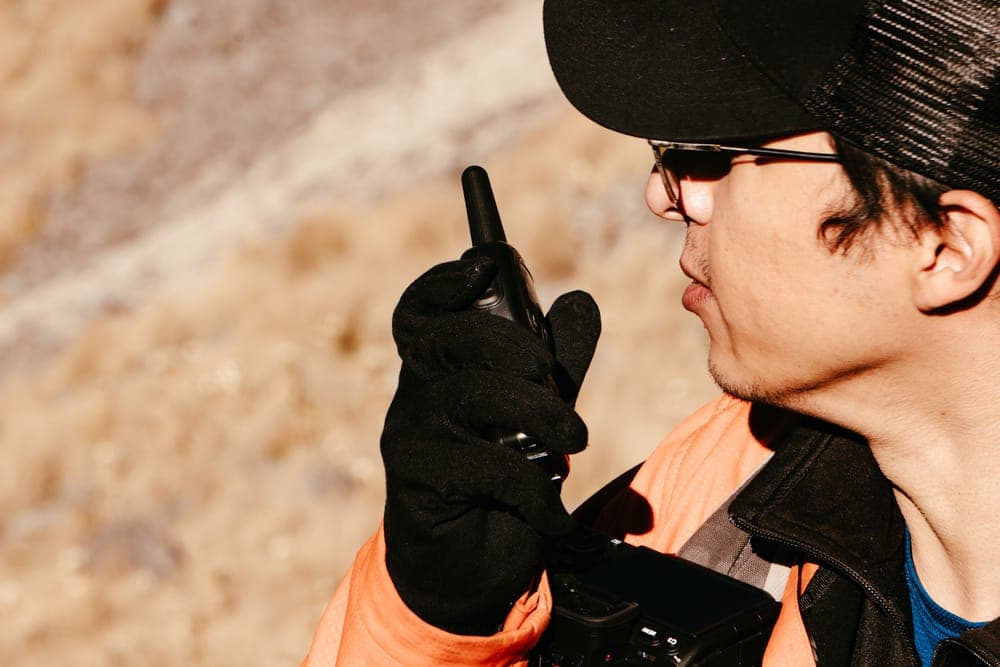 Rocky Talkie Expedition Radio (single radio) 5 W, IP67, repeater capable and rated by Rocky Talkie for 4 to 6 days. The radio that walks the spotter to the front of the obstacle. | Best handheld to carry with itGMRS licensePremium | 7.9/10Researched | Check price · Amazon #ad · Disclosure |
| 6 |  Midland MXTA25 Ghost 3 dB Antenna The 3 dB Ghost is short enough to clear low branches and a garage door, which is why it outlives taller whips on a Jeep. | Best antenna for tight trailsAccessoryMid-price | 6.2/10Researched | Check price · Amazon #ad · Disclosure |
#ad · Prices are set by Amazon and change often, so we don't print them. Scores are ours, built from published specs, manuals and FCC rules, not hands-on tests. Photos are illustrative stock. Tap a row for the full write-up.
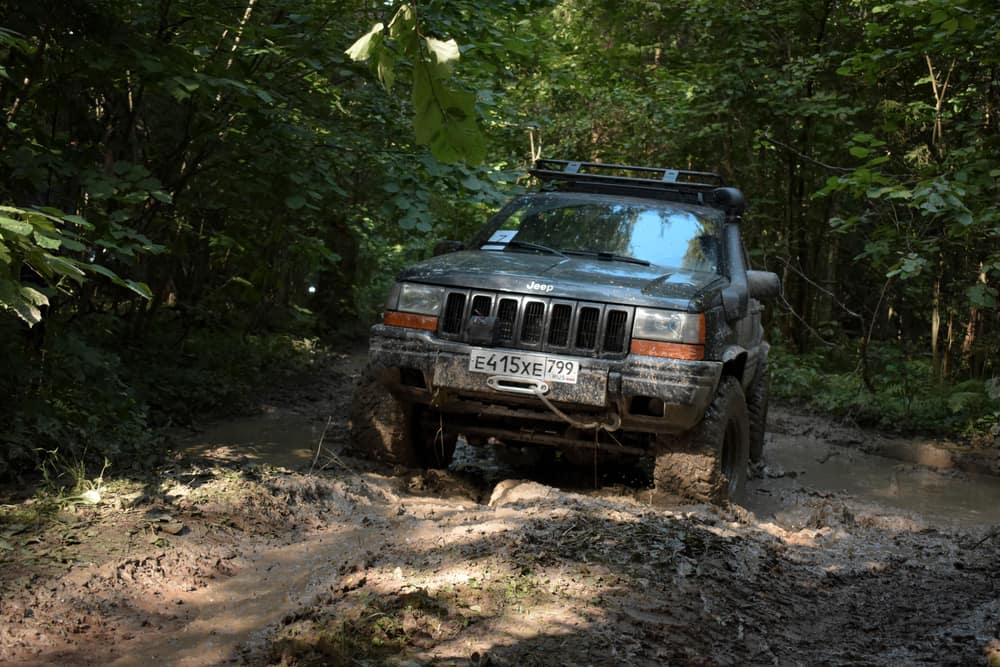
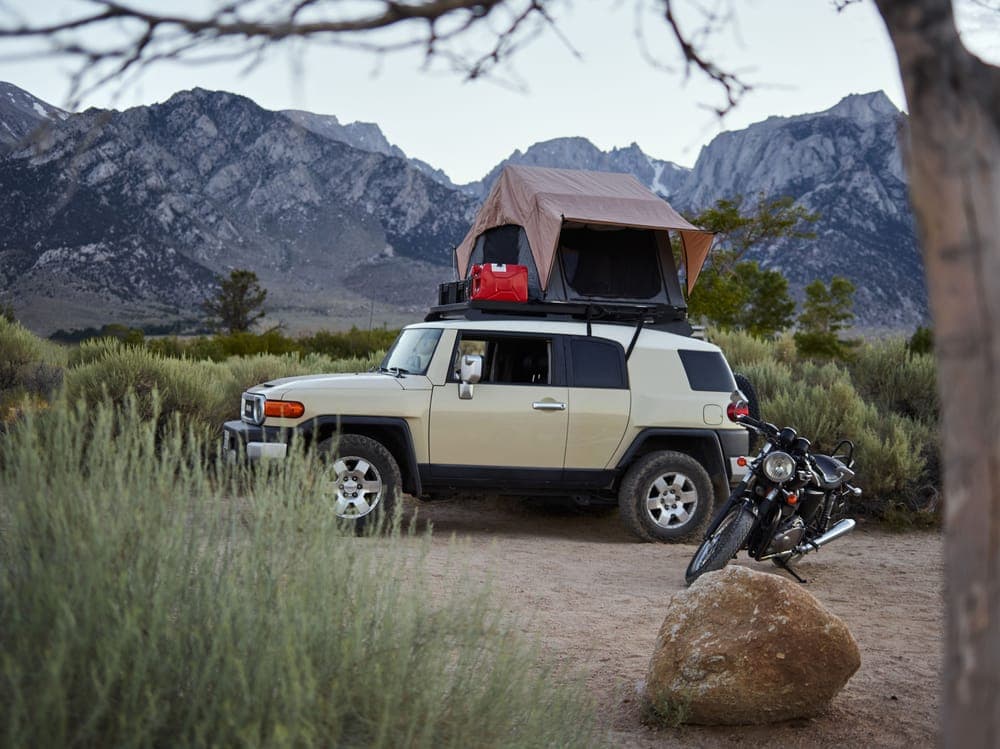
There is a reason "best GMRS radio for a Jeep" is its own search and not just "best GMRS radio." A Wrangler has almost no dash to mount a radio in, a roll cage instead of an A-pillar, a windscreen that folds, a top that comes off, and a habit of driving under branches that will remove a tall antenna. The radio that is perfect in a pickup can be the wrong shape entirely here.
So this list is not ranked on watts. It is ranked on where the radio body goes, what the antenna clears, and whether the thing still works the first weekend you take the doors off.
How we picked
Every radio here is scored on our published rubric — real-world reach, ease of use, toughness and weather, power and battery, field features and value — from the makers' own product pages, spec sheets and owner's manuals, plus the FCC rules. The method is on how we rank radios. These are research picks from published specs, and every figure below links to the page it came from.
For a Jeep specifically we weighted three things above everything else. Where the body lives: a hideaway unit with the controls on the microphone is worth more in a Wrangler than an extra 10 watts, because a full-size faceplate has nowhere to go. A published weather rating, because "the top is off" is not an edge case on this vehicle. And antenna clearance, because the tallest whip you can buy is also the first thing a low branch takes home. Availability was confirmed on each maker's own store on 2026-09-26. These picks sit in our road trips and convoys hub.
Why a Jeep is different
Three things about the vehicle drive every choice on this page.
There is no dash. What a Wrangler has is a narrow shelf, a stack of switches and a lot of vertical plastic. That is why both of our top two picks are Midland MicroMobiles: Midland's design puts the radio guts in a box you can screw under a seat or behind a panel, and all the buttons on the microphone (Midland MXT275 page). You mount a mic clip, not a radio.
The cabin is sometimes outdoors. Take the doors off and the "interior" is now weather-exposed. This is where Midland's own line splits: Midland publishes no IP or water rating for the MXT275 or the 50 W MXT575, but the MXT115P PRO is IP67. If your Jeep lives with the top off, that single fact should decide the purchase.
The trail has a ceiling. A 6 dB whip works better in open desert, and it is also the antenna that gets folded by the first low limb on a wooded trail. Midland's own mounting guide covers roll bar, roof rack and mirror brackets precisely because Jeep owners are not drilling a roof (Midland GMRS antenna mounting systems).
Mobile or handheld?
Buy a mobile if the radio is for the Jeep. A 15 W or 50 W radio on a roof-height antenna is a completely different machine from a 5 W handheld held at seat level inside a metal box: the antenna is the bigger half of that difference, and our GMRS handheld vs mobile range page takes it apart.
Then buy one handheld as well. Somebody has to get out and spot the front tire over a rock, and a mobile radio cannot walk. That is the entire job of the Rocky Talkie Expedition on this list, and it is why the two purchases are not really alternatives. If you want the handheld side ranked on its own, our best GMRS handheld radios does that.
The picks in detail
1. Midland MXT275: best GMRS radio for a Jeep
The MXT275 is the radio most Wranglers should have. Midland rates it at 15 W with Hi and Lo power settings, the body is a hideaway unit with a fully integrated control mic, and the power lead terminates in a 12V vehicle adapter, so there is no hardwiring and no fuse tap unless you want one. The stock 2.1 dB magnetic antenna and mount are in the box, and the radio uses an SO-239 jack, so upgrading the antenna later is a five-minute job.
Midland publishes a terrain chart rather than a single number, which is rarer than it should be: 50 miles maximum with no obstruction, 10 to 15 miles with partial obstruction, and 5 to 10 miles obstructed. Read the last two columns. Buy it if your Jeep has a hardtop most of the year and you want the cleanest install on this page. Skip it if the doors come off in May and go back on in October: Midland states no water rating for it.
2. Midland MXT115P PRO: best for a doorless or topless Jeep
Same 15 W, same hideaway-and-control-mic idea, but built for an open cab: this is the MicroMobile Midland rates IP67. On a Jeep that spends the summer doorless, that rating is the whole argument, and it costs you nothing in power against the MXT275.
Buy it if rain, dust or a pressure washer will ever reach the radio. Skip it if your Jeep is a hardtop daily driver and you would rather put the difference into a better antenna, which will do more for your range than either radio's extra features.
3. Midland MXT575: best when you want every watt
The 50 W MicroMobile, with the same hideaway body and control mic. Midland's own chart claims 75 miles maximum, 20 to 25 miles with partial obstruction and 10 to 15 miles obstructed, and it carries 8 split-tone repeater channels, which is what turns a 50 W radio into a genuinely long-distance tool. Note the rule the manual states: channels 1 to 7 stay on low power, so the full 50 W lives on channels 15 to 22 and the repeater channels (Midland MXT575 page).
Buy it if you run open country, a big property or a repeater. Skip it if the Jeep is topless in summer: Midland publishes no water rating for the MXT575 either.
4. BTECH GMRS-20V2: best value mobile for a trail rig
20 W, a compact body and a list tier below the Midlands. What earns its place on a Jeep list is programming: it takes a channel list from a computer, which is how a club distributes its repeater and trail channels without twenty people menu-diving in a parking lot.
Buy it if you want more than a handheld without paying MicroMobile money. Skip it if you want a hideaway body: this one has a faceplate, and a faceplate needs somewhere to go.
5. Rocky Talkie Expedition Radio: best handheld to carry with it
5 W GMRS, IP67, a removable antenna, repeater channels and a battery Rocky Talkie rates at 4 to 6 days, with a carabiner and leash that survive being clipped to a spotter who is climbing on a rock (Rocky Talkie Expedition page). Rocky Talkie's own terrain figures are 0.5 to 5 miles in forest and hills, which is honest and useful.
Buy it if anyone ever gets out of the Jeep while the Jeep is moving. Skip it if you need a pair on a budget: it is sold one radio at a time.
6. Midland MXTA25 Ghost 3 dB antenna: best antenna for tight trails
The unglamorous pick that makes the biggest difference. A 3 dB low-profile antenna gives up some gain against a 6 dB whip and buys back clearance under branches, garage doors and the tailgate tent. On a wooded trail the short antenna that is still attached beats the tall antenna in the ditch behind you.
Buy it if you wheel in timber or park in a garage. Skip it if you run open desert or plains, where the taller 6 dB MXTA26 is the better trade.
What reaches on the trail
Here is what the makers themselves publish, side by side. The middle column is the one to plan with.
| Radio | Maker's obstructed / terrain figure | Maker's best-case figure |
|---|---|---|
| Midland MXT275 (15 W) | 10-15 miles partial obstruction; 5-10 miles obstructed | "50 Miles MAX" |
| Midland MXT575 (50 W) | 20-25 miles partial obstruction; 10-15 miles obstructed | "75 Miles MAX" |
| Rocky Talkie Expedition (5 W handheld) | Forest and hills: 0.5 to 5 miles | Line of sight: 35+ miles |
The gap between the columns is terrain, not marketing dishonesty: radio at these frequencies travels in straight lines, so a ridge between two Jeeps ends the conversation regardless of watts. Our GMRS radio range guide explains what actually sets the number, and walkie-talkie range claims explained takes the box figures apart.
In detail
The picks, in full
Rank 01
Stock photoBest GMRS radio for a Jeep
Midland MXT275 MicroMobile (15 W)
15 W, the body hides under a seat, and every control lives on the mic. It plugs into a 12V socket, so a Wrangler needs no hardwiring at all.
Published specsResearched · not tested by us
How the 6.9 score breaks down
- Real-world reach (30%)
- 8
- Ease of use (20%)
- 7
- Toughness & weather (15%)
- 4
- Power & battery (15%)
- 8
- Field features (10%)
- 6
- Value (10%)
- 7
What the specs support
- Plugs into a 12V socket, with no hardwiring needed
- Hideaway body and control mic keep the dash clear
- Repeater capable, and the SO-239 jack takes an upgraded antenna
Where it falls short
- Midland states no IP or water rating
- No PA or intercom jack listed, unlike the MXT115P PRO
- Channels 1-7 stay on low power (manual)
Skip this if…
…Skip it if the radio goes in an open-cab tractor or UTV that sees rain and dust: Midland states no water rating for the MXT275, while the MXT115P PRO at the same 15 W is IP67.
#ad · Price set by Amazon · How we make money for the link to Midland MXT275 MicroMobile (15 W)
Rank 02
Stock photoBest for a doorless or topless Jeep
Midland MXT115P PRO MicroMobile (15 W)
The same 15 W, but IP67. It is the one Midland mobile rated for a cab that fills with rain and dust when the top is off.
Published specsResearched · not tested by us
How the 8.0 score breaks down
- Real-world reach (30%)
- 8
- Ease of use (20%)
- 7
- Toughness & weather (15%)
- 9
- Power & battery (15%)
- 8
- Field features (10%)
- 8
- Value (10%)
- 8
What the specs support
- IP67 waterproof and dustproof, the best rating of the Midland mobiles here
- PA and wired intercom jacks for farm yards and UTV helmets
- 3-year warranty, against 1 year on the MXT500
- Midland's terrain chart is modest and useful: up to 5 miles in dense forest
Where it falls short
- 15 W, not 50 W: less margin over broken terrain
- Midland's manual limits channels 1-7 and several preset privacy channels to 5 W
- The stock antenna is a 2.1 dB magnet mount; an NMO roof antenna needs extra parts
Skip this if…
…Skip it if you need to reach a base or a truck well past 15 miles across broken terrain: Midland's own chart tops out at 15 miles peak to peak, and a 50 W MXT500 on a roof antenna is the better tool.
#ad · Price set by Amazon · How we make money for the link to Midland MXT115P PRO MicroMobile (15 W)
Rank 03
Stock photoBest when you want every watt
Midland MXT575 MicroMobile (50 W)
50 W and the same hideaway-plus-control-mic layout. Midland publishes no water rating for it, so keep it in a hardtop.
Published specsResearched · not tested by us
How the 7.2 score breaks down
- Real-world reach (30%)
- 9
- Ease of use (20%)
- 7
- Toughness & weather (15%)
- 4
- Power & battery (15%)
- 8
- Field features (10%)
- 7
- Value (10%)
- 6
What the specs support
- 50 W on high, the top power in Midland's MicroMobile line
- Hideaway body with the controls on the mic frees dash space in Jeeps and side-by-sides
- 8 split-tone repeater channels for reaching a local GMRS repeater
- Midland publishes a terrain chart (20-25 miles with partial obstruction), not just a max figure
Where it falls short
- Midland states no IP or water rating for the MXT575; the MXT500 is listed as water resistant
- Same list-price tier as the MXT500, which adds a PA function and noise canceling
- Channels 1-7 stay on low power (manual), so full power is only on 15-22 and the repeater channels
Skip this if…
…Skip it if the radio will ride in an open-cab UTV or tractor: Midland lists no water rating for the MXT575, so the IP67 MXT115P PRO or the water-resistant MXT500 fits that job better.
#ad · Price set by Amazon · How we make money for the link to Midland MXT575 MicroMobile (50 W)
Rank 04
Stock photoBest value mobile for a trail rig
BTECH GMRS-20V2 (20 W compact mobile)
20 W at a tier below the Midlands, and it takes programming from a computer, which is how most Jeep clubs load a repeater list.
Published specsResearched · not tested by us
How the 7.8 score breaks down
- Real-world reach (30%)
- 8
- Ease of use (20%)
- 6
- Toughness & weather (15%)
- 9
- Power & battery (15%)
- 8
- Field features (10%)
- 8
- Value (10%)
- 8
What the specs support
- IP67 at the mid list-price tier
- Runs from the included 12V cigarette-plug cable
- Control-mic design lets the small body hide under a seat
- Tri watch and scanner receive
Where it falls short
- No antenna in the box
- Programming-heavy: 200 channels, with CHIRP and a cable for bulk setup
- The page's 75-mile figure contradicts its own 1-5 mile typical-range statement
Skip this if…
…Skip it if you want one box with everything: the GMRS-20V2 ships without an antenna, so it can't transmit until you add a GMRS mobile antenna and mount.
#ad · Price set by Amazon · How we make money for the link to BTECH GMRS-20V2 (20 W compact mobile)
Rank 05
Stock photoBest handheld to carry with it
Rocky Talkie Expedition Radio (single radio)
5 W, IP67, repeater capable and rated by Rocky Talkie for 4 to 6 days. The radio that walks the spotter to the front of the obstacle.
Published specsResearched · not tested by us
| Service / license | GMRS (FRS compatible); GMRS license required, US use only |
|---|---|
| Transmit power | 5 W |
| Channels | 22 channels, 121 privacy codes (CTCSS and DCS); channel lock, high/low power, scan, dual channel watch |
| Repeater and antenna | Repeater capable (8 GMRS repeater channels); removable SMA-male antenna, 7.5 cm and 17 cm antennas included |
| Water rating | IP67 (1 meter submersion) |
| Battery | Replaceable 7.4 V 1800 mAh Li-ion, USB-C; "4–6 days" per chargeAdvertised |
| Weather and weight | NOAA weather channels and emergency alert monitoring; 9.1 oz |
| Advertised range | "max range of over 35 miles, with 2–8 miles more typical in backcountry terrain"Advertised |
| Maker's terrain figures | Line-of-sight 35+ miles; mountains 2 to 8 miles; forest/hills 0.5 to 5 miles; rivers 0.5 to 3 miles; city up to 1.5 milesAdvertised |
How the 7.9 score breaks down
- Real-world reach (30%)
- 8
- Ease of use (20%)
- 8
- Toughness & weather (15%)
- 9
- Power & battery (15%)
- 8
- Field features (10%)
- 7
- Value (10%)
- 6
What the specs support
- Removable SMA antenna with short and long options, plus 8 repeater channels
- IP67 with a replaceable Li-ion battery and USB-C, rated for 4-6 days
- The maker publishes terrain-by-terrain range, not just a box number
- Channel lock and a simple 22-channel layout
Where it falls short
- Sold as a single radio, so a pair lands firmly in the premium tier
- No VOX hands-free or flashlight listed by the maker
Skip this if…
…Skip it if you don't want a GMRS license: it's a GMRS radio, and Rocky Talkie's license-free Mountain Radio (FRS, 2 W) covers most trail use.
#ad · Price set by Amazon · How we make money for the link to Rocky Talkie Expedition Radio (single radio)
Rank 06
Stock photoBest antenna for tight trails
Midland MXTA25 Ghost 3 dB Antenna
The 3 dB Ghost is short enough to clear low branches and a garage door, which is why it outlives taller whips on a Jeep.
Published specsResearched · not tested by us
How the 6.2 score breaks down
- Gain & height for the job (30%)
- 4
- Fit & connector match (25%)
- 8
- Build & weather (20%)
- 8
- Install burden (15%)
- 5
- Value (10%)
- 6
What the specs support
- At 3.5 inches it clears low branches, car washes and garage doors that would catch a whip
- Midland describes it as virtually indestructible and built for off-road vibration
- Same NMO base as Midland's taller whips, so you can swap to the MXTA26 on the same mount for open country
Where it falls short
- Midland's own FAQ puts a half wavelength at about 12 in for GMRS, so a 3.5-inch antenna is shorter than a quarter-wave; treat the 3 dB figure with caution
- No mount or cable included, and it still needs a metal ground plane
- Mid-price tier for the shortest antenna in this group
Skip this if…
…Skip it if distance is the goal, like reaching a house or a second truck across open fields: a 3.5-inch stub gives up the height a full-length whip gets you.
#ad · Price set by Amazon · How we make money for the link to Midland MXTA25 Ghost 3 dB Antenna
What to look for in a GMRS radio for a Jeep
- A hideaway body, or a plan for the faceplate. In a Wrangler this is the first question, not the last. A control-mic design turns a radio install into a bracket and a cable run.
- A published IP rating if the top comes off. IP67 means something. "Rugged" with no number does not. On this page only the MXT115P PRO and the Expedition handheld carry one.
- Repeater channels. Eight split-tone repeater channels turn a trail radio into something that can reach a town twenty miles away. Our GMRS repeaters guide covers how to find and use one.
- An antenna that clears your trail. Height and gain help; a snapped whip helps nobody. Match the antenna to the branches you actually drive under.
- A 12V plug or a hardwire kit, and know which you want. A plug is reversible and takes minutes. Hardwiring is tidier and survives a cigarette-lighter socket that quits.
- One handheld, minimum. Spotting is done on foot. See best GMRS handheld radios.
Where the antenna goes on a Jeep
You are not drilling a hole in the roof, because on a Wrangler that roof comes off. The three realistic options, all covered in Midland's own mounting guide (Midland GMRS antenna mounting systems):
- Hood or fender lip mount. The Jeep default. Easy, reversible, and the hood acts as a ground plane. It puts the antenna low, which costs you a little range.
- Roll bar or roof rack bracket. Higher is better, and this is the mount that survives the top coming off. It is also the one that needs you to think about branch clearance.
- Magnet mount on the tailgate or hardtop. Takes 30 seconds and moves between vehicles. It needs steel to stick to, which rules out an aluminum hardtop.
Whatever you pick, run the coax away from the ignition harness and give it a drip loop. Our how to install a GMRS radio in your vehicle walks the whole job, and best GMRS antennas ranks the whips and mounts themselves.
The license, in one minute
A trail channel plan that works
- Agree the channel at the airing-down spot, before anyone is out of sight. Write it on the windscreen with a marker if the group is big.
- Use a high-power channel (15 to 22) for the convoy. Channels 1 to 7 are locked to low power on most mobiles, so they are the wrong choice for spread-out rigs. See GMRS channels and frequencies.
- Set a privacy code only if the channel is busy, and make sure everyone sets the same one. A code filters what you hear; it does not stop anyone hearing you, as our privacy codes guide explains.
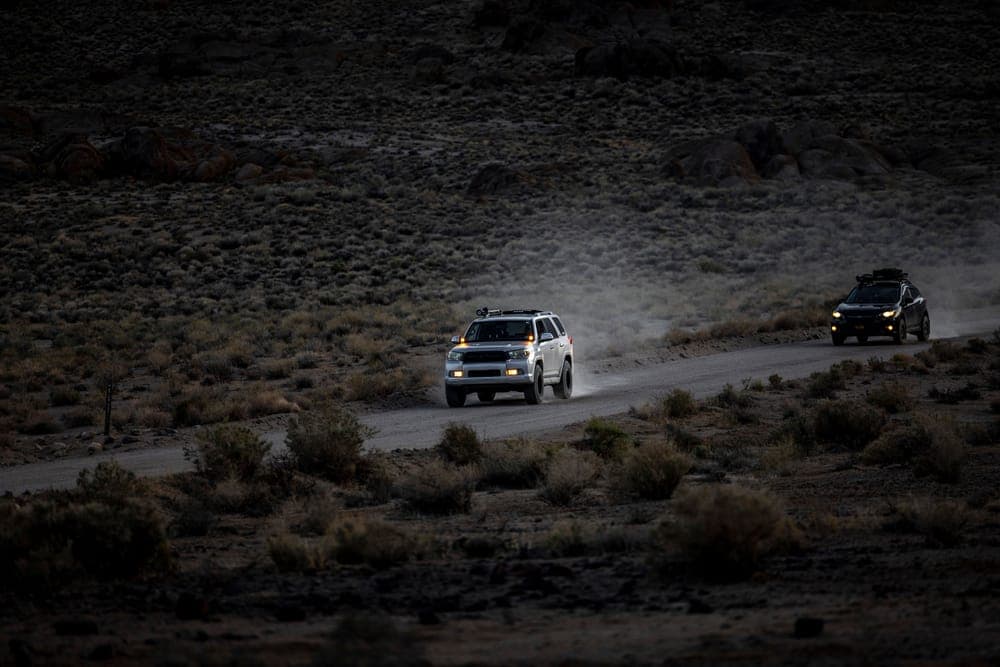
- Name the tail gunner. The last rig calls every junction. That single rule prevents most lost-vehicle radio traffic, and our convoy radio guide has the rest of the protocol.
- Keep the spotter on the same channel as the driver, with the cab radio turned down. Shouting over a 50 W speaker helps nobody.
How we scored this
Radios we claim to have lab-tested: 0
Plenty of radio sites say they range-tested everything they list. We haven't, and we say so. Every pick here is labeled Researched: we read each maker's published specs, manuals and range tables, check the license rules against the FCC, and score every radio on a public rubric. Every figure links to where it came from, and every range number is labeled “advertised.”
Scores are editorial judgments from that documented research, not test results. Commissions never set a score or decide a pick. The rubric and its weights are published.
What changed
- Published.
Questions
Frequently asked
What is the best GMRS radio for a Jeep?
Do I need a license for a GMRS radio in my Jeep?
How far will a GMRS radio reach between Jeeps on a trail?
Is 50 watts worth it over 15 watts in a Jeep?
GMRS or CB for a Jeep?
Receipts
Sources
- Midland: MXT275 MicroMobile product page (checked 2026-09-26)
- Midland: MXT575 MicroMobile product page (checked 2026-09-26)
- Midland: GMRS antenna mounting systems support article (checked 2026-09-26)
- Rocky Talkie: Expedition Radio product page (checked 2026-09-26)
- FCC: General Mobile Radio Service (GMRS) page (checked 2026-09-26)
- Cornell LII: 47 CFR 95.1705 (GMRS licensing, checked 2026-09-26)
- Cornell LII: 47 CFR 95.1767 (GMRS transmitter power, checked 2026-09-26)
We haven't tested the radios on this page and we don't pretend to. Specs and range figures come from each maker's own pages and manuals (linked on every product), and license, power and channel rules come from the FCC and 47 CFR Part 95. Range numbers are the maker's advertised claims and are labeled that way. Prices are set by Amazon and change often, so we don't print them. Where a figure isn't published, we say so. Read the full method.