Not legal advice. This page summarizes FCC rules (47 CFR Part 95) from the official sources linked in the text. Rules and fees checked . The FCC sets its fees annually and can change its rules, so confirm the current version on fcc.gov before you rely on it.
The contenders
Side by side
 Stock photo
CB, done properly
Cobra 29 LTD Classic AM/FM CB
The full-size trucker CB: 4 W on AM and FM, a built-in SWR meter to tune the antenna, and a PA output. Needs a tuned external antenna.
Check price · Amazon#ad · Price set by Amazon · How we make money for the link to Cobra 29 LTD Classic AM/FM CB
- Stock photo
CB, with no install
Midland 75-822 Portable CB
A handheld CB that converts to a mobile, with an AC adapter and a battery tray in the box. The short whip is the price of that convenience.
Check price · Amazon#ad · Price set by Amazon · How we make money for the link to Midland 75-822 Portable CB
 Stock photo
Walkie-talkie, the long-range one
Midland GXT1000VP4 (2-pack)
A GMRS pair with weather alerts and 5 W on the main channels. Needs one FCC license that covers your immediate family.
Check price · Amazon#ad · Price set by Amazon · How we make money for the link to Midland GXT1000VP4 (2-pack)
 Stock photo
Walkie-talkie, license free
Midland X-Talker T51VP3 (2-pack)
An FRS pair with NOAA weather scan and a rechargeable pack that also takes AAAs. Nothing to configure, nothing to apply for.
Check price · Amazon#ad · Price set by Amazon · How we make money for the link to Midland X-Talker T51VP3 (2-pack)
These two products get compared as if one were a cheaper version of the other. They are not. They sit on opposite ends of the usable radio spectrum, they are built around completely different antennas, and they are good at different things. A CB is a vehicle radio. A walkie-talkie is a person radio. Almost every buying mistake in this category comes from getting that one sentence backwards.
The verdict
The published rules, side by side
What each one actually is
CB is the Citizens Band Radio Service: 40 channels between 26.965 and 27.405 MHz (47 CFR 95.963). That is the 11-meter band, at the top of the HF spectrum — the same neighborhood as shortwave broadcasting. The rules cap a CB at 4 watts of carrier power on AM and FM, and 12 watts peak envelope power on sideband (47 CFR 95.967), and since 2021 the rules also permit FM, which is why new CBs advertise AM/FM (47 CFR 95.971). A CB is normally a box in a vehicle with a microphone on a coiled cord and a separate antenna you buy and tune yourself.
A walkie-talkie, in the sense almost everyone means it, is an FRS or GMRS handheld on the UHF channels around 462 and 467 MHz (47 CFR 95.563 for FRS, 95.1763 for GMRS). FRS is capped at 2 watts on channels 1 to 7 and 15 to 22 and 0.5 watts on 8 to 14, with an antenna that may not be removable (47 CFR 95.531; 95.587). GMRS allows more power and a removable antenna, and adds repeaters (47 CFR 95.1767). If the difference between those two is what you are really asking about, our GMRS vs FRS covers it properly.
So: same legal-power ballpark, wildly different frequency, wildly different antenna, and a completely different shape of product.
The license question
This one is simpler than the internet makes it. CB needs no license and never has for individuals — the FCC lists it among the personal radio services you may use without applying for anything (FCC personal radio services guide). FRS needs no license either, at any age (FCC FRS page).
GMRS is the only one that needs paperwork: one FCC license, no exam, valid for ten years, held by an individual at least 18 years old and covering that person's immediate family — spouse, children, grandchildren, stepchildren, parents, grandparents, stepparents, brothers, sisters, aunts, uncles, nieces, nephews and in-laws (47 CFR 95.1705; FCC GMRS page). Our how to get a GMRS license walks the application.
Note what that means for a business: a company cannot hold a new GMRS license at all, because new licenses go only to individuals. For a work crew the license-free options are CB and FRS — which is exactly why you still see CB in work trucks and FRS radios on job sites. Our best two-way radios for construction sites goes into that.
Which one reaches further
The honest answer has a condition attached, and the condition is the antenna.
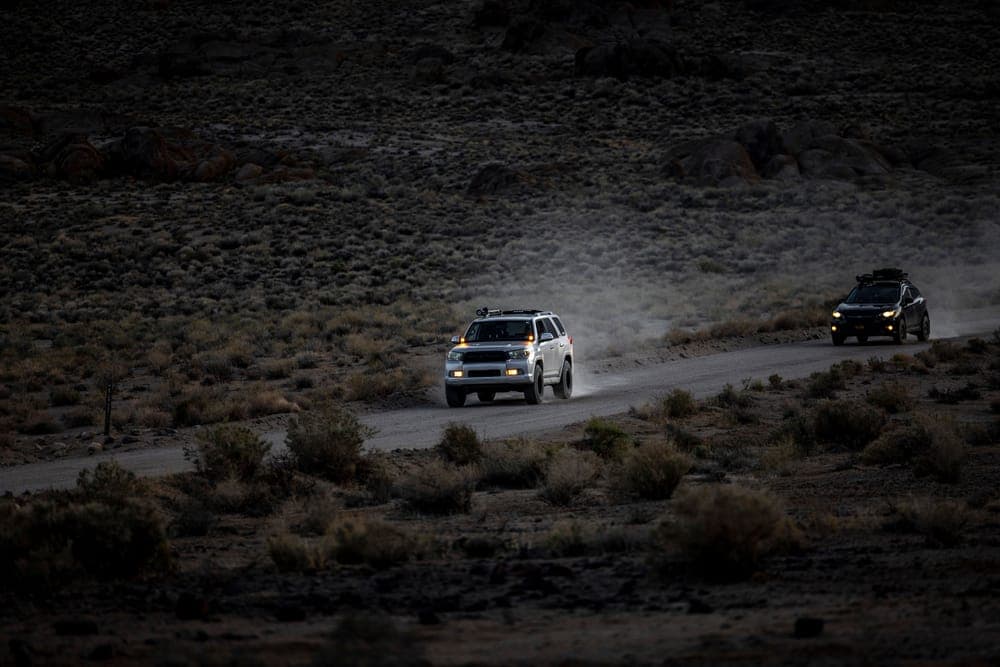
A mounted CB on a tuned external antenna usually wins on a road. At 27 MHz the signal follows the ground and bends around terrain a little better than UHF does, and a 4-foot to 8-foot antenna on a steel roof is a genuinely good antenna. Real-world expectations on a highway are a couple of miles vehicle to vehicle, further on open ground — not the wild numbers CB folklore repeats.
A walkie-talkie wins almost everywhere a person goes. The FCC's own guide puts FRS at "up to two miles on the 2 watt channels, depending on conditions" ( FCC personal radio services guide), and a 5 W GMRS handheld on a ridge does better than that. Crucially, a walkie-talkie is doing it from a coat pocket rather than from a vehicle with a mast on it.
A handheld CB loses to both, which surprises people who assume CB is simply the bigger radio. It is the antenna, every time. Our how far walkie-talkies reach explains why terrain and antenna height beat watts in every one of these services, and range claims explained takes the box numbers apart.
Who you can talk to
This is the difference buyers underrate, and it is often the one that decides the purchase.
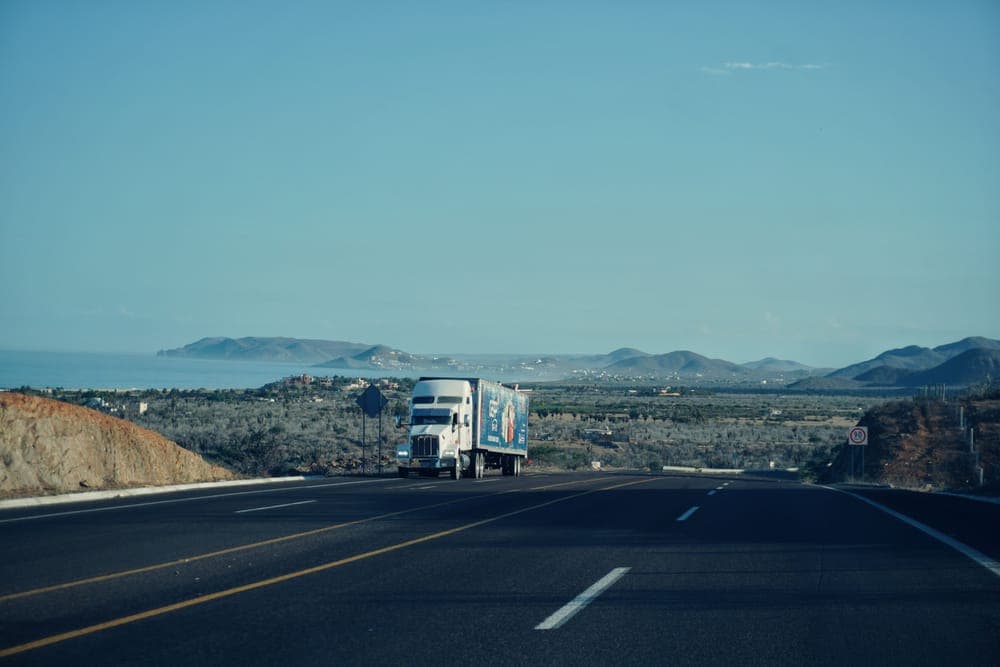
CB is a public band with traditions. Channel 19 is where highway traffic talks, and channel 9 is reserved by rule for emergency communications and traveler assistance (47 CFR 95.931). Turn a CB on anywhere near a freeway and there is something to hear. If your off-road club or your neighbors already run CB, that settles it: buy CB.
Walkie-talkies are a private-ish group tool. You and the people you handed radios to, on a channel you agreed. There is rarely anyone else on FRS channel 14 in the woods, which is the point. Do not mistake that for privacy, though: privacy codes only filter what your own radio lets you hear, and anyone on your channel can still hear you. Our walkie-talkie privacy codes explains that in detail.
The antenna decides everything
Radio antennas are sized in fractions of a wavelength, and the wavelength is set by the frequency. This is the whole comparison in one paragraph.
At CB's 27 MHz (47 CFR 95.963) a wavelength is about 36 feet, so a quarter-wave antenna is roughly 9 feet. That is why CB antennas are the length they are, why a 4-foot CB antenna is a compromise already, and why a 20-inch whip on a handheld CB is radiating a small fraction of what the radio makes.
At the walkie-talkie channels around 462 MHz (47 CFR 95.1763) a wavelength is about 25 inches, so a quarter-wave antenna is about 6 inches — the stub already molded into your radio. A 2 W handheld with a properly sized antenna is a complete, efficient radio; a 4 W handheld CB with a stubby antenna is not.
In detail
The contenders, in full
Stock photoCB, done properly
Cobra 29 LTD Classic AM/FM CB
The full-size trucker CB: 4 W on AM and FM, a built-in SWR meter to tune the antenna, and a PA output. Needs a tuned external antenna.
Published specsResearched · not tested by us
How the 6.2 score breaks down
- Real-world reach (30%)
- 6
- Ease of use (20%)
- 7
- Toughness & weather (15%)
- 4
- Power & battery (15%)
- 8
- Field features (10%)
- 5
- Value (10%)
- 7
What the specs support
- Built-in SWR meter lets you tune the antenna without extra gear
- AM/FM, and it still talks to AM-only CBs on the AM band
- PA output and a 9 ft mic cord for trucks and rigs
Where it falls short
- No NOAA weather channels listed on the Classic
- Full-size body needs real dash or overhead space
- Antenna sold separately
Skip this if…
…Skip it if your group already runs GMRS radios: a CB can't talk to them, and a 4 W CB only performs with a properly tuned external antenna.
#ad · Price set by Amazon · How we make money for the link to Cobra 29 LTD Classic AM/FM CB
Stock photoCB, with no install
Midland 75-822 Portable CB
A handheld CB that converts to a mobile, with an AC adapter and a battery tray in the box. The short whip is the price of that convenience.
Published specsResearched · not tested by us
How the 6.3 score breaks down
- Real-world reach (30%)
- 5
- Ease of use (20%)
- 8
- Toughness & weather (15%)
- 5
- Power & battery (15%)
- 7
- Field features (10%)
- 7
- Value (10%)
- 7
What the specs support
- Moves between vehicles in seconds: no drilling, no hardwiring
- An alkaline tray means it still works when the truck doesn't
- NOAA weather radio built in
Where it falls short
- The short flexible whip is the weak point; a mag-mount is close to essential in a truck
- Handheld ergonomics, not a dash radio
- No SWR meter
Skip this if…
…Skip it if you want full CB range from a truck without adding an external antenna: on its own flexible whip it will not keep up with a mounted radio on a tuned 3 ft antenna.
#ad · Price set by Amazon · How we make money for the link to Midland 75-822 Portable CB
Stock photoWalkie-talkie, the long-range one
Midland GXT1000VP4 (2-pack)
A GMRS pair with weather alerts and 5 W on the main channels. Needs one FCC license that covers your immediate family.
Published specsResearched · not tested by us
How the 6.1 score breaks down
- Real-world reach (30%)
- 5
- Ease of use (20%)
- 7
- Toughness & weather (15%)
- 5
- Power & battery (15%)
- 7
- Field features (10%)
- 7
- Value (10%)
- 7
What the specs support
- Midland publishes a realistic figure (1/2 to 2 miles in normal conditions), so you know what the pair will really do
- Runs on the included NiMH packs or 4 AA batteries, so a dead pack doesn't end the day
- NOAA weather alerts, SOS siren and e-VOX hands-free are built in
Where it falls short
- No repeater channels, and Midland doesn't state the transmit power
- JIS4 is splash protection only, and it's lost when a headset is plugged in
- Slow desktop charging (12 hours) with no USB port
Skip this if…
…Skip it if you need to reach across a ridge or hit a local repeater: there are no repeater channels, and Midland itself says to expect 1/2 to 2 miles in normal conditions.
#ad · Price set by Amazon · How we make money for the link to Midland GXT1000VP4 (2-pack)
Stock photoWalkie-talkie, license free
Midland X-Talker T51VP3 (2-pack)
An FRS pair with NOAA weather scan and a rechargeable pack that also takes AAAs. Nothing to configure, nothing to apply for.
Published specsResearched · not tested by us
How the 5.6 score breaks down
- Real-world reach (30%)
- 4
- Ease of use (20%)
- 8
- Toughness & weather (15%)
- 3
- Power & battery (15%)
- 6
- Field features (10%)
- 6
- Value (10%)
- 8
What the specs support
- NOAA Weather Scan and weather alerts for storms on camping trips
- Rechargeable packs plus a desktop charger, with AAA backup
- License-free and simple enough for the whole family
Where it falls short
- No water rating, and the manual warns against immersion
- No runtime figure published
Skip this if…
…Skip it if it will ride in a kayak or a wet pack: Midland gives it no water rating, so choose an IP67 radio instead.
#ad · Price set by Amazon · How we make money for the link to Midland X-Talker T51VP3 (2-pack)
Who should buy what
A convoy of two or three vehicles on the highway. Either works. Walkie-talkies are cheaper and need no install; CB lets you hear the truck traffic. Our convoy radio guide is the full answer.
An off-road or overland club. Ask what the club runs, then buy that. Many still run CB, plenty have moved to GMRS. See GMRS vs CB radio.
Hunting, the deer lease, a farm on foot. Walkie-talkies, without hesitation. A CB in the truck does nothing for two people 600 yards apart in timber. See best hunting radios.
Kids, camp, a campsite, a ski hill, a cruise. Walkie-talkies, and FRS specifically so nobody needs a license. See best walkie-talkies for kids.
A work crew or a job site. FRS radios, or business radios on a Part 90 license for a big site. CB only if the crew lives in trucks. See best two-way radios for construction sites.
A base at the house talking to family vehicles. This is the one place CB genuinely shines for a household, because a house can carry a tall antenna. See best CB radios for home use.
Can a CB talk to a walkie-talkie?
No, and it never will. They are hundreds of megahertz apart: a CB transmits near 27 MHz and an FRS or GMRS radio near 462 MHz, and neither can receive the other's band. There is no adapter, no channel trick and no setting. If half your group has CBs and half have walkie-talkies, one half has to change.
The one thing that does bridge them is a person with both radios on, which is how a lot of trail runs actually work in practice: the lead vehicle carries a CB for the club channel and a handheld for the people out of the truck spotting.
What each one really costs
A CB purchase is two purchases. The radio is only part of it: every CB here ships without an antenna, and the antenna, the mount and the coax are not optional extras — an untuned or missing antenna can damage the radio and will certainly cost you most of your range. Cobra says so plainly in its own box contents: "Standard CB Antenna Required (Sold Separately)" (Cobra 29 LTD page). Budget for a meter to tune it too, unless the radio has an SWR meter built in.
A walkie-talkie purchase is one purchase, and it usually arrives as a pair with chargers and clips in the box. That is a large part of why this category outsells CB by an enormous margin. If the budget is the constraint, best walkie-talkies under $50 and best CB radios under $100 are the two floors.
How we scored this
Radios we claim to have lab-tested: 0
Plenty of radio sites say they range-tested everything they list. We haven't, and we say so. Every pick here is labeled Researched: we read each maker's published specs, manuals and range tables, check the license rules against the FCC, and score every radio on a public rubric. Every figure links to where it came from, and every range number is labeled “advertised.”
Scores are editorial judgments from that documented research, not test results. Commissions never set a score or decide a pick. The rubric and its weights are published.
What changed
- Published.
Questions
Frequently asked
Is a CB radio better than a walkie-talkie?
Can a CB radio talk to a walkie-talkie?
Do you need a license for a CB radio or a walkie-talkie?
Which has longer range, CB or a walkie-talkie?
Are CB radios still used in 2026?
Receipts
Sources
- FCC: Personal Radio Services consumer guide (checked 2026-09-29)
- FCC: Family Radio Service (FRS) page (checked 2026-09-29)
- FCC: General Mobile Radio Service (GMRS) page (checked 2026-09-29)
- 47 CFR 95.963, CBRS channel frequencies (via Cornell LII, checked 2026-09-29)
- 47 CFR 95.967, CBRS transmitter power limits (via Cornell LII, checked 2026-09-29)
- 47 CFR 95.971, CBRS emission types (via Cornell LII, checked 2026-09-29)
- 47 CFR 95.931, permissible CBRS uses (channel 9; via Cornell LII, checked 2026-09-29)
- 47 CFR 95.531, FRS channel power limits (via Cornell LII, checked 2026-09-29)
- 47 CFR 95.563, FRS channel frequencies (via Cornell LII, checked 2026-09-29)
- 47 CFR 95.587, FRS transmitter certification and antenna rule (via Cornell LII, checked 2026-09-29)
- 47 CFR 95.1705, GMRS eligibility and immediate family (via Cornell LII, checked 2026-09-29)
- 47 CFR 95.1763, GMRS channels (via Cornell LII, checked 2026-09-29)
- 47 CFR 95.1767, GMRS transmitting power limits (via Cornell LII, checked 2026-09-29)
- Cobra: 29 LTD Classic AM/FM product page (checked 2026-09-29)
- Midland: 75-822 portable CB product page (checked 2026-09-29)
- Midland: GXT1000VP4 product page (checked 2026-09-29)
- Midland: T51VP3 X-Talker product page (checked 2026-09-29)
- Right Channel Radios: CB radios collection, stock and prices (checked 2026-09-29)
We haven't tested the radios on this page and we don't pretend to. Specs and range figures come from each maker's own pages and manuals (linked on every product), and license, power and channel rules come from the FCC and 47 CFR Part 95. Range numbers are the maker's advertised claims and are labeled that way. Prices are set by Amazon and change often, so we don't print them. Where a figure isn't published, we say so. Read the full method.