Not legal advice. This page summarizes FCC rules (47 CFR Part 95) from the official sources linked in the text. Rules and fees checked . The FCC sets its fees annually and can change its rules, so confirm the current version on fcc.gov before you rely on it.
Quick picks
The picks at a glance
| # | Product | Best for | Score | Price |
|---|---|---|---|---|
| 1 |  Retevis RT22 (2-pack) No screen, no menus, channel lock, and a body that disappears in a hi-vis pocket. Nobody can change anything by accident, which on a site is the whole feature. | Best crew radio for a job siteNo licenseBudget | 5.5/10Researched | Check price · Amazon #ad · Disclosure |
| 2 | Motorola Talkabout T605 H2O (2-pack) IP67, floats face up, and Motorola publishes up to 23 hours on three AAs. The one here you can hose off at the end of the day. | Best for rain, mud and dustNo licenseMid-price | 6.8/10Researched | Check price · Amazon #ad · Disclosure |
| 3 | Midland X-Talker T71VP3 (2-pack) Rechargeable packs plus a 3 AA fallback, 36 channels and silent operation, from a brand with a three-year warranty and US support. | Best for a long shiftNo licenseMid-price | 5.7/10Researched | Check price · Amazon #ad · Disclosure |
| 4 | Baofeng BF-88ST Pro FRS (multi-pack) Full 2 W on FRS, 12 NOAA weather channels and a headset with every radio, in packs of two, three or four. The cheapest way to put a radio on every trade. | Best value for a big crewNo licenseBudget | 6.1/10Researched | Check price · Amazon #ad · Disclosure |
| 5 | 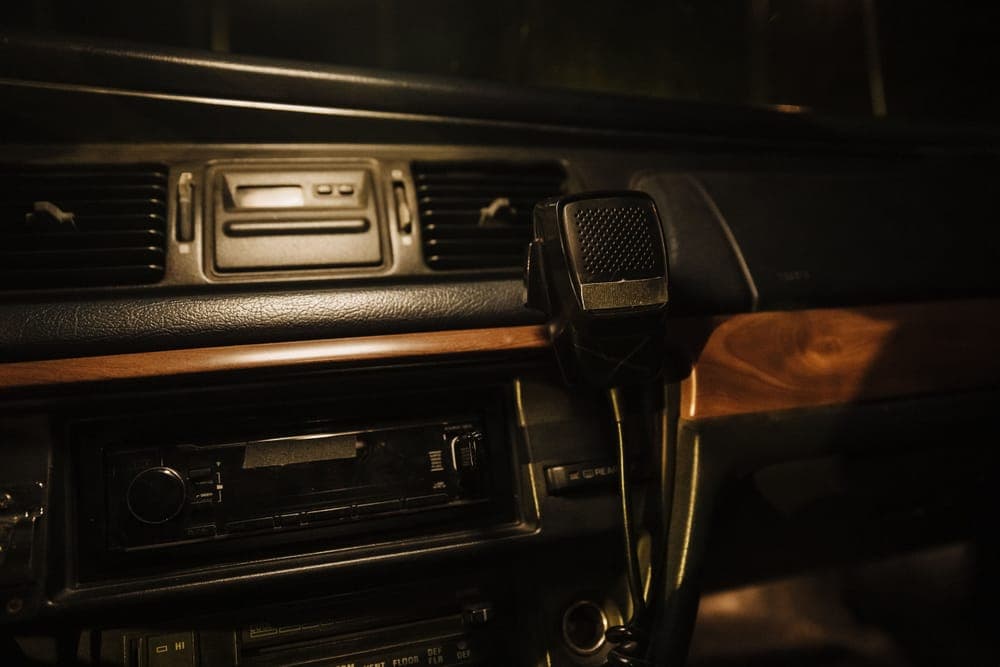 BTECH QHM22 Heavy Duty Speaker Mic A heavy-duty K1 speaker-mic that clips to a collar, so the radio stays in your pocket and you stop missing calls under a hard hat. | Best accessory: hear it over the sawAccessoryBudget | 6.9/10Researched | Check price · Amazon #ad · Disclosure |
#ad · Prices are set by Amazon and change often, so we don't print them. Scores are ours, built from published specs, manuals and FCC rules, not hands-on tests. Photos are illustrative stock. Tap a row for the full write-up.

A construction site is the hardest place a consumer radio gets used. It is loud, it is dusty, radios get dropped off scaffolding, they get shared between people who have never used one, and they have to last a full shift. None of that is what the packaging on a family two-pack is designed around, which is why the right picks for a site are not the same as the right picks for a campsite.
There is also a licensing point that catches a lot of contractors, and it is worth getting out of the way first, because it rules out a whole shelf of radios.
The license trap: your company cannot use GMRS
That is why every radio ranked on this page is FRS. It costs you a little range, and it buys you a crew that is legal on day one. Our GMRS vs FRS explains what the licensed service would have added.
How we picked
Every radio is scored on our published rubric — real-world reach, ease of use, toughness and weather, power and battery, field features and value — from the makers' own product pages, spec sheets and manuals plus the FCC rules. The method is on how we rank radios. These are research picks from published specs, not test results, and every figure links to its source.
For a site we weighted three things harder than we would for a family: whether a non-technical person can be handed the radio and get it right, whether the maker publishes a dust or water rating rather than the word "rugged", and whether the radio survives a shift without a charger. Availability was confirmed on the makers' own stores on 2026-09-29.
The picks in detail
1. Retevis RT22: best crew radio for a job site
Sixteen channels, a channel lock, no screen and no menus, 113 g with the battery, and a pair that ships already set to the same channel and code (Retevis RT22 page). Retevis also publishes an honest range figure — "0.5 to 2 miles" — rather than a line-of-sight fantasy, and sells the radio in packs from two up to dozens.
On a site, the lack of features is the feature. There is no channel to lose, no code to change by accident, and no display for someone to break. USB-C charging and a 1000 mAh Li-ion pack cover a shift.
Buy it if several people who do not care about radios have to share them all day. Skip it if you need NOAA weather alerts or have to match channels with other trades' 22-channel radios: the RT22 has 16 channels and no weather receiver.
2. Motorola Talkabout T605 H2O: best for rain, mud and dust
The only radio here with a real published rating: Motorola states IP67, including submersion to one meter for 30 minutes, and says it floats face up on the supplied NiMH pack (Motorola TALKABOUT T600 series page). Its datasheet gives up to 9 hours on the pack and up to 23 hours on three AA cells (T605 datasheet), and it carries 11 NOAA weather channels with alerts plus a water-activated flashlight.
IP67 is the spec that matters most on a site that gets hosed, rained on or covered in concrete dust, because dust ingress kills more radios than water does.
Buy it if the work is outdoors, wet or filthy — concrete, groundwork, roofing, marine. Skip it if you are buying twenty radios: it is the most expensive pick here per pair.
3. Midland X-Talker T71VP3: best for a long shift
Thirty-six channels, 121 privacy codes, rechargeable packs with a 3 AA fallback, eVOX hands-free and silent operation, with a desktop charger and a micro-USB cable in the box (Midland T71VP3 page). Midland backs it with a three-year warranty and answers support questions from the US, which matters when you have eight of something and two stop working.
The AA fallback is the underrated part: when the charger walks off the site, alkaline cells from the gas station put every radio back in service.
Buy it if you want a mainstream brand with real support and a battery plan B. Skip it if the radios will be rained on: Midland publishes no IP rating for this one.
4. Baofeng BF-88ST Pro: best value for a big crew
The most radios per dollar on this page. A clear 2 W on the FRS channels, 22 FRS channels plus 12 NOAA weather channels, dual watch, VOX, two emergency alarm modes, and a headset, belt clip, lanyard and USB charger with every radio, in packs of two, three or four (Baofeng BF-88ST Pro page). Baofeng rates the 1200 mAh pack at 8 to 12 hours of frequent use.
Buy it if you need a radio in every trade's pocket rather than two good radios. Skip it if you need a water or dust rating: Baofeng publishes none, and there is no AA fallback.
5. BTECH QHM22: best accessory, and the one people forget
A heavy-duty speaker-mic on a Kenwood-style K1 two-pin plug, which is what the RT22 and the Baofeng radios use (BTECH QHM22 page). It clips to a collar or a strap so the radio stays in a pocket, out of the dust and out of the way of a harness, and you hear it without holding it to your ear.
On a site with saws and compressors running, a speaker-mic at shoulder height does more for actual communication than upgrading the radio would. Check the connector before you buy: a Midland or a Motorola Talkabout uses a different jack, and the wrong plug is worth nothing. Our earpieces and headsets page lists which fits what.
Buy it if your radios have a K1 jack and the site is loud. Skip it if you need hearing protection built in: this is a speaker-mic, not a headset, and it does not protect anyone's hearing.
In detail
The picks, in full
Rank 01
Stock photoBest crew radio for a job site
Retevis RT22 (2-pack)
No screen, no menus, channel lock, and a body that disappears in a hi-vis pocket. Nobody can change anything by accident, which on a site is the whole feature.
Published specsResearched · not tested by us
How the 5.5 score breaks down
- Real-world reach (30%)
- 4.5
- Ease of use (20%)
- 8
- Toughness & weather (15%)
- 3
- Power & battery (15%)
- 6
- Field features (10%)
- 4
- Value (10%)
- 8
What the specs support
- States 2 W and a realistic 0.5 to 2 mile range
- USB-C Li-ion and very light
- Pre-paired out of the box; no screen to confuse anyone
Where it falls short
- Only 16 channels, so it can't reach every FRS channel another family's radio might use
- No weather channel, and only light water resistance
Skip this if…
…Skip it if you need NOAA alerts or will match channels with other brands' 22-channel radios: it has 16 channels and no weather receiver.
#ad · Price set by Amazon · How we make money for the link to Retevis RT22 (2-pack)
Rank 02
Stock photoBest for rain, mud and dust
Motorola Talkabout T605 H2O (2-pack)
IP67, floats face up, and Motorola publishes up to 23 hours on three AAs. The one here you can hose off at the end of the day.
Published specsResearched · not tested by us
How the 6.8 score breaks down
- Real-world reach (30%)
- 4
- Ease of use (20%)
- 8
- Toughness & weather (15%)
- 9
- Power & battery (15%)
- 7
- Field features (10%)
- 8
- Value (10%)
- 8
What the specs support
- IP67 and it floats face up, with a flashlight that switches on when it hits the water
- Runs on the NiMH pack or three AA batteries, so a dead pack isn't the end of the day
- The T605 pack adds a case, spare batteries and earpieces
Where it falls short
- Motorola doesn't publish the transmit power; reach is ordinary FRS
- It may not float with some AA batteries, per Motorola
- Headset use is for dry conditions only
Skip this if…
…Skip it if you need to talk between boats or trucks miles apart: IP67 keeps it alive in the lake, but a fixed-antenna FRS radio won't cover that distance.
#ad · Price set by Amazon · How we make money for the link to Motorola Talkabout T605 H2O (2-pack)
Rank 03
Stock photoBest for a long shift
Midland X-Talker T71VP3 (2-pack)
Rechargeable packs plus a 3 AA fallback, 36 channels and silent operation, from a brand with a three-year warranty and US support.
Published specsResearched · not tested by us
How the 5.7 score breaks down
- Real-world reach (30%)
- 4
- Ease of use (20%)
- 8
- Toughness & weather (15%)
- 4
- Power & battery (15%)
- 6
- Field features (10%)
- 7
- Value (10%)
- 7
What the specs support
- AA fallback plus 1000 mAh packs and a full charging kit
- Weather Scan, silent mode and hands-free eVOX
- Works with any other FRS or GMRS radio on the shared FRS channels
Where it falls short
- Midland's own runtime figure is about 5 hours on high power
- Only "water resistant"; no IP rating
- Transmit power isn't published, and FRS rules still cap what it can do
Skip this if…
…Skip it if you're buying it for the "38 miles": through hills and trees it's still a fixed-antenna FRS radio, and a GMRS radio is the real step up in reach.
#ad · Price set by Amazon · How we make money for the link to Midland X-Talker T71VP3 (2-pack)
Rank 04
Stock photoBest value for a big crew
Baofeng BF-88ST Pro FRS (multi-pack)
Full 2 W on FRS, 12 NOAA weather channels and a headset with every radio, in packs of two, three or four. The cheapest way to put a radio on every trade.
Published specsResearched · not tested by us
How the 6.1 score breaks down
- Real-world reach (30%)
- 5
- Ease of use (20%)
- 8
- Toughness & weather (15%)
- 3
- Power & battery (15%)
- 7
- Field features (10%)
- 7
- Value (10%)
- 8
What the specs support
- A clear 2 W figure, where the cheaper GT-18 page contradicts itself
- 12 NOAA weather channels with alert scanning
- Two, three or four radios in one box, each with a headset
Where it falls short
- Fixed antenna, so no upgrade path
- No water or dust rating published
- Dual watch and alarms are menu features on a radio with very few buttons
Skip this if…
…Skip it if you need more than about a mile in timber: this is a 2 W FRS radio with a sealed antenna, and no setting changes that.
#ad · Price set by Amazon · How we make money for the link to Baofeng BF-88ST Pro FRS (multi-pack)
Rank 05
Stock photoBest accessory: hear it over the saw
BTECH QHM22 Heavy Duty Speaker Mic
A heavy-duty K1 speaker-mic that clips to a collar, so the radio stays in your pocket and you stop missing calls under a hard hat.
Published specsResearched · not tested by us
How the 6.9 score breaks down
- Connector fit (30%)
- 8
- Hearing & mic in the field (25%)
- 6
- Comfort & quiet use (20%)
- 5
- Durability (15%)
- 7
- Value (10%)
- 9
What the specs support
- K1 two-pin plug; BTECH lists the GMRS-V1, GMRS-V2 and FRS-A1
- IP54 impact-resistant casing and an 8-position stainless clip
- 3.5 mm jack lets you add a listen-only earpiece for quiet or loud places
Where it falls short
- BTECH does not list its GMRS-PRO, or any Midland or Motorola radio
- IP54 is splash resistance, not waterproof
- No warranty length stated on the page
Skip this if…
…Skip it if you own a Midland, a Motorola Talkabout or a BTECH GMRS-PRO: none is on BTECH's fit list, which covers Kenwood-style K1 two-pin radios.
#ad · Price set by Amazon · How we make money for the link to BTECH QHM22 Heavy Duty Speaker Mic
What a job-site radio needs
Audio you can hear over machinery. This is the number one complaint and the easiest to fix: add a speaker-mic or an earpiece rather than buying a louder radio. A radio buried in a jacket pocket is inaudible whatever it cost.
Dust resistance, more than waterproofing. Concrete, silica and gypsum dust get into speakers, into charging contacts and into battery seals. Only the Motorola here publishes IP67. Everything else is at best splash-resistant, so a cheap pouch is a sensible accessory.
A channel that cannot change. Channel lock, or a radio with no screen. Half the "broken radio" calls on a site are a radio parked on channel 7 with a privacy code nobody else has.
A battery plan. Either enough capacity for the shift or an AA fallback. Rotate two packs if the radio takes them.
Enough radios. One per person who can walk out of sight, not one pair for a crew of six. This is the single most common mistake, and it is why multi-packs exist.
When you need business radios instead
FRS has a hard ceiling set by rule: 2 W on channels 1 to 7 and 15 to 22, 0.5 W on 8 to 14, and an antenna that may not be removed (47 CFR 95.531; 95.587). The FCC's own guide puts that at "up to two miles on the 2 watt channels, depending on conditions" ( FCC personal radio services guide), and on a multi-story concrete frame it will be much less.
Past that point, the proper answer is not a bigger consumer radio — it is the Industrial/Business Pool under Part 90. Persons "primarily engaged in" the operation of a commercial activity are eligible to hold those licenses (47 CFR 90.35), which is how a general contractor gets its own frequency, higher power, repeaters that cover a tower crane, and radios with hearing-protection headsets. It costs money and coordination, and it is the difference between a site radio system and a bag of walkie-talkies.
Signs you have outgrown FRS: more than one building or more than about four floors, a basement or a parking structure, more than about a dozen radios, or safety-critical calls. For the concrete-and-rebar problem specifically, see best two-way radios for concrete buildings, and for what digital business radios add, see digital vs analog two-way radios.
What to look for
- A K1 or matching accessory jack. Buy the radio that fits the speaker-mic you want, not the other way round.
- Channel lock. Or no screen at all.
- A published rating, not the word rugged. IP67 means something; "tough" does not.
- Multi-packs and spare batteries from the same maker. Mixed brands means mixed chargers and mixed connectors.
- Pack count over feature count. Four simple radios beat two clever ones on a site.
- Ignore the mileage on the box. Every one of these claims a best case over open water. Use the maker's own short figure where they publish one.
Four job-site radio mistakes
- Putting the crew on GMRS. A company cannot hold a new GMRS license (47 CFR 95.1705), and the higher-power radios on the shelf next to the FRS ones are GMRS radios.
- Assuming privacy codes are private. They filter what your radio lets you hear, and the trades across the road on the same channel can still hear you. See privacy codes.
- Buying an amateur radio by mistake. A cheap "8 W" handheld from a marketplace is usually a ham radio your crew is not licensed to transmit on. See are Baofeng radios legal on GMRS.
- Expecting the radio to cover the whole structure. Once concrete floors are between people, handheld-to-handheld stops working long before the box numbers say it should.
How we scored this
Radios we claim to have lab-tested: 0
Plenty of radio sites say they range-tested everything they list. We haven't, and we say so. Every pick here is labeled Researched: we read each maker's published specs, manuals and range tables, check the license rules against the FCC, and score every radio on a public rubric. Every figure links to where it came from, and every range number is labeled “advertised.”
Scores are editorial judgments from that documented research, not test results. Commissions never set a score or decide a pick. The rubric and its weights are published.
What changed
- Published.
Questions
Frequently asked
What are the best two-way radios for a construction site?
Do construction workers need a license for two-way radios?
How far do two-way radios reach on a job site?
Are walkie-talkies loud enough to hear on a construction site?
How many radios should a crew buy?
Receipts
Sources
- Retevis: RT22 product page (checked 2026-09-29)
- Motorola Solutions: TALKABOUT T600 H2O series product page (checked 2026-09-29)
- Motorola Solutions: T605 H2O datasheet PDF (checked 2026-09-29)
- Midland: T71VP3 X-Talker product page (checked 2026-09-29)
- Baofeng: BF-88ST Pro FRS/PMR product page (checked 2026-09-29)
- BTECH: QHM22 heavy duty speaker mic product page (checked 2026-09-29)
- FCC: Family Radio Service (FRS) page (checked 2026-09-29)
- FCC: Personal Radio Services consumer guide (checked 2026-09-29)
- 47 CFR 95.531, FRS channel power limits (via Cornell LII, checked 2026-09-29)
- 47 CFR 95.587, FRS transmitter certification and antenna rule (via Cornell LII, checked 2026-09-29)
- 47 CFR 95.1705, GMRS eligibility: individuals only (via Cornell LII, checked 2026-09-29)
- 47 CFR 90.35, Industrial/Business Pool eligibility (via Cornell LII, checked 2026-09-29)
We haven't tested the radios on this page and we don't pretend to. Specs and range figures come from each maker's own pages and manuals (linked on every product), and license, power and channel rules come from the FCC and 47 CFR Part 95. Range numbers are the maker's advertised claims and are labeled that way. Prices are set by Amazon and change often, so we don't print them. Where a figure isn't published, we say so. Read the full method.