Not legal advice. This page summarizes FCC rules (47 CFR Part 95) from the official sources linked in the text. Rules and fees checked . The FCC sets its fees annually and can change its rules, so confirm the current version on fcc.gov before you rely on it.
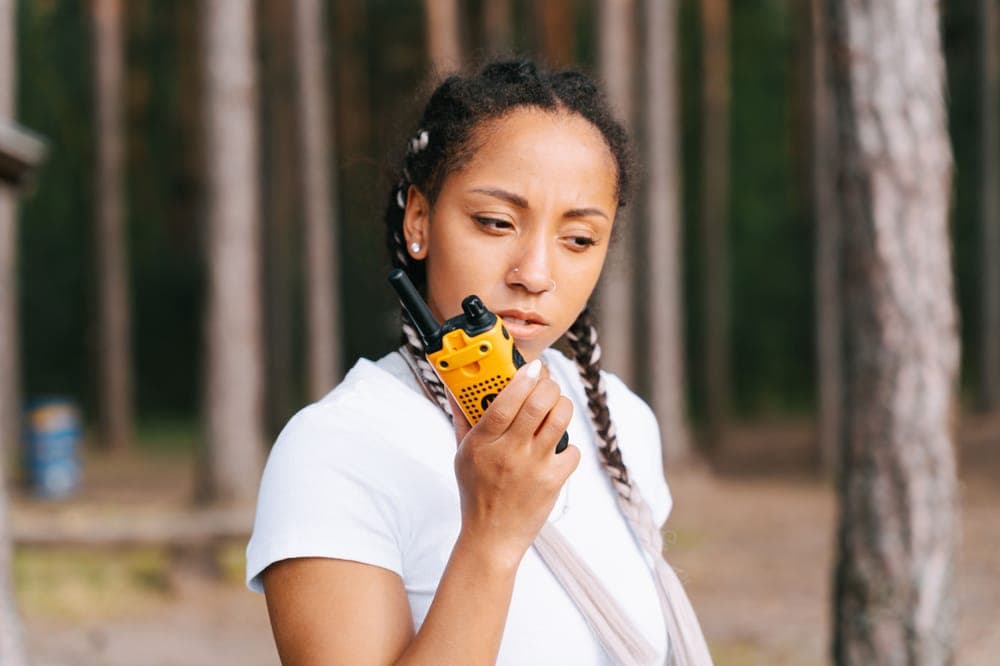
Ten codes came out of public-safety dispatching, where a trained operator and a trained officer share one agency's code list. Everything that makes them work in that setting — training, a single list, a controlled channel — is missing on a consumer radio channel, which is why they cause more confusion than they save.
That does not mean you should never use one. It means knowing which ones carry across and which ones do not.
What the FCC rules actually say
On GMRS, the rule on prohibited uses bars "coded messages or messages with hidden meanings" — and then says, in the same breath, that "10 codes are permissible" (47 CFR 95.1733). That is the one place the FCC rules mention them, and it settles the common worry: using 10-4 on a GMRS radio is fine, while inventing your own cipher so outsiders cannot follow the traffic is not.
On FRS the rule is shorter still: the only prohibition in the section is on one-way communications other than the permitted few (47 CFR 95.533). There is no code restriction at all. FRS is licensed by rule with no application or fee (FCC: Family Radio Service).
The codes in common use
There is no FCC code list, no national consumer standard, and no agreement between agencies: departments and companies publish their own sheets, and the same number means different things in different places. The handful below are the ones that travel, as commonly used on CB and consumer radio channels:
- 10-1 — receiving you poorly.
- 10-4 — acknowledged, message received. The one everybody knows.
- 10-7 — out of service, going off the air.
- 10-8 — in service, back on the air.
- 10-9 — say that again.
- 10-20 — location, as in "what is your 20?"
Everything past that point is where it falls apart. Numbers in the teens, twenties and thirties vary by agency, by region and by decade, so a 10-code that is obvious to the person who taught it to you is noise to everyone else on the channel. The CB-flavored version of this vocabulary is in our CB radio pages, where "what is your 20" came from in the first place.
Why plain language wins
- Your group is not trained. Kids, volunteers, substitute staff and new crew will not have the list, and they will guess wrong.
- Mixed groups mean mixed lists. Two vendors on one event channel with different code sheets is worse than no codes at all.
- Codes do not survive bad audio. "10-9" and "10-19" sound identical through a squelch tail; "say again" does not sound like anything else.
- They save almost no airtime. "10-20" and "where are you" are the same length.
- They sound like something you are not. A church team or a school office using police codes reads as role-play to anyone listening.
Emergency management went the same way years ago: incident response runs on plain language precisely because agencies arriving from different places cannot share a code book.
What to say instead
- "Go ahead" instead of 10-3 or inviting traffic.
- "Copy" or "got it" instead of 10-4.
- "Say again" instead of 10-9. Never "repeat," which means something else in other radio traditions.
- "Where are you?" instead of asking for a 20.
- "Standing by" and "back on" instead of 10-7 and 10-8.
- Positions, not names: "lobby to lot," "camp to trail," "truck two to lead." It is clearer, and it keeps names off a public channel.
Add two habits and a group sounds competent immediately: press the button, pause half a second, then speak — the first syllable is what gets clipped — and say who you are calling before what you want. The kids' version of all this is in walkie-talkie games and lingo for kids, and the hunting-specific etiquette is in hunting radio channels and etiquette.
Our picks for this job
Radios that suit a shared channel
Nothing here is about codes - it is about being heard the first time, which is what codes were invented to fix.
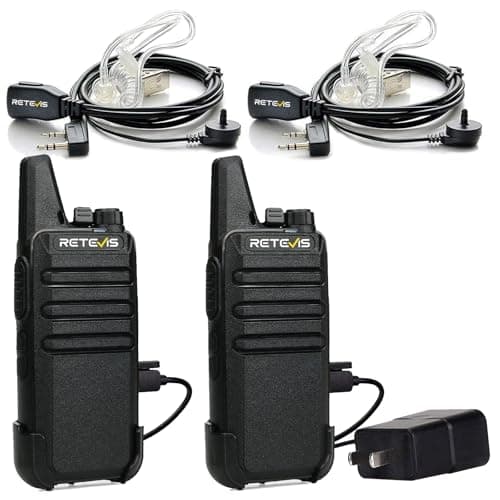
Best cheap pair for short-range crews
Retevis RT22 (2-pack)
No screen, a channel knob with a lock and a clear 2 W transmitter: the radio you hand to someone who has never used one.
$29.98Amazon#ad · Price as of November 2, 2026 · How we make money for the link to Retevis RT22 (2-pack)
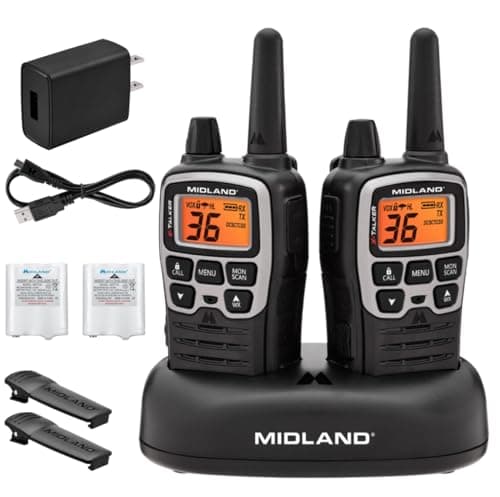
Best license-free Midland for hikes
Midland X-Talker T71VP3 (2-pack)
Hi/lo power, silent operation and a headphone jack, so you can drop power on a busy channel and keep traffic out of a room.
$89.99Amazon#ad · Price as of November 2, 2026 · How we make money for the link to Midland X-Talker T71VP3 (2-pack)
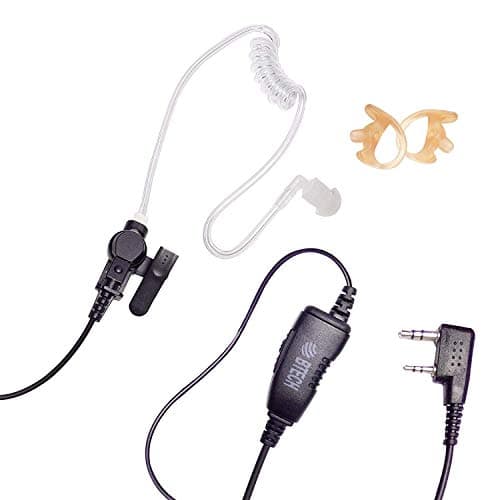
Best budget K1 earpiece
BTECH QHM07 Surveillance Earpiece and Microphone Kit
The earpiece that makes brevity easy: audio in one ear, push-to-talk on your lapel, for Kenwood-style K1 radios.
$16.25Amazon#ad · Price as of November 2, 2026 · How we make money for the link to BTECH QHM07 Surveillance Earpiece and Microphone Kit
One thing you do have to say
If you are on GMRS, you are required to identify your station with your FCC call sign (47 CFR 95.1751). That is a rule, not a convention, and it is the one piece of radio procedure worth memorizing — our GMRS call signs page covers how and how often. On FRS there is no call sign and no identification requirement at all.
So the short version: say "copy" rather than 10-4 if you want to be understood, use the codes if you enjoy them, keep nothing secret because the rules forbid it and physics does not allow it anyway, and give your call sign if you are licensed.
How we scored this
Every pick here is backed by the paperwork
Every pick is labeled Researched: we read each maker's published specs, manuals and range tables, check the license rules against the FCC, and score every radio on a public rubric out of 10. Every figure links to where it came from, and every range number is labeled “advertised” so you can see the difference between the box and the terrain.
Scores are our editorial judgment on that documented evidence. Commissions never set a score or decide a pick. The rubric and its weights are published.
What changed
- Published.
Questions
Frequently asked
What does 10-4 mean on a walkie-talkie?
Are 10 codes legal on GMRS and FRS?
Is there an official list of walkie-talkie 10 codes?
Should my family or work crew use 10 codes?
Do codes make my radio traffic private?
Receipts
Sources
- 47 CFR 95.1733, prohibited GMRS uses: coded messages and the 10-code allowance (via Cornell LII, checked 2026-10-17)
- 47 CFR 95.533, permissible FRS uses (via Cornell LII, checked 2026-10-17)
- 47 CFR 95.1751, GMRS station identification (via Cornell LII, checked 2026-10-17)
- FCC: Family Radio Service (FRS) page (checked 2026-10-17)
- Retevis: RT22 product page (checked 2026-09-29)
- Midland: X-Talker T71VP3 product page (checked 2026-09-22)
- BTECH: QHM07 surveillance earpiece product page (checked 2026-09-22)
Specs and range figures come from each maker's own pages and manuals, linked on every product, and license, power and channel rules come from the FCC and 47 CFR Part 95. Range numbers are the maker's advertised claims and are labeled that way, so you can tell the box number from the terrain number. Prices come live from Amazon with the time we checked. Read the full method.